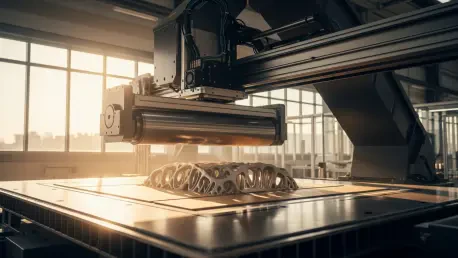

Engineering complex architectures that maintain strength while maximizing empty space has long remained a fundamental conflict in the development of high-performance structural materials. This phenomenon, often referred to as the porosity paradox, suggests that as a material becomes lighter and more permeable, its load-bearing capacity and structural integrity inevitably decline. However, recent developments in biocemented 3D printing have begun to challenge this limitation by integrating biological mineralization processes with high-precision mechanical engineering. By leveraging the natural ability of certain bacteria to produce calcium carbonate, researchers have developed a hybrid manufacturing method that creates incredibly strong mineral bonds at a microscopic level. This innovative approach allows for the intentional creation of void spaces without compromising the overall resilience of the structure, effectively bridging the gap between airy, lightweight designs and robust mechanical performance. As the demand for efficient, high-performance materials grows in sectors ranging from aerospace to civil engineering, this bio-inspired manufacturing technique offers a viable solution to one of the most persistent hurdles in modern materials science.
The technical foundation of this breakthrough lies in a dual-pillar system that utilizes selective binding and active print bed compaction to create complex, multi-functional architectures. Unlike traditional additive manufacturing, which often relies on energy-intensive plastic extrusion or carbon-heavy concrete deposition, this method uses a bio-inspired binding agent to fuse particles together. The current research focuses on balancing intentional void spaces with overall resilience, making it a highly customizable manufacturing process for specialized engineering needs that require both permeability and durability. By moving away from heat-based fusion and toward biological precipitation, the industry is witnessing a shift in how structural components are conceived and fabricated. This method not only addresses the physical limitations of porous materials but also aligns with the global movement toward low-carbon manufacturing. The result is a new class of materials that are not just printed, but grown into their final, high-strength forms, providing a level of structural sophistication that was previously unattainable through conventional means.
The Foundations: Biomimetic and Sustainable Engineering
Central to this transformative method is the concept of biomimetic manufacturing, which mimics the natural formation of resilient structures like coral reefs or seashells. By using biological agents such as Sporosarcina pasteurii to precipitate calcium carbonate, the 3D printer creates a durable mineral bond between individual particles at ambient temperatures. This biological adhesive acts as a natural glue, allowing for the creation of intricate internal geometries that would be exceptionally difficult to achieve with traditional casting or molding. The precision of the printer nozzle ensures that the bacteria and the necessary nutrient solutions are deposited exactly where they are needed, facilitating a controlled growth process. This represents a significant departure from standard additive techniques, as the structural strength is derived from a living chemical reaction rather than the cooling of molten polymers or the hydration of traditional cement. The ability to control this mineralization at the micro-scale allows engineers to design materials with specific density gradients, optimizing the ratio of weight to strength for diverse industrial applications.
Sustainability serves as another primary driver of this research, as the biocementing process avoids the massive energy consumption and carbon emissions associated with traditional Portland cement production. Because the biocementation occurs at room temperature and normal atmospheric pressure, it significantly lowers the environmental footprint of the resulting components. This low-energy requirement, combined with the ability to engineer precise microstructures, marks a significant shift toward environmentally responsible fabrication in 2026. Traditional concrete manufacturing is responsible for a significant portion of global carbon dioxide emissions, but by utilizing microbially induced calcium carbonate precipitation, the construction industry can move toward a carbon-neutral or even carbon-negative future. Furthermore, the process can utilize various powder substrates, including local sands or recycled industrial waste, which reduces the need for transporting raw materials over long distances. This localized approach to manufacturing not only cuts costs but also promotes a circular economy where waste products are reimagined as high-strength structural foundations.
Mechanical Precision: Bridging the Gap in Microstructural Integrity
The technical execution involves a selective binding phase where a specialized printer nozzle deposits the biocementing agent into a powder substrate following a mathematically optimized pattern. This ensures that only the intended areas solidify, creating intentional void spaces that are essential for permeability in various engineering applications like filtration or bone tissue engineering. This level of control is critical for industries where fluid flow and load-bearing requirements must be carefully balanced within a single, monolithic component. By varying the concentration of the biological agent and the duration of the mineral growth phase, manufacturers can fine-tune the mechanical properties of different zones within the same part. This heterogeneity is a major advantage over traditional manufacturing, which usually produces isotropic materials with uniform properties. The selective binding process allows for the creation of internal channels and lattices that are both lightweight and capable of directing stress away from vulnerable points, effectively solving the structural weaknesses typically found in highly porous designs.
To resolve the inherent instability often found in typical powder-bed printing, researchers introduced an active compaction mechanism that compresses each layer during the build cycle. Experimental results demonstrate that this synergy between mechanical pressure and biological binding creates materials with superior stiffness and exceptional resistance to deformation. Scanning electron microscopy has confirmed that this active compaction reduces unintended irregularities and voids between particles, ensuring that the calcium carbonate precipitation is uniform across the entire structure. Without this mechanical intervention, the biological bonds might form inconsistently, leading to weak spots that could fail under high-pressure loads. The integration of a compaction roller or plate within the 3D printing assembly ensures that the density of the powder bed is maximized before the binding agent is applied. This results in a much higher particle-to-particle contact area, which in turn allows the biocement to form more effective bridges between the grains. This combination of biological growth and mechanical force is what ultimately allows these materials to overcome the porosity paradox, achieving high strength even when a large percentage of the volume consists of empty space.
Interdisciplinary Growth: Scaling the Bio-Manufacturing Revolution
This work highlights a growing trend of multidisciplinary integration, combining expertise from microbiology, mechanical engineering, and computational design. Such collaboration is necessary to synchronize the living agents of mineralization with the automated control systems required for high-precision manufacturing. As global regulations on carbon emissions continue to tighten throughout 2026, this convergence of fields provides a viable path for the next generation of advanced “green” technology. Scientists must carefully manage the metabolic rates of the bacteria to ensure that the mineralization occurs at a pace compatible with the mechanical printing speed. Meanwhile, computer scientists are developing sophisticated algorithms to predict how these biological structures will behave under different load conditions, allowing for the optimization of pore geometry before a single grain of sand is moved. This holistic approach ensures that the biological and mechanical components of the system work in perfect harmony, reducing the likelihood of manufacturing defects and maximizing the efficiency of the entire production line.
The practical reach of this technology extends from lightweight aerospace components to advanced biomedical scaffolds used in regenerative medicine. In the medical field, the ability to tune pore size and interconnectivity is vital for bone regrowth, providing a structure that supports weight while allowing for nutrient flow and cellular infiltration. Because the calcium carbonate produced is biocompatible, these printed structures can serve as temporary templates that the body eventually replaces with natural bone. In the construction sector, using recycled materials or local desert sand as a substrate could lead to a more circular and efficient economy in building practices, especially in regions where traditional construction materials are scarce. The versatility of the powder-bed system means that almost any granular material can be transformed into a solid structure given the right biological catalyst. This flexibility opens up new possibilities for on-site manufacturing in remote or harsh environments, where transporting heavy equipment and traditional materials is logistically impossible or prohibitively expensive.
Strategic Implementation: Practical Steps for Industrial Adoption
The research team successfully demonstrated that the integration of microbial activity within a 3D printing framework provided a solution to the porosity paradox. Engineers observed that the combined application of active layer compaction and microbially induced calcium carbonate precipitation resulted in a significant increase in the compressive strength of porous lattices. These findings confirmed that biological bonds, when formed under controlled mechanical pressure, matched or exceeded the performance of traditional synthetic binders. The project established a clear correlation between the density of the initial powder bed and the final structural integrity of the biocemented part. Furthermore, the experiments proved that the internal geometry of the pores could be manipulated to facilitate fluid transport without creating structural vulnerabilities. This success marked a turning point in the acceptance of biological manufacturing as a legitimate alternative to conventional industrial processes, proving that “grown” materials could meet the rigorous standards of modern engineering.
To ensure the long-term viability of this technology, industry leaders recommended the immediate development of standardized protocols for bacterial cultivation and nutrient delivery. The transition to biocemented manufacturing required a shift in how facilities managed raw materials, moving toward systems that supported biological life cycles alongside mechanical assembly. It was also determined that the implementation of real-time monitoring systems was essential for maintaining quality control, as fluctuations in temperature or humidity could impact the rate of mineral precipitation. Stakeholders identified that the next logical step involved the creation of specialized training programs for engineers to bridge the gap between biology and mechanical design. By adopting these interdisciplinary strategies, companies positioned themselves to capitalize on the lower energy costs and reduced environmental impact offered by biocementation. The integration of these bio-fabricated components into mainstream supply chains ultimately provided a more resilient and sustainable foundation for the future of global infrastructure and high-tech manufacturing.