
Success in the high-performance computing sector depends on the ability to scale production volume without compromising the intricate electrical connections of the PCB. Isu Petasis is currently navigating this critical challenge by weighing a significant secondary investment in its manufacturing infrastructure, estimated to be between $75 million and $115 million. This capital injection is primarily targeted at Plant 6, a facility intended to solve specific manufacturing hurdles that currently limit total output. By focusing on the production of ultra-high-layer printed circuit boards, the company aims to secure its position as a primary supplier for high-performance AI servers and global data centers. As the demand for sophisticated hardware grows, the ability to produce boards with higher layer counts becomes a major differentiator. This investment is not just about increasing the physical size of the operations but about refining the technical processes that allow for the creation of denser, more reliable circuitry required for AI workloads.
Engineering High-Performance Solutions: Overcoming the Ultra-High-Layer Challenge
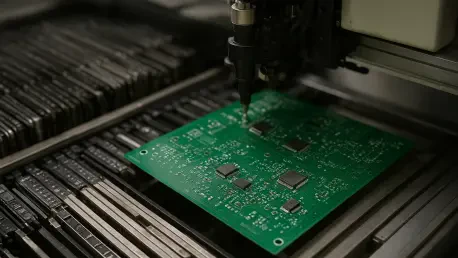
The technical demands of artificial intelligence hardware are far more rigorous than those associated with standard consumer electronics or basic networking equipment. AI servers require specialized boards that can facilitate extremely rapid data exchanges between high-end processors and memory modules while maintaining signal integrity under heavy, continuous workloads. To meet these exacting requirements, Isu Petasis must master the production of ultra-high-layer PCBs, which involve incredibly complex lamination and plating processes. These boards often exceed twenty layers, requiring a level of precision that traditional manufacturing setups struggle to provide consistently. The current investment strategy aims to bring these specialized stages into a state of perfect synchronization, ensuring that no individual segment of the production line acts as a drag on the entire facility’s throughput. This focus on technical harmony is essential for meeting the high standards of global tech leaders.
Solving these specific manufacturing bottlenecks is less about simply adding more square footage and more about the meticulous fine-tuning of the overall manufacturing workflow. Even a state-of-the-art factory can encounter significant difficulties if the chemical plating process cannot keep pace with the speed of lamination or if the processing of outer layers lags behind the internal core assembly. By specifically targeting these mechanical and procedural gaps, Isu Petasis intends to maximize the economic potential of Plant 6. This strategic approach ensures that every dollar of the multi-million-dollar investment translates directly into increased daily throughput and higher-quality output for its demanding roster of global technology clients. Enhancing the speed of these critical stages allows the firm to handle larger orders without extending delivery times, which is a key requirement for companies building out massive AI clusters. Such precision-based upgrades are vital for maintaining a competitive edge.
Financial Stability and Market Timing: Strategizing for the 2026 Expansion
In a move that highlights corporate stability, Isu Petasis plans to fund this expansion primarily through its own internal cash reserves and operational cash flow. By avoiding external debt or new equity raises, the firm protects its balance sheet while pivoting toward high-growth technology sectors. This conservative financial strategy reflects a commitment to long-term health, ensuring the company can weather market volatility while still scaling its operations to meet the rising demand for AI components. Funding the project internally also signals to the broader market that the company’s core business remains robust and profitable enough to support capital-intensive growth without outside assistance. This financial independence allows the leadership team to maintain full control over the pace of expansion and the specific technological choices made within Plant 6. Consequently, the company is well-positioned to adjust its strategy as the technical requirements for AI hardware continue to evolve.
Timing is a critical factor in the hardware industry, and Isu Petasis is looking toward the second half of 2026 to bring its newly acquired equipment online and reach full operational capacity. Because high-specification PCBs require long lead times for customization and certification by major technology giants, starting the procurement process early is essential for remaining competitive in the global market. The ultimate goal of this aggressive expansion is to push the company toward a mid-to-long-term annual revenue target of over 2 trillion won, a milestone that relies heavily on the ability to scale while maintaining high product quality. By ordering specialized machinery well in advance, the company can navigate potential delivery delays and installation complexities that often disrupt industrial scaling efforts. This proactive stance positions the firm to be among the first suppliers ready when the next major wave of data center construction peaks, securing early-mover advantages for the brand.
The successful stabilization of manufacturing yields and the strategic expansion of Plant 6 eventually pushed the organization toward its ambitious revenue targets. Industry observers noted that the focus on technical precision and internal funding provided a more stable foundation for growth than the debt-heavy models used by some competitors. As the market for AI infrastructure expanded between 2026 and 2028, the company moved beyond traditional manufacturing hurdles to become a dominant force in the ultra-high-layer PCB segment. Future considerations shifted toward the integration of even more exotic dielectric materials and the implementation of AI-driven automated inspection systems to further optimize the production line. These steps ensured that the company remained at the cutting edge of hardware development, offering actionable insights into how high-tech firms can scale effectively in a volatile environment. The lessons learned during this period of expansion highlighted the necessity of aligning financial discipline with engineering excellence.