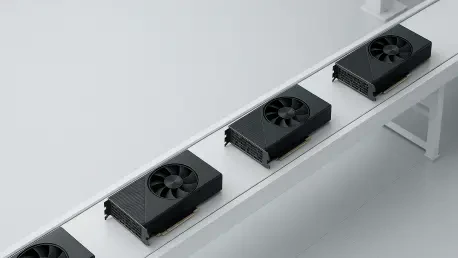

The decentralized nature of the gaming hardware industry creates data silos that often limit the effectiveness of holistic artificial intelligence models. This fragmentation is increasingly at odds with the technical demands of manufacturing modern graphics processing units and next-generation consoles that house billions of transistors within microscopic architectures. As performance requirements reach unprecedented levels, the industry has undergone a fundamental transition from traditional assembly methods to an AI-integrated ecosystem that functions as the primary driver for industrial efficiency. These sophisticated electronic devices are no longer viewed as mere components but as complex, interconnected systems that require constant thermal management and processing stability. Artificial intelligence provides the necessary computational layer to oversee these variables, transforming manufacturing from a series of isolated steps into a predictive, self-correcting process. This approach helps the industry manage the extreme volatility of both production cycles and consumer demand.
Navigating the Complexity of Modern Component Production
Producing a flagship graphics processor or a gaming console is a fragmented, global endeavor involving thousands of individual components sourced from various countries. Silicon wafers might be fabricated in one region, packaged in another, and finally integrated onto printed circuit boards in a third, making the process highly susceptible to logistical bottlenecks. A delay in a single facility or a shortage of specialized parts like high-speed video memory can stall global output entirely. AI helps mitigate these risks by identifying potential points of failure within this global factory, allowing manufacturers to pivot before a shortage reaches the consumer. By analyzing shipping routes, factory throughput, and component availability, these systems allow manufacturers to pivot their logistics strategies dynamically. This proactive stance is essential for maintaining the flow of critical parts, which remains a primary constraint for hardware makers who must navigate an increasingly complex and fragile international supply chain.
The extreme unpredictability of the gaming market further complicates production, as massive spikes in demand often coincide with holiday seasons or major software releases. Traditional forecasting methods often fail to account for the sudden generational leaps in consumer interest that leave retail shelves empty for months. By analyzing regional market trends, historical launch data, and even real-time social media sentiment, AI-driven demand forecasting allows manufacturers to allocate stock with significantly more precision. This strategic planning ensures that limited inventory reaches the geographical areas with the highest demand, reducing the frequency of frustrating stockouts and paper launches. By stabilizing the supply-to-demand ratio, machine learning has created a more resilient marketplace that can better absorb the sudden shocks characteristic of modern consumer electronics cycles. These tools provide a centralized hub for managing production orders, allowing even smaller teams to compete in a market dominated by massive corporations.
Advancing Quality Control Through Machine Learning
In the high-stakes environment of semiconductor fabrication, the move toward automated, high-precision quality control has become a necessity rather than a luxury. During the early phases of wafer production, AI-driven image analysis systems scan silicon surfaces at the nanometer scale to distinguish between harmless microscopic dust and critical structural flaws. Identifying these defects early allows engineers to recalibrate the fabrication machinery in real-time, effectively halting process drift before it ruins an entire production batch. This level of microscopic scrutiny far exceeds the capabilities of any human inspector or older, rule-based automated systems that lacked the nuance to recognize complex patterns. By maintaining such rigorous standards at the atomic level, manufacturers can ensure that the foundational building blocks of gaming hardware are flawless from the start. This early intervention is critical because a minor error in the silicon layer can lead to catastrophic hardware failure once the chip is operational.
Once the silicon dies are successfully mounted onto circuit boards, machine learning models refine the Automated Optical Inspection process to distinguish between functional variations and genuine defects. Previous iterations of this technology were notorious for generating false positives, which frequently triggered unnecessary production halts and manual re-inspections. Modern AI-assisted X-ray analysis has solved this by peering through opaque surfaces to inspect internal solder joints in ball grid arrays that are invisible to the naked eye. This ensures that every internal connection is robust enough to handle the thermal expansion and contraction associated with intense gaming sessions. Furthermore, during the final predictive stress testing phase, AI models evaluate thermal and power data to identify outliers. These are units that pass basic functional tests but exhibit subtle electrical signatures suggesting a high probability of failure within the first few months of use, reducing the rate of dead units.
Optimizing Performance and Yield via Intelligent Binning
Microscopic variations inherent in the manufacturing process mean that no two chips on a silicon wafer are truly identical in terms of their electrical properties and thermal efficiency. This physical reality necessitates a sorting process known as binning, where chips are assigned to different product tiers based on their maximum stable clock speeds and voltage requirements. Artificial intelligence has revolutionized this sorting by utilizing massive datasets from previous production runs to predict a chip’s performance profile long before it reaches the final testing stage. By recognizing subtle patterns in the chemical and physical characteristics across thousands of wafers, AI allows manufacturers to determine the optimal frequency for each piece of silicon with unprecedented accuracy. This intelligent categorization ensures that the silicon lottery is minimized for the end-user. The result is a more predictable hardware experience where consumers receive exactly the performance tier they purchased without instability.
Maximizing the percentage of usable chips per silicon wafer, known as the yield, is the primary factor in maintaining the profit margins typical of high-end consumer hardware. AI-driven optimization tools analyze fabrication data to suggest adjustments in voltage delivery or thermal management during the production cycle to salvage chips that might otherwise be discarded as waste. By fine-tuning these variables, manufacturers can turn what would have been scrap into functional, lower-tier products that still meet strict performance criteria. This optimization is particularly vital in 2026, where the cost of raw materials and energy has increased the financial risk of every failed wafer. Consistent yield improvement also stabilizes the retail price of hardware, as manufacturers do not need to overcharge to compensate for excessive production losses. The intersection of machine learning and material science has thus created a more sustainable production model that benefits the industry and the consumer.
Establishing New Standards for Industrial Resilience
Despite the significant advancements offered by artificial intelligence, it is crucial to recognize that algorithms cannot override the fundamental physical and geopolitical constraints of the industry. No amount of software optimization can create raw materials or factory floor space out of thin air if there is a global shortage of specialized substrates or rare earth metals. Furthermore, the decentralized structure of the gaming hardware world remains a barrier, as various entities along the supply chain are often hesitant to share proprietary data due to competitive concerns. These data silos limit the effectiveness of AI models that require holistic, end-to-end information to achieve their full predictive potential. Trade regulations, international tariffs, and regional policy shifts also introduce human-driven variables that remain outside the direct control of algorithmic management. While AI provides a powerful toolkit for efficiency, it functions within a framework governed by physical availability.
The transition toward AI-enhanced manufacturing protocols established a new baseline for industry transparency and technical reliability. Manufacturers that integrated these sophisticated systems moved beyond reactive fixes and instead utilized historical data to prevent disruptions before they occurred. To further this progress, the industry identified the need for standardized data-exchange frameworks that allowed for cross-company collaboration while protecting intellectual property. These collaborative efforts proved essential for overcoming the physical limitations of raw material availability and geopolitical shifts. By adopting these forward-looking strategies, the gaming sector successfully mitigated the risks of hardware shortages and inconsistent product quality. The integration of advanced diagnostics and predictive maintenance transformed the lifecycle of gaming hardware from a volatile venture into a disciplined science. This shift allowed the global market to meet the growing demand for high-performance computing without compromising the durability of the final product.