
The modern factory floor is no longer an isolated island of proprietary circuitry but a connected node in a vast digital ecosystem where code dictates the physical movement of heavy machinery. The shift toward commercial off-the-shelf hardware for industrial control allows for rapid updates but simultaneously introduces the attack surface of general-purpose IT systems. This evolution reflects a broader trend in operational technology where efficiency and interoperability take precedence over the historical security by obscurity model. By moving away from specialized black box controllers toward software-defined solutions like OpenPLC, industrial operators gain unprecedented flexibility in how they scale and manage their production lines. However, this transition requires a fundamental reevaluation of the trust models that have governed industrial automation for decades. Understanding the architectural foundations of these systems is not merely an academic exercise; it is a prerequisite for defending the critical infrastructure that sustains modern society against increasingly sophisticated digital threats. As these systems become more integrated with cloud services and enterprise networks, the distinction between a server and a controller continues to blur, demanding a new set of skills from security practitioners.
Evolution and Contrast: Defining the Software PLC
Architectural Decoupling: Separating Logic from Hardware
The core concept behind a Software PLC involves the separation of the control runtime from the physical hardware that executes it. In traditional settings, a manufacturer would provide a proprietary device where the operating system, firmware, and industrial logic were inextricably linked. This created a rigid environment where updates were slow and hardware replacement often meant a complete overhaul of the control logic. The software-defined approach changes this dynamic by allowing the control runtime to function as an application layer on top of a standard operating system. This decoupling means that the same industrial logic can run on an embedded Linux device, a high-performance industrial PC, or even a virtualized server in a data center. Such flexibility is essential in 2026, where supply chain constraints and the need for rapid prototyping demand that software be portable across different hardware architectures without extensive rewriting or recompilation of the core logic.
Furthermore, this shift toward software-defined automation allows for the integration of advanced diagnostic tools and version control systems that were previously the exclusive domain of traditional IT software development. By treating the PLC runtime as a standard service, engineers can leverage modern DevOps practices to deploy updates across thousands of units simultaneously. However, this independence from specific hardware also means that the security of the controller is now tied to the security of the host operating system. If the underlying Linux or Windows environment is compromised, the PLC runtime is inherently at risk. This relationship necessitates a holistic view of the system, where the hardening of the host is just as important as the integrity of the control program. The move toward modularity has successfully broken the black box model, but it has replaced it with a complex stack of dependencies that must be managed with precision to maintain operational safety and security.
Deployment Paradigms: Virtualization and Containerization
The environment in which a SoftPLC resides significantly influences its operational characteristics and its defensive posture. Currently, many industrial environments utilize virtual machines to host their control runtimes, providing a layer of isolation that mimics the physical separation of old-school hardware. A virtual machine allows for a dedicated guest operating system, which can be stripped down to the bare essentials required for the PLC to function. This isolation is beneficial for security, as it limits the ability of an attacker to move laterally from the PLC to other services on the same physical host. However, the hypervisor layer required for virtualization can introduce latency and jitter, which are detrimental to the strict timing requirements of industrial processes. Engineers must carefully tune the hypervisor to ensure that the virtualized PLC maintains its deterministic behavior, often through the use of dedicated resource allocation and high-priority execution threads.
In contrast, the use of containerization platforms like Docker has gained significant traction for deploying SoftPLC runtimes due to their resource efficiency and ease of orchestration. Containers allow developers to package the runtime with all its necessary libraries, ensuring consistent behavior across different environments from the engineering workstation to the production floor. While containers offer faster startup times and lower overhead than virtual machines, they share the host’s kernel, which presents a different set of security challenges. A vulnerability in the host kernel could potentially allow an attacker to escape the container and gain access to the broader system. Therefore, the security of a containerized SoftPLC depends heavily on the configuration of namespaces and control groups, as well as the implementation of strict networking policies. Choosing between virtualization and containerization involves a delicate balance between the need for robust isolation and the demand for high-performance, real-time control.
Engineering Lifecycle and Internal Execution
Programming Standards: The Language of Automation
The creation of industrial control logic is governed by the IEC 61131-3 standard, which provides a consistent framework for programming across different manufacturers and platforms. This standard includes several languages, ranging from the graphical Ladder Diagram, which mimics electrical relay logic, to the more sophisticated Structured Text, a high-level language similar to Pascal. The use of these standardized languages ensures that engineers can transition between different SoftPLC platforms with minimal retraining. A critical aspect of this standard is the use of Program Organization Units, or POUs, which allow for the modularization of code into functions and function blocks. This structure is not only helpful for organization but is vital for how the runtime manages memory and preserves the state of the system between execution cycles. By encapsulating logic within POUs, developers can create reusable components that are easier to test and verify, which is a key requirement for safety-critical applications.
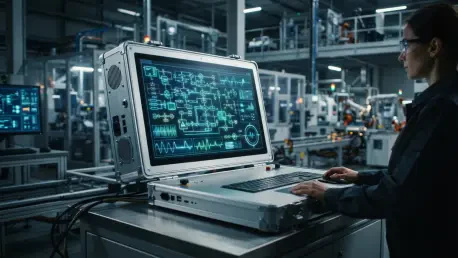
The workflow from the initial lines of code to the active control of a factory involves a complex pipeline that begins at the Engineering Workstation. Here, the source code is written and then translated into an executable format, which could be machine-specific binary code or an intermediate bytecode that the PLC runtime interprets. This translation process is a critical junction for security; the integrity of the compiler and the transfer mechanism must be guaranteed to prevent the introduction of malicious logic. Once the application is deployed to the runtime, it begins its execution within the memory space allocated by the host operating system. The Engineering Workstation often remains connected to the runtime for monitoring and debugging, providing a real-time window into the variables and state of the process. This persistent connection, while necessary for maintenance, represents a primary communication path that must be secured against unauthorized access to prevent tampering with the active control logic.
The Scan Cycle: Heartbeat of the Industrial Process
At the center of every PLC operation is the scan cycle, a deterministic loop that ensures the controller responds to physical changes in a predictable manner. This cycle consists of three distinct phases: reading inputs from sensors, evaluating the programmed logic, and updating the outputs to actuators. In a SoftPLC environment, the runtime must manage this cycle with millisecond-level precision, often competing with other system processes for CPU time. To achieve this, modern SoftPLCs utilize real-time extensions of the host operating system, such as the RT-Preempt patch for Linux. These extensions allow the PLC process to interrupt lower-priority tasks, ensuring that the control loop is not delayed by background activities like system updates or network logging. This level of determinism is what separates an industrial controller from a standard computer application, as even a minor delay in the scan cycle can lead to mechanical failure or safety hazards.
Managing multiple tasks within a single SoftPLC adds another layer of complexity to the execution model. A runtime might handle a high-speed motion control task every 5 milliseconds while simultaneously managing a lower-priority temperature monitoring task every 200 milliseconds. The coordination of these tasks requires a sophisticated scheduler that can prevent resource contention and ensure that the most critical logic always has the necessary processing power. To safeguard against system hangs, developers implement watchdog timers that monitor the duration of each scan cycle. If a cycle takes longer than the allotted time, the watchdog can trigger a safe state, such as shutting down a motor or closing a valve, to prevent unpredictable behavior. This rigorous management of time and resources is the foundation of operational integrity, ensuring that the digital instructions translated from the Engineering Workstation result in reliable and safe physical actions on the production floor.
Security Boundaries and System Hardening
Application Integrity: Securing the Deployment Pipeline
The security of a SoftPLC is largely defined by the boundaries between its various components and the external environment. One of the most critical is the application boundary, which involves the integrity of the control logic itself as it moves through the deployment pipeline. Because the behavior of the entire industrial process is dictated by the code loaded onto the runtime, any unauthorized modification of this code can have catastrophic physical consequences. Security professionals must focus on protecting the Engineering Workstation and the network path used for deployment to ensure that only verified and signed applications are executed by the runtime. Implementing robust authentication and encryption for the management protocols used to transfer code is a primary defense against tampering. Without these controls, an attacker could potentially overwrite the existing logic with a malicious version that subtly alters production parameters or disables safety systems.
Beyond the initial deployment, the ability to make online changes—updating parts of the code while the PLC is still running—introduces a unique set of risks. While this feature is essential for maintaining high availability in continuous manufacturing processes, it provides an avenue for an attacker to modify the system’s behavior without a full restart. Protecting this mechanism requires granular access control and detailed logging of all changes made to the running application. It is also important to consider the integrity of the compiled code within the runtime’s memory. Techniques such as memory protection and the use of non-executable memory segments can help prevent certain types of exploitation, such as buffer overflows, which might be used to inject malicious code directly into the execution path. By securing every stage of the application lifecycle, from the first line of Structured Text to the active instructions in RAM, organizations can maintain the high level of trust required for automated industrial operations.
Resource and Platform Security: Mitigating Side-Channel Risks
Another significant security boundary exists at the platform level, where the PLC runtime interacts with the host operating system and shares its hardware resources. Unlike traditional PLCs, which have dedicated CPUs and memory, a SoftPLC often shares these resources with other services, creating the risk of resource starvation. A denial-of-service attack on a non-critical web server or database running on the same host could consume enough CPU or memory to disrupt the PLC’s scan cycle. To mitigate this risk, engineers often use CPU pinning and memory locking to reserve specific hardware resources exclusively for the PLC process. This ensures that the industrial logic always has the capacity it needs to maintain its timing requirements, regardless of the load on the rest of the system. Hardening the host OS by disabling unnecessary services and implementing strict user privilege levels further reduces the likelihood that a compromise of one component will lead to the failure of the entire controller.
The communication boundary is also a vital area of concern, as SoftPLCs typically expose multiple network interfaces for different purposes. Industrial interfaces, using protocols like Modbus or OPC UA, handle the exchange of process data with other controllers and human-machine interfaces, while management interfaces are used for configuration and programming. Each of these interfaces represents a potential entry point for an attacker and requires a tailored security strategy. For instance, industrial protocols often lack built-in security features, necessitating the use of industrial firewalls or deep packet inspection to monitor and filter traffic. Meanwhile, management interfaces should be restricted to authorized devices and utilize strong, multi-factor authentication. By clearly defining and securing these boundaries, organizations can create a defense-in-depth architecture that protects the SoftPLC from both external threats and internal system failures, ensuring the continued safety and efficiency of the automated environment.
Strategic Hardening for Software-Defined Industry
The transition toward software-defined industrial control necessitated a fundamental shift in how security was integrated into the operational lifecycle. Research into the architecture of SoftPLCs provided the evidence needed to move away from outdated models that relied on physical isolation. Instead, engineers adopted a more transparent approach that acknowledged the inherent risks of using general-purpose computing platforms. By documenting the critical boundaries between the host operating system and the control runtime, the industry established a new baseline for system hardening. This foundational work allowed for the implementation of real-time patches and resource isolation techniques that successfully bridged the gap between the flexibility of IT and the strict requirements of OT. The result was a more resilient infrastructure where the speed of software development matched the reliability of traditional hardware.
In the final analysis, the successful deployment of systems like OpenPLC Runtime v4 demonstrated that security was as much about the integrity of the process as it was about the protection of the data. Actionable steps taken by industrial operators included the rigorous implementation of signed code deployments and the use of dedicated network segments for management traffic. These measures ensured that the source of truth for any controller remained protected from unauthorized changes. Furthermore, the use of real-time performance monitoring became a standard practice, allowing for the early detection of anomalies that might indicate either a technical failure or a targeted cyberattack. As industrial automation continues to evolve beyond 2026, the lessons learned from this architectural analysis will remain vital for maintaining the delicate balance between technological progress and the absolute necessity of operational safety.