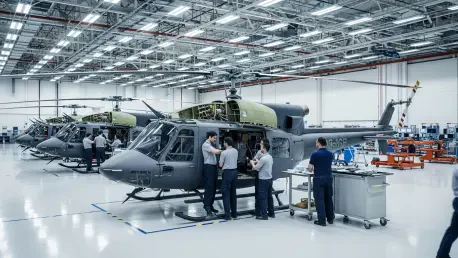

The establishment of a dedicated legal entity by American aerospace giant Bell Textron within Ukraine marks a pivotal shift from the provision of short-term military assistance toward a deeply integrated, long-term industrial alliance focused on sovereign manufacturing. This strategic move is designed to transition the local defense sector from being a mere recipient of foreign equipment into a primary center for Western aviation technology within Eastern Europe. By laying down these institutional roots, the company aims to facilitate the localized assembly, maintenance, and eventual manufacture of advanced rotary-wing aircraft. This initiative represents a massive commitment to the technological sovereignty of the region, ensuring that the necessary infrastructure for sustained defense operations is built directly on the ground. Such a foundation allows for rapid response times and fosters an environment where high-tech growth can thrive despite the current geopolitical environment.
Strategic Advantages: Part 1. Technical Commonality
Central to this industrial initiative is the deployment of the Bell H-1 platform, which includes the AH-1Z Viper attack helicopter and the UH-1Y Venom utility aircraft. A defining characteristic of these two models is their extraordinary level of technical commonality, as they share approximately eighty-five percent of their major components, including engines, rotors, and avionics. This design philosophy significantly simplifies the logistical challenges associated with operating diverse aircraft fleets in high-intensity combat zones. By standardizing the hardware, the military can streamline its supply chains, reducing the variety of spare parts needed in inventory and simplifying the training requirements for ground crews. This synergy ensures that every piece of equipment brought into the theater serves a dual purpose, maximizing the utility of every technician deployed to the front lines. This logistical efficiency remains a cornerstone of the broader modernization strategy.
Strategic Advantages: Part 2. Maintenance Synergy
Beyond the shared hardware, the logistical uniformity of the H-1 platform offers a unique advantage regarding maintenance and readiness in the field. A single engineering team, trained on the core architecture of the H-1 system, can effectively service both the transport and attack variants, which leads to much faster turnaround times during active operations. This efficiency is critical for maintaining high sortie rates and ensuring that aircraft are returned to the air as quickly as possible after missions. Defense experts emphasize that in modern warfare, the sustainability and ease of repair are often as vital as the raw combat capabilities of the platforms themselves. By adopting a system that prioritizes these factors, Ukraine is building a fleet that is not only lethal but also remarkably resilient. This approach minimizes the total cost of ownership over the long term, allowing for a more sustainable defense budget as the nation continues to modernize its military forces.
Regional Security: Part 1. Geopolitical Reshaping
The strategic vision behind this partnership extends far beyond immediate defense needs, as Bell Textron views the evolving European landscape as an opportunity to establish a permanent defense infrastructure. The long-term objective is to transform the country into a primary site for the assembly and overhaul of H-1 aircraft for the broader European market, leveraging its central location and growing technical base. This vision rests on the assumption that regional security requirements will continue to demand a robust, localized presence for Western aviation technology for years to come. By positioning itself early, the aerospace giant is creating a foothold that will serve as a lighthouse for other Western defense firms looking to engage in the region. This development signals to the global community that the industrial base is ready for high-level integration, moving away from temporary solutions toward a permanent and sophisticated manufacturing ecosystem that can support regional allies.
Regional Security: Part 2. Institutional Risk Mitigation
To navigate the inherent complexities of establishing high-tech manufacturing in such a dynamic environment, the project operates under the strict guidance of the United States government via the Foreign Military Sales program. This framework provides an essential layer of institutional security and oversight, ensuring that every stage of the technology transfer adheres to rigorous American protocols. This structure not only protects sensitive military data but also provides a stable legal and financial safety net for the corporation and its local partners. By utilizing the FMS pathway, the initiative gains a level of governmental backing that mitigates many of the risks associated with large-scale industrial investment in the region. This collaborative model ensures that the partnership remains transparent and focused on mutual security goals, while also providing the necessary scrutiny to maintain the highest standards of technological integrity throughout the life of the project.
Future Integration: Part 1. Human Capital Development
A fundamental pillar of this industrial roadmap involves the intensive cultivation of local expertise through specialized training programs and professional exchanges. Bell Textron has initiated a comprehensive evaluation of existing aerospace enterprises to determine their technical readiness for sophisticated production tasks. This process includes a regimen where local engineers are embedded within the core engineering groups at the company’s facilities in the United States to master intricate technical specifications. This direct transfer of knowledge is intended to empower local staff to handle autonomous maintenance and eventually oversee complex assembly lines without constant external supervision. By investing in the human capital of the region, the partnership ensures that the technological advancements are deeply rooted in the local workforce. This creates a sustainable cycle of innovation and skill development that will benefit the broader economy and the defense sector for decades.
Future Integration: Part 2. Logistical Standardization
The final integration into the H-1 ecosystem necessitated a synchronization of national defense logistics with the standards utilized by Western allies and international coalitions. This alignment was reinforced through active participation in groups like the CORPUS coalition, which prioritized the standardization of supply chains to ensure seamless interoperability during joint missions. By moving away from legacy Soviet-era hardware, the domestic military established a framework that allowed for the direct sourcing of components from a global network of aerospace providers. This transition simplified complex repair cycles and allowed for the eventual export of locally assembled defense products to international markets. Stakeholders moved forward by prioritizing the certification of local facilities for full-scale independent manufacturing, which served as the primary solution for long-term fleet sustainability. These steps ensured that the regional hub functioned independently.