
Heavy rare earth deposits found within the Titan project site provide a secondary revenue stream that supports the broader transition toward domestic mineral sovereignty. In the current landscape of 2026, the United States faces an urgent necessity to decouple its critical infrastructure from fragile international logistics networks that have long dominated the titanium market. Iperionx has positioned itself at the vanguard of this industrial revolution, moving aggressively to establish a fully integrated production cycle on American soil. This approach represents a fundamental rethinking of how strategic metals are sourced and processed in high-stakes environments. By bridging the gap between raw ore extraction and advanced component manufacturing, the company seeks to eliminate the inefficiencies of the traditional Kroll process. This evolution is vital for securing materials that define modern aerospace capabilities, ensuring that American innovation remains unhindered by external geopolitical pressures or supply chain bottlenecks.
Establishing a Domestic Mineral Foundation
Resource Integration: Strategic Assets
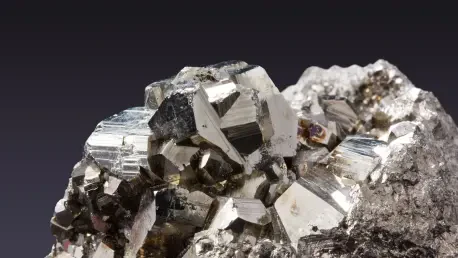
The foundational strength of this new supply chain lies in the Titan project, a sprawling mineral resource located in Tennessee that serves as the primary engine for raw material independence. Unlike traditional mining operations that focus on a single output, the Titan site is a polymetallic powerhouse, yielding high-grade titanium feedstock alongside essential co-products like zircon and monazite. These heavy rare earth elements, specifically dysprosium and terbium, are the silent workhorses of the green energy transition, powering everything from electric vehicle motors to advanced wind turbines. By securing these minerals domestically, Iperionx effectively mitigates the risk of price manipulation by foreign entities that currently control the global rare earth market. This multi-commodity strategy provides a robust economic cushion, allowing the company to sustain its operations even during periods of price volatility, while simultaneously addressing a critical gap in the American defense industrial base.
Manufacturing Evolution: The HAMR Technology
At the heart of the downstream transition is the South Boston, Virginia, facility, where the company is deploying its proprietary Hydrogen Assisted Magnesiothermic Reduction (HAMR) technology. This breakthrough process represents a departure from the energy-intensive and chemically complex methods that have characterized titanium production since the mid-20th century. By utilizing hydrogen to facilitate the reduction of titanium dioxide, the HAMR method produces high-quality titanium alloy powders with a significantly reduced carbon footprint and lower energy requirements. This technical advantage allows Iperionx to manufacture Ti-6Al-4V powder at a cost structure previously thought unattainable for domestic producers. The integration of this technology with raw materials from Tennessee creates a localized, closed-loop ecosystem. This system not only enhances operational efficiency but also provides a traceable, sustainable source of metal for manufacturers who must prove their supply chain environmental credentials.
Evaluating Economic Potential and Scaling Up
Feasibility Milestones: Economic Impact
The economic feasibility of this integrated model was recently solidified through a comprehensive study that analyzed the long-term profitability of the Titan project. This definitive feasibility study projected an after-tax net present value of 813 million dollars, calculated using a conservative eight percent discount rate. With an internal rate of return reaching 39.4 percent, the project demonstrates a level of financial resilience that is rare in the capital-intensive mining sector. The estimated payback period of 3.6 years suggests that the initial capital expenditure can be recovered quickly, paving the way for sustained free cash flow for reinvestment. For the broader market, these metrics serve as a signal that domestic titanium production is no longer a speculative endeavor but a commercially viable reality. This financial clarity is essential for securing the large-scale institutional investment required to transition from development to full-scale industrial operations across the United States.
Industrial Growth: Scaling Powder Production
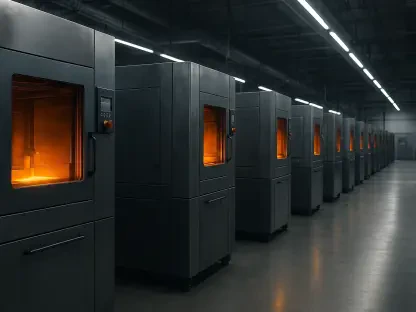
The physical manifestation of this growth is evident in the rapid expansion of the manufacturing footprint in Virginia, where industrial output is reaching new heights. During the middle of 2026, the company successfully commissioned a massive 300-tonne powder metallurgy press, a piece of machinery that serves as a cornerstone for scaling production volumes. This infrastructure allows for the transition from small-scale testing batches to the high-volume output required by major industrial clients. While the initial phases of scaling involve meticulous technical calibrations and maintenance adjustments, the overall trajectory remains sharply upward. Current focus has shifted toward maximizing furnace throughput and refining the consistency of the powder morphology. As more specialized equipment comes online throughout the latter half of the year, the facility is expected to reach an annual production cadence that can satisfy the burgeoning demand for high-performance titanium components in renewable energy and deep-sea exploration.
Driving Market Adoption Through Partnerships
Commercial Collaboration: Defense and Aerospace
Market adoption of this domestic titanium is gaining significant momentum, particularly within the defense sector where the demand for high-strength, lightweight materials is at an all-time high. Ongoing collaborations with the United States Army and specialist manufacturers like Carver Pump are demonstrating the practical benefits of the HAMR-produced titanium in real-world military applications. These projects focus on creating advanced components that can withstand extreme corrosive environments while providing superior protection and durability for hardware used in the field. The strategic importance of a domestic supply chain for these materials cannot be overstated, as it removes the reliance on adversarial nations for the precursors to essential defense equipment. By meeting the rigorous qualification standards of the military, Iperionx is establishing its titanium as the benchmark for quality and reliability. These defense-centric programs represent the foundation of a long-term partnership aimed at ensuring American technological superiority.
Automotive Innovation: Market Adoption
Beyond the specialized world of defense, the automotive industry is emerging as a primary driver for large-scale titanium adoption, led by efforts with brands like Ford. These programs explore how the lightweight properties of titanium can be leveraged to enhance the efficiency of consumer vehicles, particularly as the industry shifts toward electrification where weight reduction directly translates into increased battery range. The ability of Iperionx to produce titanium powder that is compatible with advanced additive manufacturing and powder metallurgy techniques is the key to unlocking these commercial markets. These manufacturing methods allow for the creation of complex parts that were historically too expensive to produce using traditional casting. As these testing initiatives mature into high-volume off-take agreements, they will provide the predictable and scalable revenue streams necessary for the company to solidify its position. This commercial diversification ensures that the company remains resilient across different economic cycles.
Navigating Financial Growth and Execution Risks
Capital Structure: Funding the Transition
The financial structure supporting this expansion is characterized by a strategic blend of public equity and significant government support. As of the middle of 2026, the company maintained a strong cash position of over thirty-five million dollars, which was recently augmented by a successful capital raising effort. This influx of capital is specifically earmarked for the completion of the Virginia manufacturing facility and the final engineering phases of the Titan project. Furthermore, the alignment of Iperionx with federal re-shoring goals has opened doors to various forms of government grants and financial reimbursements linked to national security and energy independence. This unique synergy reduces the overall risk profile for private investors and provides a degree of stability that is often missing in early-stage industrial projects. By leveraging these diverse funding sources, the company has built a financial runway that allows it to focus on long-term execution, ensuring that the infrastructure for a domestic titanium industry is built to last.
Operational Hurdles: Future Strategic Pathways
While the progress achieved by 2026 was substantial, the company faced several execution risks that demanded rigorous management to ensure the successful realization of its vision. Scaling a proprietary metallurgical process from a demonstration plant to a full-capacity industrial operation required overcoming unforeseen engineering hurdles and maintaining strict quality control over increasing production volumes. The capital intensity of the Titan project also meant that any fluctuations in global commodity prices or interest rates could have impacted the timing of final investment decisions. To navigate these challenges, the company prioritized the establishment of long-term commercial contracts that provided revenue certainty and insulation from market volatility. Leaders focused on deepening the integration between the mining operations and the manufacturing arm to maximize cost efficiencies. By looking forward, the focus remained on securing the final environmental permits and completing the construction of the Tennessee site, which served as the ultimate goal for domestic mineral sovereignty.