
JSW Greentech’s collaboration with the Italian design firm Torino focuses on engineering vehicles that maintain technological sovereignty while meeting international aesthetic standards. This strategic alignment represents a critical component of the JSW Group’s broader pivot into the sustainable mobility sector, backed by a significant ₹2,500 crore investment. As a diversified industrial giant currently valued at approximately $23 billion, the group is transitioning its core focus from traditional heavy industries like steel and cement into the high-growth realm of electric commercial vehicles. By establishing a world-class manufacturing facility in Chhatrapati Sambhaji Nagar, the company is positioning its new “Ampstar” brand as a cornerstone of the national clean energy movement. The move is not merely a diversification of the portfolio but a fundamental reimagining of how heavy industrial logistics can operate without the carbon footprint associated with internal combustion.
Industrial Engineering: The Foundation of Production Excellence
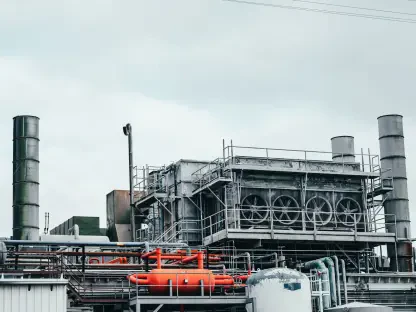
The manufacturing complex in Maharashtra serves as the physical manifestation of JSW’s ambition, featuring a highly versatile production line designed to handle both urban buses and heavy-duty electric trucks. This facility integrates cutting-edge Japanese manufacturing standards, specifically through an automated Pre-Treatment and Electro-Deposition paint process provided by Taikisha. Such advanced systems are essential for producing vehicles capable of withstanding the corrosive and harsh environments typical of industrial sites. By focusing on durability and structural integrity, the group ensures that its fleet can provide long-term service in sectors where mechanical failure often leads to massive operational losses. This commitment to engineering excellence allows the brand to compete with established global manufacturers while maintaining a distinct focus on the unique topographical and climatic requirements of the Indian subcontinent.
The financial logic underpinning this expansion is rooted in the pursuit of superior capital efficiency compared to legacy operations. Internal analysis suggests that the electric vehicle business offers significantly more attractive returns on invested capital and equity than the traditional steel or cement sectors. With a projected production capacity of 15,000 units annually, the group anticipates generating a top-line revenue of roughly ₹12,000 crore once the plant reaches its full operational scale. Central to this profitability is the use of a “born-electric” platform, which avoids the compromises inherent in converting existing internal combustion engine architectures. By designing the chassis from the ground up to accommodate large battery packs and electric drivetrains, the company optimizes vehicle weight and performance. This specialized approach leads to better energy efficiency and higher margins, as the vehicles are purpose-built for the rigors of heavy haulage.
Strategic Sovereignty: Maintaining Internal Technology Stacks
A primary differentiator for JSW Greentech in the current market is its unwavering commitment to technological independence. While many of its contemporaries rely on joint ventures or technology transfers from foreign partners, this venture is developing its full technology stack internally. This strategy effectively eliminates the long-term burden of royalty payments, which can often stifle the profitability of emerging manufacturers. By owning the intellectual property behind the vehicle control units and powertrain management systems, the company can rapidly iterate on its designs based on real-world data. This autonomy also allows for a higher degree of customization, ensuring that the software and hardware are perfectly tuned to handle the extreme heat and heavy loads that define local logistics. This internal control over technology is seen as a vital safeguard against future disruptions in the global supply chain.
Despite the focus on internal engineering, the group leverages international expertise for specific aesthetic and ergonomic elements to ensure the vehicles meet global standards. The partnership with Torino provides a sophisticated design language that complements the rugged engineering developed in India. This blend of international style and local functional robustness is intended to make the Ampstar brand appealing to both domestic logistics firms and potential export markets. The focus remains on “technological sovereignty,” meaning that even when outside designers contribute to the look and feel, the core mechanics and digital infrastructure remain firmly under the company’s control. This model provides a blueprint for how domestic firms can transition into high-tech manufacturing without becoming overly dependent on external entities, thereby strengthening the industrial base of the country.
Captive Demand: De-risking Entry Through Internal Markets
One of the most significant barriers to success for new entrants in the commercial vehicle market is the initial lack of a verified customer base. JSW Group has addressed this challenge through a “captive demand” strategy that utilizes its own sprawling industrial ecosystem as a primary market. The broader JSW and OP Jindal groups provide an immediate requirement for approximately 10,000 electric trucks to handle internal logistics. These vehicles are currently being deployed to transport raw materials like clinker, slag, and iron ore at various plant locations. This internal demand provides a massive, guaranteed order book that allows the manufacturing facility to scale production safely. It serves as a financial safety net, ensuring that the heavy investment in the Maharashtra plant is supported by consistent utilization rates from day one, rather than relying solely on the fluctuations of the open market.
Beyond the financial security provided by internal orders, these operations act as a massive real-world laboratory. A fleet of 100 units is already undergoing intensive trials within the group’s steel and cement facilities, where they are subjected to some of the most demanding operational conditions imaginable. This allows engineers to gather granular data on battery degradation, motor performance under load, and structural durability before the vehicles are marketed to external logistics providers. By fine-tuning the product within its own ecosystem, the company can resolve technical issues and optimize maintenance schedules in a controlled environment. This symbiotic relationship between the manufacturer and its parent company’s logistics arm ensures that when the vehicles are eventually sold to third-party clients, they have already been proven in the most rigorous industrial settings.
Infrastructure Solutions: Solving the Charging Paradox
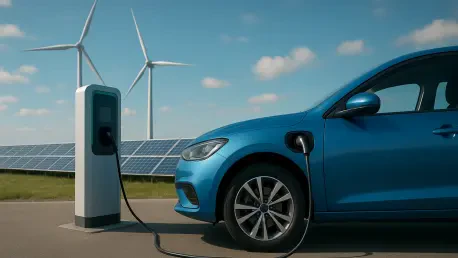
The adoption of electric trucks has historically been limited by the lack of widespread charging infrastructure capable of handling heavy-duty requirements. To overcome this, JSW Greentech is implementing a point-to-point corridor strategy that focuses on specific industrial routes rather than waiting for a national network. This involves installing high-capacity fast chargers at designated hubs, allowing vehicles to reach full power in approximately 60 minutes. Furthermore, the group is pioneering ultra-fast battery swapping technology, which can replace a depleted unit in just seven minutes. This is particularly effective for high-utilization routes, such as the logistics corridors connecting major ports to inland industrial hubs. By controlling the infrastructure as well as the vehicles, the company offers an integrated solution that directly addresses the “range anxiety” that often prevents fleet operators from making the switch.
Technical advancements in battery technology are continuing to push the boundaries of what these electric trucks can achieve in terms of distance. Current models utilize a 282 kWh battery pack that provides a reliable range of 150 kilometers, which is sufficient for most short-to-medium haul industrial tasks. However, the engineering team is currently finalizing a more robust 400 kWh battery configuration designed for fixed-charge setups, which is expected to increase the range to 200 kilometers shortly. This progress is essential for expanding the utility of the vehicles beyond internal plant operations and into the broader regional logistics market. By incrementally improving energy density and charging speeds, the group is ensuring that its electric offerings remain a viable and cost-effective alternative to traditional diesel-powered trucks, even as operational requirements become more demanding.
Future Horizons: Localization and Alternative Energy Pathways
The path to long-term profitability and market dominance is paved with an aggressive localization roadmap designed to minimize costs and capitalize on government incentives. Currently, the bus segment has achieved a domestic value addition of approximately 75%, and the goal is to reach a similar level for the truck segment within the next year. Most components are sourced from within the domestic supply chain, with imports limited only to specialized items like high-performance motor magnets and specific battery chemistries. This high degree of localization makes the vehicles more affordable and protects the company from the volatility of international trade and exchange rate fluctuations. Furthermore, by aligning with national initiatives such as the PM E-DRIVE scheme, the group ensures that its expansion is supported by favorable regulatory tailwinds and financial subsidies.
Looking beyond the immediate focus on heavy trucks and urban transport, the group has established a five-year vision that includes expansion into light and small commercial vehicles. This move will eventually require the development of a comprehensive dealer and service network, transitioning the company from a direct-to-industry model to a broader commercial presence. While battery technology is the current priority, the group is also positioning itself as a leader in hydrogen research, viewing it as the ultimate solution for long-haul, heavy-duty transport. This dual-track approach ensures that the company remains flexible as energy technologies evolve. By maintaining a forward-looking perspective on alternative fuels, JSW Greentech is preparing for a future where clean energy is not just an environmental preference but a fundamental requirement for the global logistics and transportation industry.
Redefining the Industrial Logistics Landscape
The initiatives undertaken by JSW Greentech established a definitive framework for how traditional industrial conglomerates successfully transitioned into the green economy. By focusing on internal demand and technological independence, the company effectively bypassed many of the common pitfalls that hindered early adopters in the electric vehicle space. The implementation of dedicated charging corridors and battery swapping stations demonstrated a practical approach to infrastructure that other industry players began to emulate. These actions not only reduced the carbon footprint of heavy manufacturing but also proved that sustainable logistics could be more cost-effective than traditional methods over the long term. Moving forward, the focus must remain on scaling these technologies across wider regional networks and accelerating the development of hydrogen-based solutions to achieve a truly carbon-neutral transport ecosystem for the entire nation.