
The Philippine textile industry has long navigated the turbulent waters of global competition, seeking a unique niche that balances traditional craftsmanship with the relentless demands of modern industrial efficiency. While the archipelago is famous for its intricate hand-woven fabrics like the T’nalak and Piña, these labor-intensive processes often struggle to scale for the massive global demand seen in the medical, construction, and filtration sectors. Nonwoven technology presents a transformative opportunity by bypassing the traditional spinning and weaving stages altogether, instead bonding fibers directly through mechanical, thermal, or chemical means. This shift allows for the rapid production of high-performance materials that are essential for the next generation of industrial applications. By adopting these methods, local manufacturers can move beyond small-batch artisanal goods toward high-volume production. This evolution creates a versatile industrial base capable of producing specialized products that meet rigorous international standards.
Advanced Manufacturing: The Engineering of Modern Fabrics
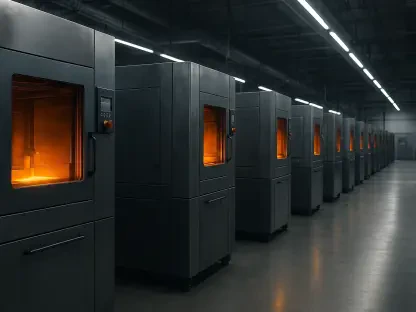
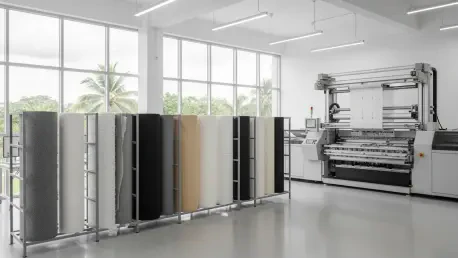
The adoption of nonwoven manufacturing involves several sophisticated engineering techniques that fundamentally change how raw materials are handled on the factory floor. Spunbond and meltblown technologies are currently at the forefront of this industrial transition, particularly as the demand for filtration media and protective equipment remains high from 2026 to 2028. These processes involve extruding molten polymers through fine nozzles to create microfibers that are immediately laid into a web and bonded. Unlike woven fabrics that rely on the interlacing of yarns, nonwovens achieve structural integrity through the entanglement of fibers, resulting in a material that can be engineered for specific porosities or tensile strengths. This precision is vital for the development of advanced air filtration systems and medical-grade masks. Furthermore, the ability to control fiber density at a microscopic level allows for the creation of lightweight yet durable components used in the automotive sector.
To facilitate this technological leap, the Philippine government, through the Philippine Textile Research Institute, has established dedicated facilities that bridge the gap between academic research and commercial application. The Innovation Center for Yarns and Textiles now serves as a testing ground for local companies looking to pilot new nonwoven products without the prohibitive initial costs of full-scale machinery. This institutional support has led to the successful prototyping of geotextiles, which are increasingly utilized in domestic infrastructure projects for soil stabilization and erosion control. By utilizing local expertise to develop these materials, the country reduces its reliance on expensive imports while simultaneously building a workforce skilled in high-tech textile engineering. The transition toward automated nonwoven production also allows for a more consistent quality control process compared to manual methods. This consistency is a prerequisite for entering the global supply chain, where buyers demand uniform specifications.
Material Innovation: Merging Heritage Fibers with Modern Utility
A significant advantage of nonwoven technology in the local context is its ability to utilize indigenous fibers like abaca, banana, and pineapple in ways that were previously impractical. These natural materials possess exceptional mechanical properties, such as the high tensile strength of abaca, which makes them ideal candidates for reinforced nonwoven mats used in sound insulation and interior cladding. By blending these local lignocellulosic fibers with recycled polymers, manufacturers are creating hybrid materials that offer superior environmental benefits compared to purely synthetic alternatives. This approach not only enhances the performance characteristics of the textiles but also creates a direct economic link between high-tech manufacturing and the agricultural sector. As global consumers increasingly demand sustainable products, the use of endemic Philippine fibers in nonwoven applications provides a distinct competitive edge. This bio-based manufacturing model effectively turns agricultural byproducts into high-value industrial assets for the nation.
The industry recognized that the successful integration of nonwoven technology required a comprehensive strategy that prioritized both technical training and capital investment. Stakeholders determined that the most effective path forward involved the creation of specialized textile economic zones where manufacturers could access shared infrastructure and streamlined regulatory processes. They also realized that branding these materials as premium, eco-friendly Philippine products was essential for penetrating mature markets in North America and Europe. Government agencies and private partners established long-term research grants that focused on the biodegradability of nonwoven composites to ensure the industry remained compliant with tightening global environmental laws. This proactive stance ensured that the transition was not merely a reaction to current trends but a deliberate move toward a resilient future. Ultimately, the decision to invest in nonwoven capabilities provided the necessary foundation for a diverse textile ecosystem.