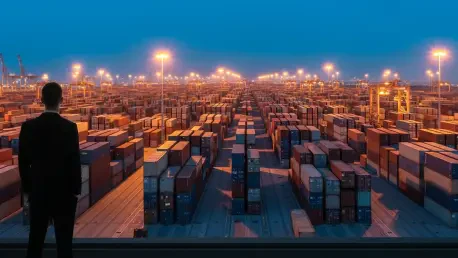

The standardized steel box that travels from distant industrial ports to the local warehouse may seem like a mundane artifact of trade, but its availability dictates the price of nearly every consumer item in America. While families across the nation navigated the deep economic uncertainty of recent years, the cost of these essential vessels doubled in a silent surge that felt like a natural disaster. However, recent findings by federal investigators suggest that this price hike was no accident of the market, but rather a calculated strategy designed to drain resources from the global supply chain.
The Department of Justice’s unsealing of a massive indictment against four global manufacturing titans marks a turning point in the fight against international corporate collusion. By targeting the primary infrastructure of modern commerce, these companies—CIMC, Dong Fang, CXIC, and Singamas—allegedly orchestrated a cartel that turned a global logistics crisis into a private goldmine. This case is particularly significant because it illustrates how the subversion of fair competition can lead to a hidden tax on every household, inflating the cost of living under the guise of scarcity.
The Hidden Surcharge on Every Consumer Purchase
As the global economy faced unprecedented fragility, the defendants reportedly realized that controlling the supply of unrefrigerated intermodal containers would give them leverage over the entire world of retail. By coordinating their efforts, they ensured that shipping lines had no choice but to pay premium prices for the very equipment needed to move medicine, electronics, and clothing. This was not a temporary adjustment to rising labor costs; it was a deliberate effort to ensure that the primary tools of international trade remained artificially scarce and prohibitively expensive.
The impact of this scheme was felt most acutely by small businesses and average consumers who were already struggling with inflation. When the cost of a shipping container doubles, that expense does not disappear—it is passed down the line until it reaches the final price tag on a retail shelf. This orchestrated inflation allowed the cartel to siphon billions of dollars from the global economy, effectively turning a period of collective hardship into a window of historic profitability for a select few manufacturing executives.
From Global Vulnerability to Corporate Opportunity
The timing of the conspiracy was as precise as it was predatory, beginning as the supply chain started to fracture under global pressure. The defendants recognized that the market for shipping containers was uniquely susceptible to manipulation because there are so few major players capable of producing them at scale. By aligning their interests, these firms effectively neutralized the competitive forces that typically keep prices in check, allowing them to dictate terms to the world’s largest logistics providers and shipping lines.
This exploitation of economic vulnerability highlights a dangerous trend in global manufacturing where essential infrastructure is controlled by a handful of entities. The indictment serves as a stark reminder that without aggressive antitrust enforcement, the “invisible hand” of the market can be replaced by the heavy hand of a cartel. For the American consumer, the stakes are high, as the stability of international trade routes depends on the integrity of the companies that build the containers that move the world’s goods.
Surveillance and Quotas: How the Cartel Enforced Compliance
Maintaining a cartel requires more than just a handshake; it requires a level of internal policing that borders on the dystopian. To ensure that no single member “cheated” by producing more containers than their assigned quota, the conspirators reportedly established an invasive monitoring network. The indictment details the installation of 87 surveillance cameras across 49 production lines, allowing the companies to watch each other in real-time. This digital panopticon was designed to suppress competition from within, ensuring that supply never rose enough to lower the market price.
Furthermore, the defendants allegedly implemented a rigid system of output restrictions that included a total ban on the construction of new manufacturing facilities. They went as far as limiting factory shifts and operational hours to prevent any one manufacturer from meeting the high demand of the global market. To solidify this control, a financial penalty fund was reportedly established, forcing any member who dared to increase their production to pay a fine into a shared account, effectively taxing any attempt at genuine competition.
Quantifying the Financial Impact of the Sherman Act Violation
The financial results of this collusion were nothing short of extraordinary, as evidenced by the dramatic shifts in the companies’ balance sheets during the height of the scheme. CIMC, for instance, saw its profits explode from roughly $19.8 million in one year to a staggering $1.75 billion just two years later. Meanwhile, Singamas managed to pivot from a significant loss of $110 million to a profit of nearly $187 million. These figures represent a massive transfer of wealth from the shipping industry and the general public to the coffers of a few dominant manufacturers.
The legal fallout has already begun with the arrest of Vick Nam Hing Ma, the Marketing Director for Singamas, who was recently apprehended in France. As he awaits extradition to the United States, federal authorities continue to hunt for six other high-ranking executives who remain at large. These individuals face severe charges under the Sherman Antitrust Act, a law designed to prevent exactly this kind of market manipulation. The scale of the recovery and the potential for long-term prison sentences signal that the DOJ intends to make this case a landmark in international law enforcement.
Identifying Red Flags in Global Shipping and Logistics Procurement
For professionals within the logistics and procurement sectors, this case provides a valuable blueprint for spotting future anti-competitive behavior. One of the most prominent red flags is a sudden, uniform increase in pricing across all major suppliers that cannot be explained by fluctuations in raw material costs, such as steel or labor. Organizations should now prioritize rigorous auditing of their supply chains and demand greater transparency regarding manufacturing capacities. Developing a diversified procurement strategy is no longer just a logistical necessity; it is a vital defense against the artificial scarcity created by cartels.
Moving forward, shipping lines and retailers must engage in industry-wide transparency initiatives to protect the integrity of the market. Staying informed on antitrust enforcement actions and participating in collaborative monitoring efforts can help identify anomalies before they evolve into global crises. By fostering a more transparent and competitive environment, the logistics industry can ensure that the infrastructure of trade remains a service to the global economy rather than a tool for corporate exploitation. This enforcement action served as a necessary catalyst for reform, prompting a broader investigation into the vulnerabilities of the global supply chain.