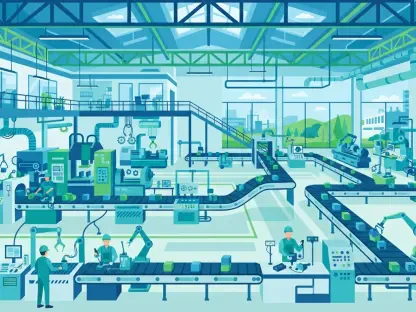

Advanced manufacturing tools and artificial intelligence have lowered the entry barrier for production, making it easier for bad actors to introduce substandard parts into the market. This development has forced a paradigm shift within the Georgia Tech Manufacturing Institute, where researchers are now prioritizing the creation of Digital Product Passports to verify industrial integrity. A Digital Product Passport functions as a comprehensive, centralized digital record that documents an item’s entire lifecycle, from the raw materials used in production to its eventual disposal or recycling. By consolidating data regarding production processes, material sources, and quality inspections, these passports provide the transparency and traceability required by modern industrial auditing standards. The demand for this technology is surging as the industry faces a growing crisis of authenticity. Current projections indicate the global sector will experience an annual growth rate of thirty-six percent through the years from 2026 to 2033.
Securing Critical Defense: Infrastructure and Supply Chain Risks
The impetus for Digital Product Passport adoption is perhaps most urgent within the United States defense industrial base. The Department of Defense estimates that approximately fifteen percent of spare and replacement electronic parts in its inventory are counterfeit. These components often enter the system through thousands of small- and mid-sized suppliers that constitute the lower tiers of the supply chain. Tom Kurfess, Ph.D., the executive director of the Georgia Tech Manufacturing Institute, highlights a sobering reality: without rigorous verification, a single compromised manufacturing controller or a solitary “out-of-spec” part can result in the catastrophic failure of a weapon system or the total cessation of a production line. This vulnerability is exacerbated by the increasing complexity of modern hardware, which often involves dozens of global subcontractors. Ensuring that each piece of equipment adheres to strict federal guidelines is now a matter of national security.
The security risks extend beyond mere counterfeiting to include more insidious forms of industrial sabotage. Researchers at Georgia Tech have identified the threat of logic bombs, which are malicious codes inserted into digital design files. These components appear perfectly normal during visual inspection but are programmed to fail upon command or under specific operational conditions. Furthermore, imported robotics and machine tools may arrive with pre-installed software that creates backdoors for outside actors to exploit. Because many legacy manufacturing machines were designed for reliability rather than modern cybersecurity, they lack the defensive layers common in the finance or energy sectors. This makes them prime targets for data theft or physical manipulation. Protecting these assets requires a move toward a zero-trust architecture in manufacturing, where every machine and every file must provide cryptographic proof of its integrity.
Case Studies: Aerospace Verification and Commercial Excellence
The versatility of the Digital Product Passport infrastructure is evidenced by its application in the high-stakes aerospace sector. In this industry, the primary goal is high-confidence verification to ensure that every component of a vehicle is legitimate and safe. A passport allows a component for an F-35 jet engine to prove its origin, confirming it was manufactured to precise specifications and is not a counterfeit replacement. This level of certainty is vital for critical components like turbine blades or brake calipers, where even a minute dimensional variation can lead to catastrophic failure. By linking the physical part to its digital twin, engineers can track the exact stress tests and material certifications associated with that specific serial number. This process creates a transparent record that can be audited instantly by safety inspectors, reducing the time required for maintenance while increasing the safety of pilots who rely on these systems.
This technology is also being utilized in commercial manufacturing to optimize quality for consumer goods. Toto USA, a leading manufacturer of plumbing fixtures, utilizes a passport-style system in its Georgia facility to track its high-volume production. Because products like toilets and bidets undergo intense firing in kilns, the company employs specialized heat-resistant QR codes that can survive extreme temperatures. These codes allow for real-time tracking of humidity conditions during the manufacturing process, the specific steps taken, and the identity of the personnel involved. This ensures that even in a high-volume facility producing three hundred thousand units annually, every single product can be audited for structural integrity. If a defect is discovered, the company can trace it back to the exact moment in the production cycle when the error occurred. This granular level of detail allows for a more efficient response to quality issues and prevents faulty products from reaching consumers.
Digital Integration: Empowering the Missing Middle of Production
A significant portion of recent research focuses on the small- and mid-sized businesses that supply essential parts like nuts, bolts, and castings to industrial giants. These smaller entities often lack the internal IT resources or cybersecurity expertise to meet the stringent requirements of modern defense contracts. To bridge this gap, engineers are developing automated cloud-based tools that track measurements and verify quality without requiring the supplier to build a complex infrastructure from scratch. This initiative ensures that smaller shops can remain competitive in a digital-first economy by providing them with the tools needed to prove their compliance with international standards. By lowering the cost of digital integration, Georgia Tech is helping to fortify the entire supply chain, ensuring that even the smallest component is backed by verifiable data. This democratization of technology is essential for maintaining a diverse and resilient manufacturing base.
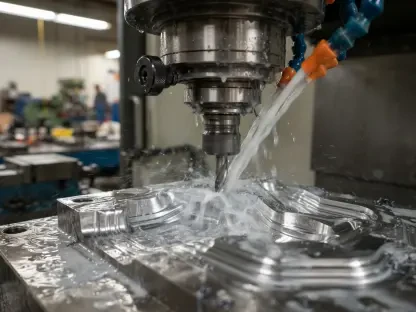
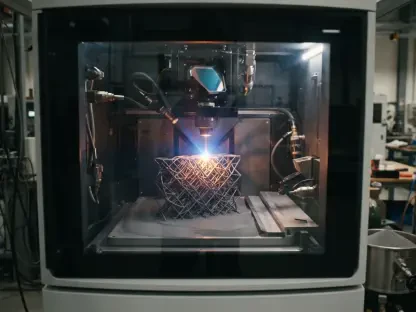
This effort is centered at the Advanced Manufacturing Pilot Facility, where artificial intelligence and knowledge management systems enable connected machines to communicate with one another. By verifying material composition and durability during the manufacturing process rather than after the fact, manufacturers can confirm they are meeting specifications in real-time. This prevents shipping delays and ensures that the final product matches the intended design perfectly. The facility serves as a testing ground for how AI can be used to identify subtle deviations in the manufacturing process that might go unnoticed by human inspectors. For example, sensors can detect microscopic fluctuations in a 3D printer’s laser intensity or a CNC machine’s vibration, flagging these issues before they result in a compromised part. This proactive approach to quality assurance is a cornerstone of the next industrial revolution, where data-driven insights are used to guarantee performance and safety.
Strategic Outcomes: Findings From the Georgia Tech Initiative
The synthesis of research from multiple institutes led to several definitive findings regarding the necessity of digital verification. It was determined that quality parts were insufficient without a verifiable digital history to combat the rising counterfeit rate in critical sectors. Researchers established that manufacturing security had to evolve to protect against logic bombs and compromised hardware, treating operational data as a high-value target. The integration of AI and Digital Product Passports allowed for quality checks during production, which effectively reduced waste and increased confidence in final products. For the defense industrial base to remain secure, digital tools were standardized and made accessible to thousands of small-tier suppliers who previously lacked the resources for advanced cybersecurity. These findings provided a blueprint for industrial resilience that relied on cryptographic proof rather than simple physical inspection, ensuring every link in the supply chain stayed verified.
Building on these established findings, manufacturers began implementing automated verification protocols as a standard requirement for all federal contracts starting in late 2026. This systemic change required suppliers to adopt interoperable data formats that could be audited by both humans and autonomous agents. The move toward digital passports ensured that every material alloy and dimensional measurement was recorded in a tamper-proof ledger, preventing the inclusion of substandard materials. Future industrial development shifted toward a model where the digital twin of a component was as essential as the physical part itself. By 2027 and 2028, these protocols became the foundation for a global circular economy, allowing for easier recycling and material recovery. The initiative proved that transparency was not merely a regulatory burden but a competitive advantage that fostered deep trust between manufacturers and their end users across the entire international market.