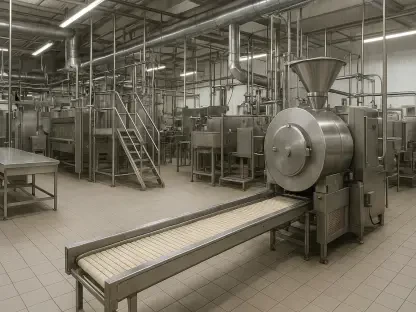

While many industrial giants struggle to maintain stability in a shifting economy, GHCL Ltd has demonstrated that fiscal resilience often resides within the quiet efficiency of a lean and well-oiled balance sheet. In the first quarter of the 2026-27 fiscal year, the company defied the common expectation that profitability must mirror sales growth. By reporting a significant surge in net earnings despite a dip in total income, the firm established a new precedent for operational agility in a tightening market. This performance suggests that internal discipline can serve as a powerful hedge against external economic stagnation.
The Financial Paradox: Growth Amidst Contracting Revenue
The recent financial results present a fascinatng contradiction that challenges standard market logic. While total income saw a contraction of roughly 3.06% to settle at ₹798.01 crore, the bottom line expanded by an impressive 32%. This outcome indicates that the management has shifted its primary focus from aggressive market expansion to the meticulous protection of margins.
Instead of chasing lower-margin sales to inflate revenue figures, the company prioritized high-value transactions and internal resource management. This strategic trade-off allowed for a healthier cash flow, proving that a smaller, more efficient operation can often outperform a bloated one during periods of economic transition. The ability to grow profit while revenue shrinks highlights a robust defensive posture.
Navigating the Volatile Global Chemical Landscape
Operating as India’s premier single-location soda ash manufacturer, GHCL finds itself at the heart of a global supply chain defined by unpredictability. The facility in Gujarat, which produces 1.2 million tonnes annually, must contend with a landscape where geopolitical friction frequently dictates the cost of logistics. Shipping delays and maritime disruptions have become recurring obstacles, forcing industrial players to rethink distribution.
The soda ash industry reflects these broader pressures, as it serves diverse sectors from glass manufacturing to detergents. Maintaining a steady output while global energy prices fluctuate requires a sophisticated understanding of macro-economic trends. By leveraging its dominant position in the domestic market, the company has managed to maintain its role as a stable supplier even as global competitors struggle with inconsistent material availability.
Analyzing the Mechanics of Disciplined Cost Optimization
The financial data reveals a masterclass in how targeted expense reduction can transform a company’s profit profile. Net profit climbed to ₹191.18 crore from ₹144.78 crore in the previous year, primarily due to a deliberate reduction in total expenses. These costs fell to ₹594.10 crore, indicating that the firm successfully capitalized on favorable input prices and improved its procurement protocols to mitigate lower sales volumes.
Furthermore, the streamlining of operational execution played a decisive role in protecting the company’s financial health. By optimizing energy consumption at its Gujarat plant and refining labor distribution, GHCL lowered the break-even point for its core products. This disciplined approach ensured that every unit of revenue generated contributed more significantly to the final profit margin than in previous fiscal cycles.
Leadership Perspectives: Market Pressures and Supply Surpluses
Managing Director R.S. Jalan has articulated a vision that balances current success with a realistic appraisal of upcoming challenges. The leadership team remains acutely aware that the surplus of global soda ash supply could eventually cap price realizations. This awareness drives the current focus on cost defense, as the organization prepares for a scenario where market prices might remain flat or decline due to oversupply.
Market analysts note that the persistent pressure on margins is a structural issue rather than a temporary hurdle. Consequently, the management has prioritized transparency regarding the fragility of the current economic environment. By acknowledging the risks of supply imbalances early, the company adjusted its production schedules to avoid the pitfalls of overproduction, thereby maintaining a competitive edge.
Strategic Diversification: The Pivot Toward Green Energy
The roadmap for future growth extended beyond the traditional confines of the soda ash market. GHCL finalized the commissioning of new projects in Bromine and Vacuum Salt, with commercial operations slated for the second quarter. These ventures represented a calculated move to reduce reliance on a single commodity and tap into high-growth specialized chemical markets. This diversification provided a stable revenue base less susceptible to the cyclical nature of the detergent industry.
By positioning itself as a primary supplier for solar glass manufacturers and lithium-ion battery producers, the company sought to integrate its operations into the clean energy supply chain. These strategic initiatives provided a buffer against traditional market shocks while opening doors to long-term partnerships in the high-tech sector. The organization essentially transitioned into a critical enabler of the modern energy economy, ensuring its relevance for the next decade of industrial evolution.