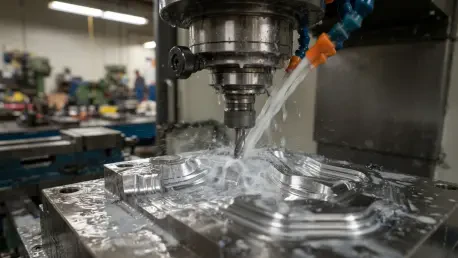

The geometric complexity of the upper mold half consistently results in longer machining times than the lower half, regardless of the parameters selected. This fundamental reality underscores the significant challenges faced by manufacturers in 2026 as they strive to produce high-precision medical devices using computer numerical control (CNC) technology. The production of prosthetic foot molds requires navigating a delicate intersection between engineering precision and operational efficiency, where every minute saved on the shop floor must not compromise the surface integrity of the final product. Typically crafted from AISI 1020 low-carbon steel, these molds serve as the essential foundation for molding the polymer and rubber components that patients rely on for daily mobility. Achieving a balance between minimizing the cycle time and ensuring a smooth, biocompatible finish is a persistent industrial hurdle. As the demand for personalized prosthetics grows, finding a reliable process window becomes vital for maintaining commercial viability while meeting high standards.
Analyzing Key Variables in the Milling Process
The Influence of Stepover and Feed Rate on Production Speed
In the specialized context of finishing a complex, freeform cavity such as a prosthetic foot mold, the stepover distance emerged as the most critical factor influencing total production speed. Technically defined as the lateral distance between adjacent tool passes, the stepover effectively dictates the density of the toolpath across the steel surface. Extensive testing through statistical frameworks reveals that stepover accounts for approximately 53 percent of the variation in machining time. This dominance is logically consistent with the physics of milling, as a larger stepover allows the machine to cover the required surface area in significantly fewer passes, thereby shortening the total path length the tool must travel. By increasing the stepover from 0.15 mm to 0.45 mm, facilities can drastically reduce the machine-hour costs associated with high-complexity molds, though this efficiency usually comes with a clear cost in surface smoothness.
While stepover remains the primary driver of efficiency, the feed rate serves as a secondary but essential variable in the pursuit of faster production cycles. In current manufacturing environments, the speed at which the 10 mm carbide ball end mill traverses the workpiece contributes roughly 39 percent to the total time variation observed during finishing operations. Manufacturers using advanced control systems, such as the Siemens Sinumerik 808D, find that pushing the feed rate to higher levels can help claw back time lost to intricate geometry. However, the influence of feed rate is always constrained by the path density established by the stepover. It is important to note that while increasing the feed rate accelerates the tool movement, it does not change the physical distance the tool must cover. Consequently, even the most aggressive feed rates cannot fully compensate for a very tight stepover setting, highlighting why process designers must prioritize stepover as the first step in optimization.
The Impact of Cutting Parameters on Surface Integrity
The quality of a prosthetic mold is measured by its surface roughness, a metric that is governed almost entirely by the physical phenomenon known as scallop height. When a hemispherical ball end mill moves across the metal surface, it leaves behind small ridges or cusps of uncut material between its parallel passes. Data indicates that stepover dictates a staggering 81.77 percent of the variation in surface roughness, making it the undeniable master dial for mold quality. As the stepover increases, these cusps become taller and more pronounced, resulting in a coarser arithmetic mean surface roughness. In the delicate manufacturing of medical prosthetics, where the final polymer foot must avoid irritating sensitive tissue or having structural weak points, maintaining a low scallop height is non-negotiable. Achieving an ideal finish often requires manufacturers to accept longer cycle times, as the correlation between a tight stepover and a superior surface finish is nearly linear and unavoidable.
An interesting finding in recent milling analysis is the negligible impact of the axial depth of cut on the final surface integrity during finishing stages. While depth of cut is vital during roughing operations to remove large amounts of bulk material, it was found to contribute less than one percent to the variation in surface roughness in the final passes. Because the amount of stock material remaining after roughing is usually constant, changing the depth of the finishing cut does not alter the toolpath length or the height of the scallops left by the tool. This insight allows CNC programmers to set the axial depth at a level that ensures tool stability and minimizes vibration without worrying that it will degrade the mold quality. Focusing resources on optimizing stepover rather than adjusting the depth of cut proves to be a more efficient strategy for technicians aiming to meet the strict tolerances required for high-performance prosthetic devices that must endure repeated stress.
Strategic Optimization for Geometric and Shop Constraints
Overcoming Anatomical Complexity in Mold Design
The anatomical complexity of the human foot creates a significant disparity in how the upper and lower mold halves respond to the CNC milling process. Unlike symmetrical components, a prosthetic foot mold features unique freeform surfaces with varying orientations and depth requirements that challenge standard machining logic. The upper mold half typically contains more complex cavity structures and steeper transitions, which translates to a longer and more intricate toolpath compared to the lower half. In practical scenarios, even when using identical machining parameters, the upper section can require over an extra hour of machine time for the finishing pass alone. This geometric imbalance means that production schedules cannot be calculated based on a single average; instead, they must account for the specific demands of each half. Understanding this disparity is crucial for medical manufacturing facilities that need to synchronize their production lines and avoid bottlenecks.
Managing the geometric disparity requires a sophisticated approach to CNC programming where toolpath strategies are tailored to the specific curvature of each mold segment. Because the upper mold half often involves more complex 3D contours, the risk of tool deflection or localized heat buildup is higher, which can affect the consistency of the final finish. Professional machinists in 2026 increasingly use adaptive toolpath software to maintain constant engagement with the AISI 1020 steel, but the underlying geometric reality remains. This complexity disparity also impacts the choice of cooling strategies, where flood cooling must be consistently applied to ensure that the more demanding upper cavity does not suffer from thermal expansion that could compromise dimensional accuracy. By acknowledging that the upper and lower halves are fundamentally different workpieces despite being part of the same mold, engineers can better predict tool life and maintenance cycles, leading to a more reliable manufacturing workflow.
Implementing Data-Driven Multi-Objective Solutions
The successful optimization of CNC milling for prosthetic foot molds required a transition from traditional trial-and-error techniques to a sophisticated, data-driven methodology. By identifying stepover as the primary determinant of both efficiency and quality, manufacturers established a reliable framework for consistent production. The application of multi-objective optimization provided a practical solution that balanced the economic demand for speed with the medical necessity for surface integrity. This approach ensured that AISI 1020 steel molds were produced with high dimensional accuracy, which facilitated easier demolding and better performance of the final prosthetic components. Facilities that adopted these refined parameters experienced a notable reduction in manual finishing labor and improved their total production throughput. Moving forward, continued research into tool wear patterns and the integration of real-time sensor data will likely further enhance the precision and reliability of these essential manufacturing processes.
To resolve the inherent conflict between the desire for rapid production and the necessity for a pristine surface finish, manufacturers often utilized a desirability function. This mathematical strategy allowed engineers to assign relative importance to different goals, such as minimizing machining time while simultaneously reducing surface roughness. The objective was to find a sweet spot in the process window where the gains in quality were maximized without causing an unsustainable increase in machine-hour costs. Analysis showed that an intermediate stepover of approximately 0.30 mm, combined with a high feed rate, often provided the best overall outcome. This specific configuration produced a surface roughness that represented a massive improvement in quality over the fastest possible settings. Such a balanced approach was essential for producing high-end prosthetics that required minimal post-processing labor. By opting for a multi-objective solution, facilities maintained high throughput while ensuring that the resulting molds produced high-quality parts.