
The seamless transition from digital blueprints to physical components through additive manufacturing has effectively dismantled the centuries-old barrier between complex engineering theory and practical industrial application. By constructing objects layer by layer rather than carving them away from a solid block, this technology offers a level of design freedom that was previously dismissed as a mathematical impossibility. In the current production landscape, the historical correlation between an object’s geometric complexity and its manufacturing cost has been severed, allowing designers to prioritize performance over ease of fabrication. This shift toward a more fluid manufacturing process means that intricate internal cooling channels or lattice-structured reinforcements no longer require expensive specialized tooling or labor-intensive assembly. Consequently, businesses can now iterate rapidly, moving from a conceptual prototype to a final functional part in a fraction of the time required by traditional methods. This evolution has democratized production, enabling small-scale creators to compete by using high-precision systems to produce specialized components that are optimized for specific environments, leading to a resilient and versatile global supply chain.
Personalizing Healthcare and Medical Devices
The medical sector represents one of the most successful applications of additive manufacturing, specifically regarding the production of patient-specific prosthetics and implants. For many years, patients requiring reconstructive surgery or prosthetic limbs were forced to wait weeks for standardized components that often necessitated painful adjustments to achieve an acceptable fit. Today, however, clinicians utilize high-resolution imaging data from MRI and CT scans to generate digital models that are exact replicas of a patient’s unique skeletal structure. This data is then sent directly to a 3D printer, which can produce a titanium bone graft or a custom prosthetic socket that fits with sub-millimeter precision. This level of personalization not only reduces the time spent in the operating room but also significantly improves the long-term comfort and mobility of the recipient. Furthermore, the ability to manufacture these devices locally has proven vital in providing rapid medical interventions in underserved regions where traditional supply chains are often disrupted or non-existent, ensuring that life-changing technology is accessible to those who need it most.
Beyond surgical implants, the decentralization of manufacturing is fundamentally changing how dental care and emergency medical services are delivered to the public. In the field of dentistry, the transition to digital workflows has allowed for the rapid fabrication of crowns, bridges, and dentures that are more accurate than those made using traditional clay impressions. By printing these items on-site, dental offices can provide same-day service, eliminating the need for temporary fittings and multiple follow-up appointments. This trend toward localized production is also expanding into the realm of home-based healthcare, where researchers are exploring the possibility of printing personalized medication dosages or basic medical tools. This move away from the “one-size-fits-all” mentality ensures that medical care is as unique as the patient receiving it. As hospitals continue to integrate additive manufacturing labs within their facilities, the traditional model of centralized mass production will likely give way to a more agile, patient-centered infrastructure that prioritizes immediate results and reduced logistical overhead for both providers and patients alike.
Engineering Efficiency and the Evolution of Production
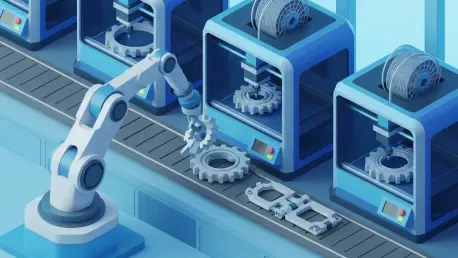
The “print-in-place” technique serves as a prime example of how additive manufacturing simplifies complex mechanical assemblies by eliminating the need for manual labor. In traditional manufacturing, a device with moving parts—such as a hinge, a gear system, or a linked chain—must be produced as a series of individual components that are later joined together using pins, bolts, or welding. This assembly phase is often the most expensive and error-prone part of the production cycle, as each connection point introduces a potential site for mechanical failure. 3D printing bypasses this entire stage by leaving microscopic gaps between moving elements during the printing process, allowing the functional system to emerge as a single, integrated unit. This capability not only reduces the weight and material waste of the final product but also ensures that the internal tolerances are perfectly maintained. The result is a more durable and reliable mechanism that can be deployed immediately without the overhead costs associated with a traditional assembly line, which ultimately enables engineers to experiment with designs that were previously too difficult to assemble.
The transition toward additive methods required companies to rethink their supply chains and inventory management strategies to remain competitive in a digital economy. By adopting on-demand production, organizations eliminated the need for massive warehouses and reduced the environmental impact of long-distance shipping. Furthermore, the integration of advanced material science allowed for the creation of more sustainable, biodegradable components that met rigorous industrial standards. This shift not only improved operational efficiency but also fostered a culture of continuous innovation where design limitations were no longer a primary concern. The successful implementation of these technologies provided a clear roadmap for future developments in hybrid manufacturing and autonomous production systems. Ultimately, the move to digital fabrication proved to be a decisive factor in maintaining competitiveness within a rapidly evolving global market. The lessons learned during this period established a new benchmark for excellence, where the focus remained on the development of multi-material capabilities that allowed for the creation of components with varying degrees of flexibility.