
The rapid evolution of unmanned aerial systems has created an unprecedented demand for reliable, high-performance propulsion systems that can be manufactured at a scale previously thought impossible for traditional aerospace firms. As the global landscape shifts toward the use of attritable aircraft, the pressure on engine manufacturers to deliver powerplants quickly and affordably has reached a fever pitch. Beehive Industries stands at the forefront of this industrial revolution, utilizing advanced additive manufacturing to bypass the multi-year development cycles that have long plagued the defense sector. By focusing on the Frenzy turbojet, a system designed specifically for rapid production, the organization is attempting to redefine how jet engines are conceived and built. This approach relies on a sophisticated fusion of material science and computational design, allowing for the creation of complex geometries that maximize thrust while minimizing weight. The goal is no longer just to build a superior engine, but to build thousands of them with the same precision and speed.
Scaling Production Through Additive Innovation and Strategic Integration
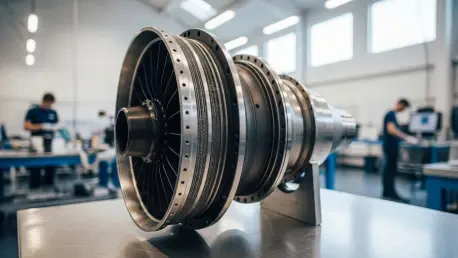
Traditional aerospace manufacturing has historically relied on casting and forging processes that involve long lead times, often stretching into years for a single engine component. Beehive Industries circumvented these delays by leveraging large-format metal 3D printing technologies that allow for the simultaneous fabrication of multiple engine parts in a single build cycle. This method not only reduces the physical footprint of the factory but also allows for immediate adjustments to the engine design without the need for expensive re-tooling. By utilizing specialized nickel-based superalloys and titanium powders, the production process ensures that the Frenzy engine maintains high thermal resistance and structural integrity under extreme operating conditions. The ability to print complex internal geometries, such as intricate cooling passages within the turbine blades, provides a performance edge that traditional methods simply cannot replicate. This shift represents a move toward a more agile supply chain that responds to real-world needs.
Beyond just the printing process, the successful scaling of the Frenzy engine production requires a radical consolidation of the total part count. Conventional small turbojets typically consist of hundreds of individual components that must be sourced, inspected, and manually assembled by skilled technicians. Through generative design and additive manufacturing, Beehive has successfully integrated dozens of these parts into single, unified structures, significantly lowering the risk of assembly errors and reducing the labor hours required per unit. This consolidation simplifies the entire logistics chain, as there are fewer sub-suppliers to manage and fewer points of failure within the engine itself. As the company expands its production capacity from 2026 to 2028, the focus is shifting toward maximizing the throughput of these integrated builds. By treating the engine as a single cohesive unit rather than a collection of disparate parts, the organization can achieve a level of manufacturing repeatability that was previously reserved for much simpler mechanical systems.
The path toward full-scale production necessitated a shift from experimental prototyping to a robust, software-driven industrial ecosystem. Industry leaders recognized that the only way to meet the burgeoning demand for propulsion was to decentralize the manufacturing process while maintaining a centralized digital command structure. This strategy involved establishing modular micro-factories that could be deployed rapidly to various regions, reducing the risks associated with centralized supply chain disruptions. Furthermore, the standardization of the digital thread ensured that every facility operated with the same calibrated parameters, guaranteeing consistent quality across the entire fleet. Moving forward, the industry prioritized the development of even more advanced recycled powder feedstocks to lower costs and improve sustainability. Stakeholders focused on securing long-term contracts with raw material providers to insulate production from market volatility. These efforts collectively ensured that the production of high-performance turbojets remained resilient and scalable.