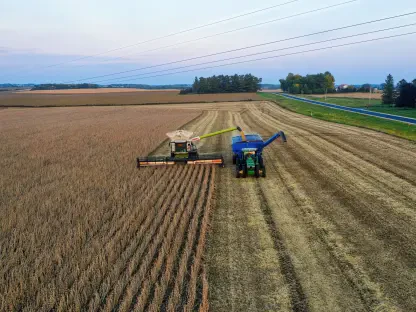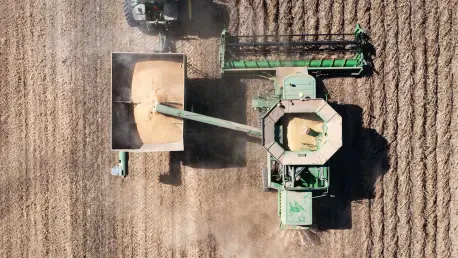

Dust-caked tractors sitting idle in the heart of the Midwest are no longer a sign of a completed harvest but a symptom of a border that has suddenly become a barrier to survival. While headlines often focus on the geopolitical posturing regarding silicon chips and industrial steel, the most devastating casualties of the 2026 U.S.-Canada trade dispute are currently found in the fertile soil of the American Heartland. What began as a diplomatic breakdown in August 2026 has rapidly evolved into a 50% tariff exchange that threatens the very mechanics of food production. For the American farmer, this isn’t just a matter of fluctuating stock prices; it is a direct tax on the seeds, machinery, and nutrients required to feed the nation.
The 49th Parallel Becomes a Financial Fault Line
The breakdown of diplomatic relations has transformed the 49th parallel from a symbol of cooperation into a significant financial fault line for agricultural producers. These tariffs serve as an immediate inflationary pressure, driving up the cost of basic inputs that farmers rely on every season. Unlike high-tech sectors that can sometimes relocate production, farming is tied to the land, leaving producers with little choice but to absorb the rising costs of cross-border commerce. The suddenness of the August 2026 breakdown left many with orders in transit that were instantly subjected to the new levies, creating an immediate liquidity crisis for small and medium-sized operations.
Beyond the immediate price hikes, the trade war has introduced a level of volatility that makes long-term planning nearly impossible. Farming is an industry that operates on thin margins and requires massive capital investment years before a profit is realized. When the cost of doing business is subject to the unpredictable nature of trade policy, the incentive to invest in new techniques or expansion disappears. This stagnation is beginning to manifest as a broader economic slowdown in rural communities, where the health of the local economy is inextricably linked to the success of the harvest.
Why the North American Trade Breakdown Matters
The integration of the U.S. and Canadian agricultural sectors is so profound that a trade war functions less like a strategic strike and more like a self-inflicted wound. This conflict matters because it disrupts a “just-in-time” supply chain where tractor parts and livestock feed cross the border multiple times before reaching their final destination. With Canada targeting American dairy and machinery, and the U.S. imposing heavy industrial levies, the cost of doing business is skyrocketing. This interconnectedness means that a tariff on Canadian steel eventually hits the American farmer in the form of more expensive equipment and infrastructure.
Historical precedents, such as the 2018 trade war with China, suggest that once market share is lost to competitors like Brazil or Argentina, it may never fully return to American soil. International buyers prioritize stability, and the current friction encourages them to seek more reliable partners who are not embroiled in trade disputes. If Canada permanently shifts its purchasing habits toward South American or Australian suppliers, the American agricultural sector could face a multi-decade struggle to regain its footing in the global market. The loss of these established trade routes represents a permanent shrinking of the economic horizon for the American Midwest.
The Triple Threat: Machinery, Market Shifts, and Mineral Scarcity
The economic impact of the 2026 conflict is manifesting through three distinct channels that increase overhead while decreasing revenue. First, the taxing of the tools of production has become an immediate concern because modern farm equipment is often assembled using cross-border components. The new tariffs act as a direct price hike on the tractors and harvesters essential for large-scale operations. When a replacement part for a combine must cross the border, the added cost is passed directly to the producer, making essential maintenance a luxury rather than a routine.
Second, a global pivot to new suppliers is already reorganizing how the world buys food. As trade barriers rise, international buyers are quickly adjusting their procurement strategies to find more stable sources of grain and produce. Evidence suggests a shift where U.S. goods are being bypassed in favor of Australian and South American products, leading to a long-term erosion of the U.S. export base. This reorganization is not merely a temporary detour but a fundamental shift in global trade routes that could leave American silos full while domestic prices are depressed by an oversupply that has nowhere to go.
Finally, the potash Achilles’ heel remains the most critical vulnerability for the Heartland. The U.S. produces less than 1% of its own potash, importing over 80% of this essential nutrient from the Elk Point Basin in Saskatchewan. If this vital mineral becomes a pawn in the trade war, American soil health faces an existential crisis that cannot be solved by simply switching suppliers. This dependence on a single geological source makes the American food supply chain incredibly fragile, as the very fertility of the land is now subject to the whims of international diplomacy.
Compounding Geopolitical Pressures and Expert Warnings
The trade war is occurring simultaneously with maritime blockades in the Strait of Hormuz, creating a “pincer movement” on the American farmer. The conflict involving Iran has choked off global nitrogen supplies, leaving 70% of farmers unable to afford full fertilizer requirements according to Farm Bureau data. This scarcity forces producers to make difficult decisions about which fields to prioritize, often leaving vast tracts of land under-fertilized and vulnerable to poor yields. The combination of high fuel costs and scarce nutrients is creating a perfect storm of operational pressure.
Expert agronomists warn that farmers are now essentially “mining” the soil by skipping potassium applications to save money in the short term. By depleting the natural reserves of the land without replacement, farmers are borrowing from the future to survive the present. This process of soil depletion takes years and massive investment to reverse, meaning the environmental and productivity costs of this trade war will linger long after the tariffs are rescinded. The land is being forced to provide more than it is being given, a cycle that is fundamentally unsustainable for the long-term health of American agriculture.
The psychological impact of trade volatility also causes farmers to reduce orders months in advance, leading to guaranteed lower yields in the following harvest cycle regardless of when the tariffs end. Research indicates that the uncertainty alone acts as a deterrent to expansion and innovation, as producers wait for a clear signal of stability. This hesitation creates a ripple effect throughout the rural economy, impacting everything from local equipment dealerships to the community banks that provide the essential credit lines for spring planting.
Strategic Adaptation in a Volatile Market
To navigate this period of unprecedented volatility, agricultural producers and stakeholders looked toward specific frameworks to protect their long-term viability. Farmers utilized soil testing and precision application technology to maximize the efficiency of existing potassium and nitrogen reserves. By minimizing waste during periods of high costs, they attempted to preserve the health of their land without incurring unsustainable debt. This focus on precision became a necessary survival tactic in a market where every ounce of input carried a heavy tariff premium.
Large-scale operations moved to diversify their input supply chains by looking beyond traditional cross-border partners. They secured equipment parts and fertilizers from alternative global sources, even when it required higher initial logistical costs and longer wait times. This shift toward supply chain resilience provided a buffer against the immediate shocks of the trade war, allowing some operations to maintain productivity while others were forced to scale back. Producers also explored cooperative buying agreements to increase their leverage when negotiating with suppliers who were passing tariff costs down the line.
Financial planning also transitioned toward conservative yield projections that accounted for lower-than-average harvests. Producers adopted debt-to-income ratios that remained manageable even during trade-induced market dips, ensuring that their family farms remained solvent despite the geopolitical turmoil. These strategic adjustments represented a fundamental evolution in agricultural management, where the ability to adapt to political disruption became as important as the ability to manage the land itself. Through these measures, the agricultural community sought to build a more resilient foundation that could withstand future shifts in international trade policy.