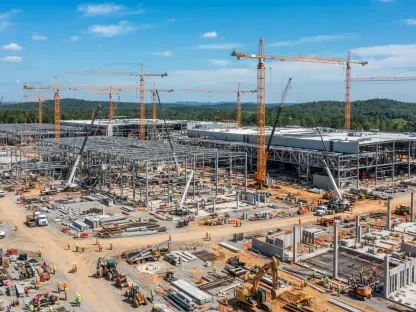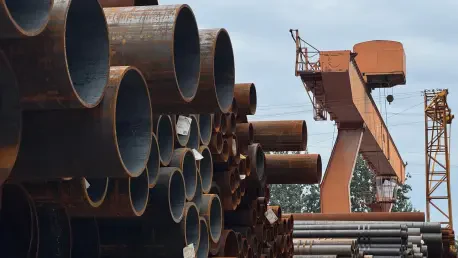

Specialized metallurgy will take center stage in Hertford County through a three-phase development designed to produce critical components for nuclear and aerospace sectors. The industrial landscape of Northeastern North Carolina stands at a pivotal juncture as U.S. Forged Rings (USFR) initiates this massive $875 million undertaking near the town of Cofield. This facility represents more than just a local business expansion; it is a vital component of a broader national strategy to secure domestic supply chains for high-performance materials. By establishing a local source for specialized steel products, the project significantly mitigates the risks associated with international shipping delays and geopolitical instability that have historically plagued heavy industries. This move aligns with a growing trend where states like North Carolina leverage their geographic advantages to attract specialized manufacturing, moving beyond traditional light industry toward advanced metallurgical processes that serve as the backbone of modern global infrastructure.
Industrial Strategy: Strategic Phasing and Infrastructure Development
The financial architecture of the USFR project utilizes a meticulously structured three-phase investment model to ensure sustainable growth and operational stability through the end of the decade. An initial commitment of $250 million serves as the foundation, followed by subsequent infusions of $300 million and $325 million as the facility matures and expands its technical capabilities. This incremental scaling allows the company to manage large-scale capital expenditures while concurrently refining its production lines to meet the evolving needs of its client base. The first phase is currently on track for completion by late 2028, with the entire complex expected to reach full capacity by 2030. Such a strategy is common in heavy industry, where the sheer scale of equipment procurement and facility construction requires a disciplined approach to cash flow. By breaking the total investment into these logical segments, the developer ensures that each stage is fully supported by the necessary infrastructure before proceeding further.
To support this massive movement of materials, significant investments are being made in the region’s multimodal transportation network, capitalizing on the site’s proximity to a major Nucor Steel facility. This geographic alignment fosters a powerful supply-chain synergy, allowing for the rapid and efficient transfer of raw steel into the USFR facility for specialized forging. The North Carolina Railroad Company has allocated $600,000 toward a new freight rail spur, which will be serviced by CSX Transportation to facilitate the transport of nearly 2,000 rail cars annually. Additionally, state lawmakers authorized $51 million for a public dock on the Chowan River, providing a vital maritime link for the transport of oversized steel components required for offshore wind and shipping. Complementing these upgrades is an $11 million heavy-load road designed to withstand the extreme weight of large-scale forgings, ensuring that North Carolina remains a premier gateway for high-stakes industrial distribution.
Community Benefit: Socioeconomic Impact and Workforce Preparation
Beyond the physical structure of the plant, the economic implications for Hertford County and the surrounding region are profound, specifically regarding high-wage job creation and community stability. The facility is projected to create over 700 full-time positions once all three phases are fully realized, providing a significant boost to the local labor market. Perhaps more impactful than the quantity of jobs is the quality of the compensation, with average annual wages expected to range between $80,000 and $85,000. In a region where such salaries are well above the existing median, this project represents a generational shift in economic opportunity for the local population. The ripple effects of this influx of wealth will likely be felt across small businesses and housing markets as hundreds of high-earning professionals integrate into the county. This development underscores the potential for heavy industry to act as an anchor for regional revitalization, turning rural areas into vibrant centers of manufacturing.
To bridge the gap between the existing labor pool and the technical requirements of modern metallurgy, the North Carolina Community College System has taken a lead role in workforce readiness. Specialized training programs are being implemented to teach the precision skills necessary for steel forging, welding, and ring-rolling operations, ensuring that the local workforce is ready for immediate employment. This focus on human capital is a critical component of the project’s long-term viability, as the complexity of the machinery involved requires a high degree of technical knowledge. Interestingly, the project has proceeded without the standard discretionary state job-development grants that often accompany such large investments. This suggests that the decision to build in Hertford County was driven primarily by the region’s strategic advantages and the strength of the company’s internal business model, rather than being solely dependent on direct government subsidies for labor costs or training.
Technical Excellence: Advanced Metallurgy and Industrial Coordination
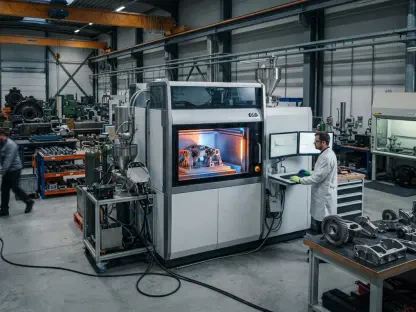
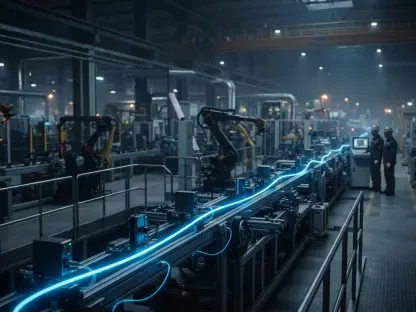
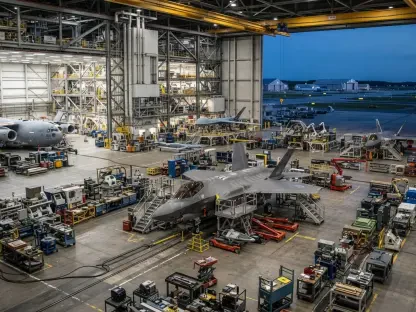
The technical capabilities of the new facility will set a new standard for advanced metallurgy in the United States, featuring a comprehensive range of production assets tailored for tier-one sectors. The complex will house state-of-the-art ring-rolling equipment, forging plants, and specialized shops for large-diameter fabrication and piping production. These assets are specifically designed to meet the rigorous specifications required by the nuclear energy, aerospace, and defense sectors, where component failure is not an option. By producing these high-durability tubular components domestically, USFR addresses a critical gap in the American industrial base, providing a reliable source for materials that were previously sourced from international suppliers. This focus on high-specification manufacturing allows the company to compete in high-value markets that demand extreme precision. As global industries move toward more resilient supply chains, the ability to manufacture these items locally provides a distinct advantage.
The successful coordination of this $875 million project was achieved through a unified effort between state agencies, local government, and utility partners who prioritized regional development. Organizations such as the North Carolina Department of Commerce and the Economic Development Partnership of North Carolina played pivotal roles in aligning the project’s needs with environmental and infrastructure standards. It was determined that stakeholders had to ensure that the scheduled infrastructure completions in 2028 and 2029 remained prioritized to support the final stages of the facility. Local businesses and educational institutions proactively engaged with the plant’s leadership to integrate their services into this emerging industrial ecosystem. As the plant moved toward full capacity, the ongoing focus shifted toward environmental stewardship and the upgrading of technical skills. This project established a clear blueprint for how strategic public-private partnerships successfully revitalized regional economies while securing national interests.