
To fund its industrial expansion, AXISCADES has divested its legacy aerospace engineering services business for two thousand two hundred fifty-six crore rupees, providing a substantial capital cushion for growth. This monumental shift marks the definitive end of an era where the firm primarily functioned as a provider of outsourced technical labor and engineering design. Instead, the organization is now aggressively pivoting toward a vertically integrated model that emphasizes proprietary product manufacturing within the high-stakes aerospace and defense sectors. By acquiring a ninety percent controlling interest in Bengaluru-based Cloud Wave Technologies, the company has effectively bypassed the multi-year development cycles typically required to establish a presence in precision engineering. This strategic realignment suggests that the leadership is no longer content with the modest margins of effort-billed services and is now prioritizing the ownership of the entire production lifecycle to maximize value.
Financial Architecture: Capital Restructuring Strategy
The financial blueprint supporting this industrial metamorphosis involves a calculated blend of high-yield debt and massive asset liquidation. To secure the two hundred thirty-four crore rupees required for the Cloud Wave acquisition, the board approved the issuance of secured, unlisted, redeemable Non-Convertible Debentures totaling up to two hundred crore rupees. These financial instruments carry a notable coupon rate of twelve point five percent per annum, a figure that reflects the company’s urgency in securing immediate industrial capacity despite the associated debt-servicing pressures. This aggressive pursuit of capital is balanced by the liquidity gained from the sale of the services division to Akkodis, which provides a necessary buffer for the current transitional phase. Such a capital-intensive strategy demonstrates a profound confidence in the manufacturing pivot, as the company willingly exchanges its historically stable service-based revenue for a more lucrative industrial future.
Revenue Performance: Navigating Transitional Losses
Despite the influx of capital and a sharp rise in revenue from continuing operations, the recent financial reports indicate the complexities of such a large-scale corporate restructuring. For the first quarter of the current fiscal period, the firm reported a consolidated net loss of fourteen point eighty-three crore rupees, even as revenue surged by over ninety-four percent year-over-year to exceed one hundred eighty-three crore rupees. This discrepancy highlights the significant profitability drag caused by overlapping overheads and the intensive capital outlays required to integrate new manufacturing assets. Managing these transitional costs while simultaneously servicing high-interest debt represents a delicate balancing act for the executive team. However, the surge in top-line growth suggests that the underlying demand for the company’s new industrial offerings is robust, potentially paving the way for future profitability once the initial integration phase is complete. This financial friction is viewed as a necessary investment.
Precision Engineering: Strategic Integration of Assets
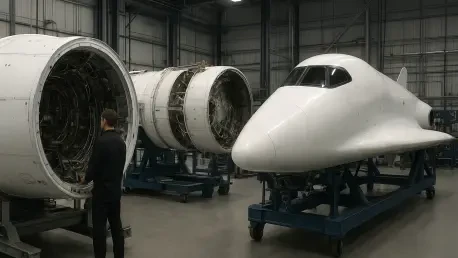
The acquisition of Cloud Wave Technologies brings far more than just physical factory space; it provides the organization with a suite of critical certifications and specialized technical expertise. Most vital is the AS9100D certification, which serves as the global gold standard for quality management in the aerospace and defense industries. Without this credential, bidding on major international contracts remains impossible, making it a cornerstone of the new business model. Furthermore, Cloud Wave’s proficiency in precision machining and sheet metal fabrication allows the company to handle tolerances measured in microns, a requirement for high-performance aircraft components. By integrating these capabilities, the firm has transformed from a consultant that designs parts to a manufacturer that actually produces them. This vertical integration reduces the reliance on external vendors and allows for tighter control over the supply chain, ensuring that the final products meet the rigorous safety and performance standards.
Industrial Infrastructure: The Centre for Advanced Manufacturing
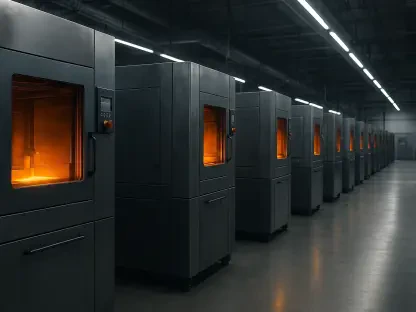
Complementing the existing seven manufacturing units inherited through the acquisition is the development of a massive two hundred forty thousand square foot Centre for Advanced Manufacturing in Devanahalli. This sprawling facility is designed to serve as a centralized hub for high-end industrial production, combining the company’s historical design proficiency with its new physical manufacturing power.