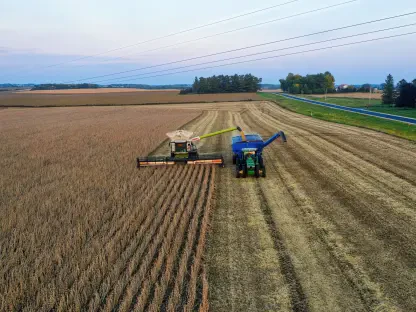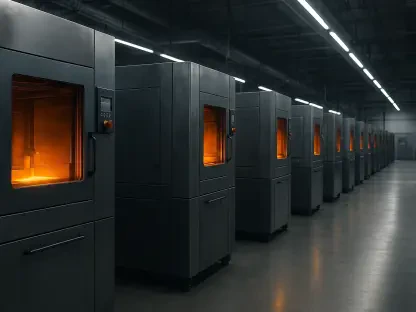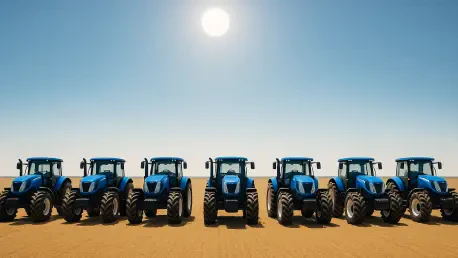

The partnership between Chinese manufacturer Lovol and Agromash Holding KZ highlights a trend toward increasing the percentage of components fabricated within Kazakhstan. This landmark collaboration represents a broader systemic transition where the nation is no longer a passive importer but an emerging manufacturing powerhouse. With over 91 million hectares of agricultural land and 22 million hectares under active cultivation, the demand for modern machinery has reached a critical mass. The government has recognized that simple procurement is insufficient for long-term food security and economic sovereignty. Consequently, a deliberate industrial strategy has been deployed to localize the production of essential farming tools. This evolution effectively bridges the modernization gap, transforming a massive internal market into a launchpad for regional industrial dominance. By focusing on domestic assembly, the country is mitigating its dependency on global supply chains while fostering a specialized workforce capable of maintaining the next generation of agricultural technology.
Catalysts for Industrial Growth
Fiscal Support: Government Incentives and Subsidies
Bridging the divide between high-tech requirements and the financial realities of local farmers required a robust intervention from the state. To address this, the government implemented aggressive fiscal policies, most notably a $900 million preferential leasing program designed to modernize the current fleet. This initiative lowered the barrier to entry by offering cost subsidies that covered up to 30% of upfront machinery expenses, allowing farmers to bypass the prohibitive costs of direct purchasing. Furthermore, the introduction of low-interest financing at an annual rate of 5% made long-term investment sustainable for large-scale operations. These financial mechanisms did more than just assist the farmers; they created a predictable and steady stream of orders for the domestic manufacturing sector. By de-risking the capital expenditure for the end-user, the state successfully catalyzed a cycle of reinvestment that is currently sustaining the expansion of regional factories and assembly plants.
Global Alliances: International Partnerships and Localized Assembly
The transition from simple distribution to sophisticated manufacturing joint ventures marks a defining era for the Central Asian industrial landscape. Global leaders such as the European giant CLAAS have already established a significant presence, while the American manufacturer John Deere has initiated localized production lines through strategic regional partnerships. These collaborations are no longer restricted to basic tractor assembly but have expanded into specialized equipment for seeding, tillage, and root crops. Swedish and Belgian firms have also joined this movement, contributing technical expertise to local assembly lines that meet specific regional soil conditions. This influx of foreign direct investment has brought with it advanced manufacturing protocols and quality control standards that were previously absent. As these international brands deep-seated their operations within the country, they provided the necessary technological scaffolding for a self-sufficient industrial base that serves both domestic and neighboring markets.
The Regional Manufacturing Ecosystem
Strategic Logistics: Positioning as a Regional Bridge
Kazakhstan is increasingly viewed as a vital bridge between major global economies, situated at the crossroads of Russia, China, and the broader Central Asian markets. International brands now utilize the country as a manufacturing platform to bypass traditional trade barriers and reduce logistical overhead for the surrounding region. This strategic positioning has fundamentally altered the market structure, moving the nation from the periphery of the supply chain to a central node for distribution and production. The ability to manufacture and ship locally-made equipment to neighboring states has turned the country into a regional export hub. By providing a stable environment for production, the government has encouraged firms to treat local factories as their primary base for Central Asian operations. This shift has not only improved lead times for equipment delivery but has also fostered a regional ecosystem where parts and services are readily available, further cementing the nation’s role as a logistical leader in the agricultural machinery sector.
Industrial Evolution: Long-Term Outlook and Diversification
The momentum within the machinery sector is currently sustained by a diversifying manufacturing base that has moved beyond basic tractor assembly into high-tech irrigation and seeding technologies. This industry evolution is creating a complex ecosystem where specialized clusters, particularly in the Kostanay region, act as focal points for industrial innovation. By combining vast agricultural scale with robust government backing, the sector has successfully mitigated its historical dependency on foreign imports. The current expansion includes the production of advanced sensors and automated systems that integrate with global GPS standards to improve precision farming. These developments ensure that the equipment produced is not just locally made but is also at the forefront of modern agricultural trends. As the manufacturing base continues to mature, it attracts secondary industries, including component manufacturers and specialized software developers. This diversification creates a resilient economic foundation that protects the agricultural sector from global supply chain volatility.
Sustaining Growth: Future Integration and Technical Training
The establishment of a domestic machinery hub successfully shifted the national economic trajectory toward industrial self-reliance. Government officials and private investors recognized that the next phase of growth required a focus on deep localization and research development. By prioritizing the fabrication of complex components, such as engines and transmissions, the industry moved toward total manufacturing autonomy. The previous reliance on imported finished goods was replaced by a system that valued local engineering talent and vocational training. To maintain this lead, the industry initiated partnerships with technical universities to ensure a steady pipeline of skilled workers. Future efforts were focused on the expansion of export routes into the Middle East and Eastern Europe to capitalize on the standardized production quality now achieved. Furthermore, stakeholders were encouraged to integrate sustainable energy solutions into the manufacturing process to meet global environmental standards. This comprehensive approach ensured that the industrial foundation remained competitive on a global scale.