
Farmington serves as a critical strategic hub for the regional timber and construction industries due to its location at the intersection of several key industrial zones. As of 2026, the volume of heavy equipment being moved through Franklin County has increased significantly, reflecting a broader trend of infrastructure modernization and forestry expansion in Western Maine. Moving a sixty-ton excavator or a specialized feller buncher through this landscape is an undertaking that requires technical sophistication far beyond standard logistics. The narrow, winding roads and substantial elevation changes inherent to the region necessitate meticulous planning to ensure that high-value assets arrive at their destinations without mechanical strain or structural damage. Because the machinery utilized in these industries often exceeds standard legal widths and heights, the transport process involves a complex orchestration of specialized trailers and weight-distribution strategies tailored to the specific demands of the Maine interior.
Engineering Precision: Managing Oversized Industrial Loads
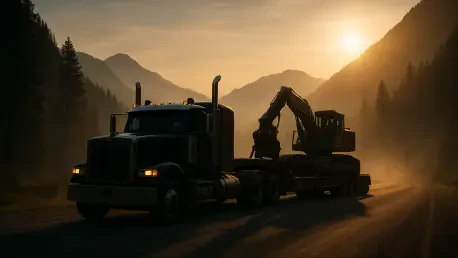
The specialized nature of heavy hauling stems from the requirement for specific trailer configurations that can handle the unique geometry of industrial machinery. Traditional flatbeds are rarely sufficient for the task; instead, transport providers rely on lowboys and removable gooseneck (RGN) trailers to accommodate equipment with low ground clearance or excessive height. These trailers allow the load to sit closer to the pavement, which is a vital consideration when navigating the many low-clearance overpasses and utility lines found throughout the Farmington area. By lowering the center of gravity, these rigs also improve the stability of the vehicle during transit, reducing the risk of tipping on the banked curves typical of rural Maine highways. Selecting the appropriate trailer is a technical decision that directly impacts the safety of the haul and ensures the mechanical integrity of the asset remains intact from the point of origin to the final construction or logging site.
Technical mastery in this field also requires a deep understanding of weight distribution and structural physics to protect both the machinery and the public infrastructure. Heavy haulers frequently utilize multi-axle configurations to spread the immense weight of the cargo across a larger surface area, thereby meeting strict per-axle weight limits designed to prevent road degradation. In 2026, the use of specialized jeep dollies and boosters has become a standard practice for the heaviest loads, providing the necessary support to navigate the varied terrain of Franklin County. This engineering approach prevents excessive stress on the truck’s frame and the road surface, ensuring that even the most massive pieces of equipment can be moved without causing long-term damage to the state’s transportation network. For project managers, the choice of a rig is a pivotal factor that determines not only the feasibility of the transport but also the long-term operational health of the machinery being moved.
Environmental Variables: Seasonal and Geographical Obstacles
The geographical landscape surrounding Farmington presents a unique set of hurdles that require intimate local knowledge and adaptive planning. The region is characterized by a mix of paved state routes and unpaved logging roads, each posing different risks depending on the weather and the weight of the load. Navigating these narrow corridors often involves scouting routes in advance to identify potential bottlenecks, such as tight turns or bridges with reduced load-bearing capacities. For transport providers, the ability to pivot and find alternative paths is essential when faced with unexpected road closures or construction. This proactive approach to route management minimizes the risk of getting a massive rig stuck in a location where recovery would be both difficult and expensive. Understanding the specific topography of Western Maine allows carriers to anticipate the power requirements and braking needs of their trucks, ensuring a controlled and safe transit through the river valleys and mountain passes.
Seasonal shifts in Maine introduce further complexity, particularly during the spring thaw, which is colloquially known as “mud season.” During this period, the Maine Department of Transportation frequently implements heavy vehicle weight restrictions on secondary roads to prevent the softening pavement from being destroyed. Specialized carriers must distinguish themselves by monitoring these postings daily and planning their transport windows to coincide with periods of high road stability. In 2026, the integration of weather-tracking technology has allowed logistics firms to predict ground conditions with greater accuracy, but the fundamental challenge remains the same. Failure to adhere to these seasonal limits can result in heavy fines and significant project delays. Therefore, successful transport in Farmington is not just a matter of mechanical power but also a matter of timing, requiring a sophisticated coordination between the shipping schedule and the unpredictable environmental cycles of the New England climate.
Regulatory Compliance: Administrative and Safety Protocols
The legal framework for hauling heavy equipment in Maine is increasingly rigorous and requires an administrative commitment that matches the physical effort of the drive. State law mandates specific permits for any load that exceeds standard legal dimensions in height, width, or total weight, and these documents are far more than mere paperwork. They represent a detailed agreement with the state regarding the exact route, the timing of the move, and the safety measures that will be in place to protect other motorists. In 2026, the permit application process has become more data-intensive, requiring transport providers to submit precise axle weights and bridge-crossing analyses for the heaviest categories of machinery. Managing this administrative burden is often the most time-consuming aspect of a project, and many contractors now prefer to partner with firms that handle all permitting in-house. This ensures that every move is fully compliant with state regulations, avoiding the legal liabilities associated with unauthorized transport.
Beyond the permits, the safety of the general public is managed through the use of escort vehicles and pilot cars, which are often legally required for oversized loads. These escorts serve as the eyes and ears for the truck driver, communicating potential hazards and managing traffic flow through narrow sections of Route 2 or Route 27. The coordination between the lead car, the truck driver, and the rear escort is a highly disciplined operation that ensures the massive load does not endanger pedestrians or other drivers. In Farmington’s bustling town center, this coordination is particularly critical to prevent traffic congestion and ensure that the equipment can move through intersections without incident. By prioritizing these safety protocols, transport companies not only comply with the law but also build trust within the community. This commitment to safety is a hallmark of professional hauling, transforming what could be a disruptive event into a seamless and controlled movement of essential industrial assets.
Digital Integration: The Modern Staging Ground
Farmington’s position as a gateway to the remote reaches of the Sandy River corridor makes it an ideal staging ground for large-scale equipment redistribution. By utilizing local facilities as central hubs, companies can optimize their fleet movements and reduce the “deadhead” time that occurs when trucks travel empty between jobs. This strategic use of the Farmington hub allows for better synchronization of machinery arrivals with labor shifts at remote logging or construction sites. As the regional economy continues to evolve in 2026, the efficiency of these logistics hubs has become a primary driver of profitability for contractors working in Western Maine. The ability to stage equipment near major arteries like Route 2 ensures that machinery can be deployed rapidly when needed, providing a competitive advantage in an industry where timing is everything. This geographic strategy turns Farmington into a vital link in the supply chain, connecting coastal resources with the industrial demands of the interior.
The industry has also seen a significant shift toward digital integration, where physical hauling is supported by real-time data and sophisticated tracking platforms. Modern logistics providers in Farmington now utilize GPS-based route optimization software that accounts for current traffic patterns, road grades, and bridge heights. This level of transparency allows project coordinators to monitor high-value assets in real-time, providing accurate arrival estimates that are essential for large-scale project management. This visibility is not just about tracking; it is about the intelligent application of data to improve fuel efficiency and reduce the environmental impact of heavy transport. By leveraging these digital tools, transport firms can offer a level of reliability that was previously unattainable, ensuring that the transition from the road to the job site is as efficient as possible. This fusion of heavy iron and digital intelligence defines the current era of equipment transport, making the process more predictable and safer for everyone involved.
Strategic Evolution: Strengthening Regional Infrastructure
Stakeholders in the Farmington region achieved significant progress by implementing a more collaborative approach to heavy equipment logistics. Companies that prioritized the early integration of transport planning into their project timelines saw a marked decrease in logistical bottlenecks and unforeseen costs. These organizations adopted rigorous maintenance schedules for their hauling rigs, ensuring that mechanical failures did not impede the delivery of critical assets to remote sites. By investing in multi-axle trailers and advanced securing systems, transport providers successfully mitigated the risks associated with moving top-heavy machinery over the uneven terrain of Franklin County. This shift toward proactive preparation established a new benchmark for operational excellence, where every variable from bridge load limits to driver fatigue was accounted for well before the truck left the yard. The success of these efforts proved that technical skill and administrative diligence are inseparable components of modern industrial growth.
Professional transport services in Western Maine focused on building long-term resilience by fostering stronger partnerships with state regulatory bodies and local law enforcement. These collaborations ensured that the permits obtained were not just compliant on paper but also feasible in practice given the real-time conditions of the road network. Managers streamlined their operations by conducting thorough route surveys and utilizing digital tracking to provide stakeholders with constant updates. It was essential to maintain a high standard of driver training, focusing on the unique challenges of the Maine interior, such as engine braking on steep descents and maneuvering in tight logging yards. To maintain this momentum, future operations should continue to prioritize the adoption of green transport technologies and automated routing systems. Moving forward, contractors are encouraged to engage with logistics experts during the initial bidding phase of a project to ensure that transport costs and constraints are accurately reflected in the overall project strategy.