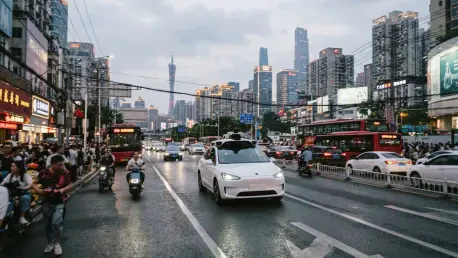

Imagine a metropolis where the hum of engines is replaced by the silent precision of algorithms navigating through dense urban traffic without a single human hand touching a steering wheel. The official deployment of the seventh-generation Toyota bZ4X Robotaxi service in Guangzhou represents a pivotal moment in the global effort to commercialize autonomous transportation at a massive scale. This initiative signifies the transition of a multi-year partnership between Pony.ai and Toyota from experimental pilot programs into a fully operational, driverless commercial enterprise. By moving beyond limited testing zones, the collaboration demonstrates that autonomous ride-hailing has matured into a viable business model ready for public consumption. This shift is not merely about technological novelty but about creating a sustainable, high-frequency transit solution that addresses the complexities of modern city life while maintaining rigorous safety standards that surpass human capabilities.
Engineering Precision: The Architecture of Level 4 Autonomy
The engineering philosophy behind the bZ4X Robotaxi marks a departure from earlier industry practices where autonomous systems were often retrofitted onto existing consumer vehicles. This seventh-generation model was conceived from its inception to support Level 4 autonomous driving, ensuring that the hardware and software are deeply integrated into the vehicle’s chassis and electrical architecture. To achieve the highest safety ratings, the development team incorporated comprehensive redundancy systems across all critical functions, including steering, braking, and power distribution. These fail-operational capabilities ensure that if a primary hardware component fails, the vehicle remains capable of executing a safe stop or completing its journey without endangering the occupants. This level of hardware reliability is essential for gaining public trust and meeting the stringent regulatory requirements established for driverless operations in dense urban environments like the Nansha district.
Beyond the structural safety features, the software suite has undergone significant refinements to enhance the passenger experience through smoother motion control. Earlier iterations of autonomous software sometimes struggled with jerky braking or overly cautious acceleration, but the latest algorithms provide a ride quality that rivals or exceeds that of a professional chauffeur. These improvements are coupled with a suite of passenger-centric technologies, such as Bluetooth-enabled door unlocking and an intelligent voice assistant that allows riders to control the cabin environment. Personalized climate controls and integrated in-car entertainment systems further transform the vehicle from a simple mode of transport into a mobile living space. By focusing on these experiential details, the developers are positioning robotaxis not just as a high-tech alternative to traditional taxis, but as a premium service that prioritizes the comfort and individual preferences of every passenger.
Scaling Operations: Manufacturing and Regional Deployment
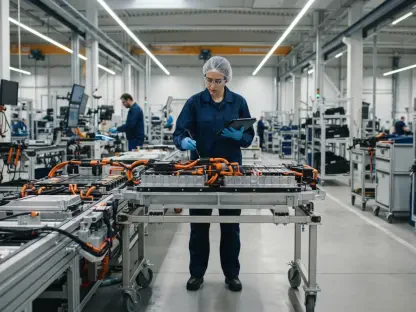
The transition from small-scale testing to commercial reality required a massive investment in manufacturing infrastructure and supply chain management. In 2023, Pony.ai and Toyota Motor China, along with GAC Toyota, formed a strategic joint venture backed by an investment exceeding RMB 1 billion to facilitate the mass production of these specialized vehicles. This capital injection allowed for the creation of dedicated assembly lines that began rolling out mass-produced units in early 2026. This industrialized approach to autonomous vehicle production is critical for reducing the per-unit cost of sensors and computing hardware, which has historically been a barrier to widespread adoption. By leveraging Toyota’s world-renowned manufacturing efficiency and Pony.ai’s cutting-edge software stack, the partnership has established a blueprint for how autonomous fleets can be scaled rapidly across different geographic regions without compromising on build quality or software reliability.
While current operations are concentrated in the Nansha district of Guangzhou, the strategic roadmap involves a significant expansion into other major Chinese metropolitan hubs. Plans are currently underway to deploy approximately 1,000 robotaxis across Beijing, Shanghai, and Shenzhen, creating a network of autonomous transit that spans the country’s most economically vital regions. Accessibility remains a core focus of this rollout, with passengers able to hail a driverless ride through the PonyPilot mobile application or via mini-programs on widely used platforms like WeChat and Alipay. This integration into existing digital ecosystems ensures that the service is easily accessible to millions of users who are already accustomed to mobile-first lifestyles. Furthermore, the 24/7 availability of these vehicles addresses the gap in late-night transportation options, providing a safe and reliable way for commuters to navigate the city long after traditional public transit services have ceased operations.
The successful launch of the driverless fleet in Guangzhou proved that the combination of purpose-built hardware and sophisticated AI software could meet the demands of complex urban environments. Industry stakeholders recognized that the next logical step involved the standardization of safety protocols across international borders to facilitate global expansion. Municipal governments began evaluating their infrastructure to support increased sensor-to-vehicle communication, which enhanced the operational efficiency of autonomous networks. Manufacturers also shifted their focus toward developing even more energy-efficient battery systems to ensure that large-scale fleets remained environmentally sustainable over long operational lifecycles. By prioritizing the integration of predictive maintenance tools, operators minimized downtime and increased the overall reliability of the service for the public. These developments suggested that future urban planning would increasingly revolve around the seamless integration of autonomous pods into the broader multimodal transportation landscape.