
High-precision 3D printing often forces a choice between the structural durability of an object and its potential for sustainable end-of-life recycling. For years, the industry relied on resins that create irreversible chemical bonds, resulting in high-performance parts that were ultimately destined for landfills. However, a significant breakthrough led by Prof. Dr. Eva Blasco at Heidelberg University has introduced a metastable polymer ink that fundamentally changes this narrative. Developed at the Institute for Molecular Systems Engineering and Advanced Materials, this innovation enables the creation of high-precision components that can be fully disassembled and recycled at the molecular level. This research marks a pivotal shift toward a truly circular economy within additive manufacturing, where the utility of a printed object is no longer limited by its physical permanence. By bridging the gap between mechanical strength and environmental responsibility, this new material system offers a roadmap for sustainable industrial production.
Breaking the Cycle: The Sustainability Challenge in Additive Manufacturing
Traditional 3D printing methods like Digital Light Processing (DLP) have long favored the creation of thermosets, which are polymers characterized by their rigid, cross-linked networks. These materials provide the necessary mechanical stability and heat resistance for demanding applications in aerospace, medicine, and automotive engineering. Despite these functional advantages, the irreversible nature of their chemical bonds presents a major ecological hurdle. Once cured, these structures cannot be remelted or reformed, making conventional recycling impossible. As the adoption of 3D printing continues to expand across global supply chains in 2026, the volume of non-recyclable waste generated by these processes has become a critical concern for manufacturers aiming to meet environmental standards. The introduction of metastable polymers provides a sophisticated solution to this enduring dilemma by allowing for structural integrity during use while facilitating complete molecular breakdown once the object reaches its end.
The environmental consequences of the current manufacturing model are increasingly difficult to ignore, especially as digital fabrication becomes more integrated into decentralized production. Standard resins used in light-based printing are often composed of acrylates that form dense, permanent networks. When these components are discarded, they either end up in landfills or are subjected to energy-intensive incineration, neither of which supports a circular economy. The research conducted at Heidelberg University addresses this sustainability gap by proving that high-performance characteristics do not have to be sacrificed for recyclability. By reimagining the chemical architecture of the ink, the team has demonstrated that it is possible to design materials that remain stable under stress but are chemically programmed for destruction. This approach moves beyond simple biodegradable solutions and instead offers a method to recover high-value chemical components for immediate reuse.
Molecular Lock and Key: The Science of Metastable Polymers
The core innovation of this new ink resides in its metastable molecular architecture, which operates on a principle similar to a chain secured by a single, specialized lock. During the 3D printing process and subsequent use, the material remains exceptionally robust, maintaining its shape and mechanical properties even under significant environmental or physical pressure. This stability is essential for functional parts such as those found in soft robotics, where flexibility must be balanced with durability, or in micro-optics, where structural precision is paramount. The molecular design ensures that the polymer chains stay locked in place until they receive a specific external command. This sophisticated level of control allows engineers to create objects that perform exactly like traditional high-strength materials during their operational phase, effectively debunking the myth that recyclable polymers are inherently weaker or less reliable than their permanent counterparts in high-precision settings.
When the time comes to recycle a printed object, a specific chemical “key” is applied as a trigger signal to initiate the disassembly process. This chemical trigger targets the molecular lock within the polymer network, setting off a rapid domino effect that causes the entire structure to unravel at the molecular level within seconds. Unlike traditional recycling techniques that often require high temperatures, high pressures, or the use of aggressive solvents, this triggered degradation occurs efficiently at room temperature. The process is both fast and gentle, ensuring that the chemical building blocks are not damaged during the breakdown. This breakthrough provides a significant advantage over mechanical recycling methods, which often degrade the quality of the plastic with each cycle. By utilizing a molecular trigger, manufacturers can ensure a clean and efficient transition from a solid object back into a liquid starting material, ready to be utilized in a new production cycle without any loss.
Precision at Scale: High-Resolution Printing Without Compromise
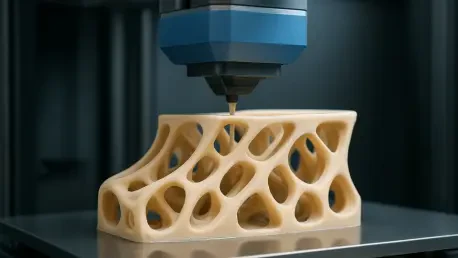
A significant challenge in developing recyclable 3D printing materials has always been maintaining the high-resolution capabilities that define modern additive manufacturing. The metastable ink developed by the Blasco group successfully overcomes this barrier, allowing for the creation of intricate three-dimensional structures at the micrometer scale. This level of precision is crucial for advanced fields like microfluidics and precision engineering, where even the slightest deviation in form can lead to component failure. The ink performs with the same accuracy as conventional, non-recyclable resins, ensuring that there is no loss of detail or surface finish during the printing process. This achievement confirms that transitioning to more sustainable materials does not require a compromise in the complexity of the designs that can be produced. As the industry moves forward between 2026 and 2028, the ability to maintain such high standards of precision while implementing circularity will be a key differentiator for leading technology firms.
Beyond the initial printing precision, the efficiency of the material recovery process is a standout feature of this research. Advanced spectroscopic analysis has confirmed that the building blocks recovered after the disassembly process are chemically identical to the virgin starting materials. This means that the recycled ink can be used to print new objects that possess mechanical and chemical properties indistinguishable from the original parts. This eliminates the problem of “downcycling,” where recycled materials are of lower quality and can only be used for less demanding applications. The ability to recover high-quality monomers repeatedly allows for a closed-loop system where the same material can be cycled through multiple lives. This efficiency is vital for reducing the demand for raw petrochemical resources and minimizing the carbon footprint of the manufacturing sector. The high recovery rate and the purity of the recycled components represent a major step forward in making 3D printing sustainable.
Circularity by Design: Redefining the Industrial Manufacturing Paradigm
The success of this research project was largely driven by the collaborative efforts within the “3D Matter Made to Order” Excellence Cluster. This partnership brought together diverse expertise from both Heidelberg University and the Karlsruhe Institute of Technology, reflecting the multidisciplinary nature of modern scientific challenges. By combining insights from macromolecular chemistry, material science, and precision engineering, the researchers were able to solve a problem that had previously stymied individual laboratories. The project received significant support from the German Research Foundation and other institutional partners, highlighting the global importance of developing zero-waste manufacturing solutions. This collaborative model demonstrates that the most complex ecological and technical hurdles can be overcome through shared knowledge and cross-functional research initiatives. The resulting metastable ink is a practical tool that has been rigorously tested and validated by leading minds in the field.
Integrating end-of-life considerations into the initial molecular engineering phase represents a fundamental shift in how materials are designed and utilized. This “circularity by design” approach ensures that sustainability is not an afterthought but a core feature of the material’s identity. By programming polymers to respond to specific stimuli, scientists have created a blueprint for “smart” manufacturing where materials are active participants in their own lifecycle. This paradigm shift is essential for moving away from the traditional “take-make-waste” model that has dominated the industrial landscape for decades. As these technologies are refined and scaled between 2026 and 2030, the focus will likely expand to include even more complex stimuli-responsive materials that can be recycled using light or specific wavelengths of electricity. The work done by the Blasco group provides the foundation for these future developments, proving that it is possible to harmonize high-tech production with the urgent need for environmental conservation.
Beyond the Laboratory: Implementing Sustainable Manufacturing Strategies
The successful demonstration of metastable polymer inks provided a clear path toward the integration of circularity within high-precision manufacturing sectors. Leaders in the industry recognized that the transition to these recyclable systems required a fundamental reassessment of existing supply chains and material procurement strategies. To fully leverage this technology, organizations prioritized the standardization of triggered-degradation protocols, ensuring that the necessary chemical keys were readily available at recycling facilities. The focus shifted toward creating localized recycling hubs that processed 3D-printed waste back into high-quality resins on-site, thereby reducing the logistical costs and emissions associated with traditional waste management. In the years following 2026, the adoption of these programmable materials significantly lowered the environmental impact of rapid prototyping and small-batch production, fostering a culture of sustainable innovation.
Building on these foundational changes, the next phase of implementation focused on expanding the library of compatible materials to include medical-grade polymers. By 2027, the technology moved from experimental laboratory settings to mainstream production lines, allowing companies to meet zero-waste mandates without compromising on design complexity. Scientists worked closely with industrial partners to refine the chemical triggers, ensuring that the recycling process could be triggered by safer, more accessible reagents. This effort led to the creation of a global database of molecular keys, providing a standardized framework for material recovery that transcended international borders. As the manufacturing sector moved toward 2028, these advancements established a new benchmark for corporate responsibility, where the environmental footprint of a product was as scrutinized as its performance. The legacy of this research was a more resilient industrial ecosystem that valued long-term resource management.