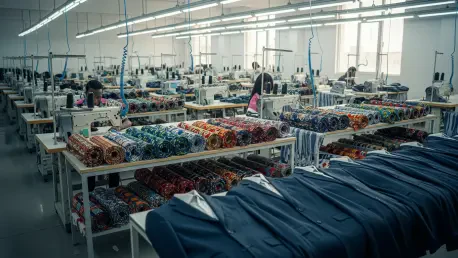

The vibrant colors of West African fabrics are reclaiming their dominance in local markets as Nigeria experiences a significant 45 percent surge in domestic textile and garment production, marking a decisive pivot toward industrial sovereignty. This unexpected resurgence represents more than just a statistical anomaly; it is a fundamental reconfiguration of an economy that has long been tethered to the whims of international clothing suppliers. By harnessing the massive potential of its labor force and integrating traditional craftsmanship with modern manufacturing techniques, the nation is actively dismantling the barriers that once made imported apparel the default choice for millions. This shift is not merely about replacing foreign labels with local ones but about establishing a resilient, internal supply chain capable of withstanding global economic shocks while fostering a sense of national pride. The current momentum suggests that the foundations for a sustainable manufacturing ecosystem are finally being laid, paving the way for a more self-reliant future.
Catalysts: Investment and Consumer Sentiment
A significant portion of this industrial uptick is attributed to a massive influx of domestic investment as local entrepreneurs move beyond simple retail to establish sophisticated production facilities. These investors are channeling capital into state-of-the-art machinery and specialized workshops to produce high-quality apparel, ranging from school uniforms to formal suits, that successfully rivals the quality of established international brands. This trend reflects a broader confidence in the “Made-in-Nigeria” brand, which has gained substantial traction among a population increasingly wary of the rising costs associated with imported goods. By focusing on quality control and contemporary designs, local manufacturers have managed to capture a segment of the market that previously looked abroad for fashion needs. This internal investment cycle is creating a robust ecosystem where local supply meets local demand, effectively reducing the capital flight that characterized the sector for decades.
The psychological shift in consumer behavior has proven just as critical as financial investment, as more Nigerians consciously choose locally produced textiles over foreign alternatives. This change is partly driven by economic necessity, as extreme currency volatility has made imported luxury and everyday wear prohibitively expensive for the average household. Consequently, the “Made-in-Nigeria” sentiment has evolved from a patriotic slogan into a practical financial strategy for millions of consumers seeking affordability without compromising on style. Local designers are capitalizing on this by offering customized and culturally relevant products that international mass-production lines cannot easily replicate. This deep connection between cultural identity and commercial viability is reinforcing the domestic market, providing a stable revenue stream for manufacturers who can now predict demand with greater accuracy. As the preference for domestic goods hardens, the textile industry is finding itself at the center of a renewed national economic identity.
Innovation: Entrepreneurship and Infrastructure Barriers
Small and Medium-sized Enterprises have rapidly become the backbone of the current industrial expansion, with youth and women taking unprecedented leadership roles in the garment sector. Rather than relying on a few massive, state-run factories that have historically struggled with inefficiency, the industry is now characterized by a decentralized network of agile tailoring hubs. These small-scale production centers are popping up in urban and rural areas alike, providing vital livelihoods and fostering innovation at the grassroots level. This entrepreneurial wave is democratizing the manufacturing process, allowing individual designers to scale their operations based on immediate market feedback. However, industry experts maintain that for these smaller players to transition into major industrial forces, they require consistent access to modern sewing technology and advanced technical training. By focusing on human capital development, Nigeria is ensuring that the recent surge in production is supported by a skilled workforce capable of maintaining high standards.
Despite the positive trajectory, the path to a full industrial recovery remains fraught with structural challenges that mirror the decline of the sector since its peak in the 1980s. At that time, Nigeria boasted over 100 functional textile mills that processed vast quantities of locally grown cotton, a feat that current manufacturers are struggling to replicate due to a degraded supply chain. Modern producers are frequently hindered by systemic bottlenecks, most notably an unreliable power grid that significantly inflates operational costs and reduces the competitiveness of local goods. Furthermore, the high cost of importing specialized machinery remains a barrier for many emerging businesses that lack the collateral to secure traditional bank loans. Addressing these historical obstacles requires a multi-faceted approach that combines infrastructure development with innovative financing. Only by resolving these core issues can the industry hope to achieve the scale necessary to displace the influence of substandard foreign textiles that enter the market.
Roadmap: Strategic Policies and Economic Trajectory
To sustain the current 45 percent production surge, economic analysts have advocated for a comprehensive policy framework designed to bridge the gap between initial growth and long-term stability. One of the most promising recommendations involves the creation of specialized industrial clusters where manufacturers can share the costs of power generation, logistics, and raw material procurement. These clusters would allow small-scale producers to benefit from economies of scale that were previously only available to massive corporations. Additionally, there is a pressing need to restore the domestic cotton value chain by providing farmers with high-yield seeds. By integrating the agricultural and manufacturing sectors, Nigeria can create a closed-loop system that maximizes value addition within its borders. Targeted government subsidies and vocational programs from 2026 to 2028 could provide the necessary support for local manufacturers to compete effectively against foreign imports that often benefit from similar protections.
The long-term implications of this textile revival extended far beyond mere production figures, as the sector became a primary engine for job creation and poverty alleviation. Authorities recognized that the labor-intensive nature of garment manufacturing offered a unique solution to the employment needs of a growing population. By strengthening the internal supply chain, the government successfully conserved foreign exchange reserves that would have otherwise been spent on clothing imports. Stakeholders coordinated efforts to enforce quality standards, which helped in curbing the influx of smuggled goods and ensured that domestic products remained the preferred choice. Future strategies focused on expanding vocational programs to certify technicians in advanced manufacturing protocols, ensuring the workforce remained globally competitive. The transition toward a dominant manufacturing hub was solidified through consistent policy implementation. These collective actions ensured that the gains were not transient but formed the bedrock of a resilient national economy.