
The silhouette of the Great Plains is no longer defined solely by traditional agriculture and energy production; today, it is marked by the sleek lines of hypersonic test vehicles and the rhythmic hum of jet turbines from some of the world’s most advanced manufacturing facilities. Oklahoma’s aerospace economy maintains resilience through a strategic balance of commercial aviation, military defense contracts, and emerging autonomous technologies. This sector has surged to become the state’s second-largest economic driver, yielding a staggering $44 billion annual impact while supporting a workforce of more than 206,000 individuals. By moving beyond simple industrial expansion, the region has implemented a sophisticated, state-led framework that connects academic research, specialized capital, and modern infrastructure to a global network of partners. This transformation is not an accidental byproduct of geographical luck but the result of a coordinated effort to capture the next generation of high-tech investment through a multi-layered ecosystem that prioritizes innovation and operational efficiency over bureaucratic inertia.
Strengthening the Industrial and Corporate Foundation
The concentration of major aerospace corporations within the state has created a powerful cluster effect that effectively mitigates operational risks for new and existing firms. Global industry titans such as Boeing, Northrop Grumman, Lockheed Martin, and Raytheon have established a deep presence, bringing with them a sophisticated network of Tier 1 and Tier 2 suppliers. This density of expertise fosters a collaborative environment where high-level engineering and complex production processes benefit from shared logistical resources and a localized knowledge base. As these integrators expand their footprints, they attract niche manufacturers who specialize in everything from advanced composites to avionics, ensuring that the local supply chain remains robust and responsive to shifting market demands. This structural depth allows the state to compete for massive international contracts that require a level of industrial maturity found in only a handful of global locations.
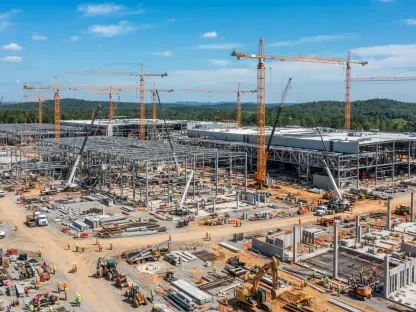
Beyond the presence of large integrators, the state’s business environment is specifically tailored to sustain long-term industrial growth through strategic deregulation and proactive economic services. The Aerospace Commerce Economic Services (ACES) team has been instrumental in facilitating billions of dollars in capital investment, navigating the complexities of site selection and incentive packages for incoming firms. By offering a stable regulatory climate and competitive tax structures, the state provides a level of predictability that is essential for the long-cycle investments typical of the aerospace and defense sectors. This approach has led to 159 project wins in recent years, demonstrating that corporate leaders value the state’s commitment to reducing overhead costs while maintaining high standards for technical output. This synergy between government policy and corporate needs ensures that the industrial foundation remains flexible enough to adapt to future technological shifts.
Leading the Global Maintenance and Logistics Sector
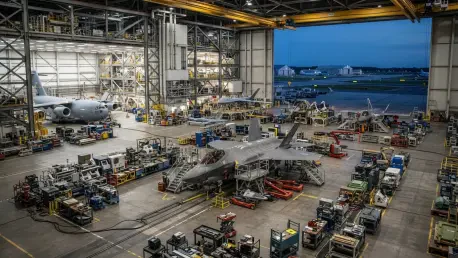
A primary pillar of the regional aerospace identity is its undisputed dominance in the Maintenance, Repair, and Overhaul (MRO) market, which serves as the backbone for both civil and military aviation. Tulsa is home to the American Airlines Maintenance and Engineering Center, currently the largest commercial MRO facility on the planet, employing over 5,200 specialized technicians and engineers. This facility is critical for the sustainability of commercial aviation, handling the complex upkeep of massive fleets that connect global markets. The technical expertise housed within these hangars radiates outward, supporting a constellation of smaller maintenance shops and component manufacturers that rely on the steady demand generated by one of the world’s most significant airline operations. This concentration of MRO activity ensures that the state remains a vital node in the global transportation network, providing services that are essential for the safe and efficient operation of modern air travel.
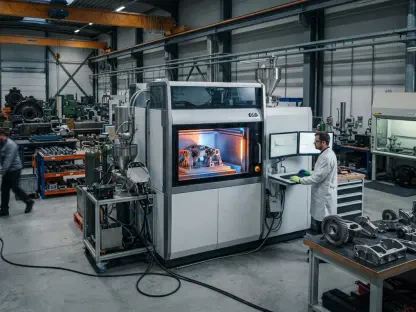
Complementing this commercial strength is the Oklahoma City Air Logistics Complex located at Tinker Air Force Base, which stands as the largest air depot maintenance site for the United States Department of Defense. This installation is a critical asset for national security, providing deep-level maintenance and structural repairs for iconic military aircraft such as the B-52 Stratofortress, the KC-46 Pegasus, and the E-7 Wedgetail. The integration of military and civilian MRO capabilities creates a unique environment where technical innovations in one sector frequently provide benefits to the other. For instance, advancements in additive manufacturing and 3D printing developed for rapid military repairs are increasingly being adopted by commercial shops to reduce lead times for rare parts. This dual-track dominance in logistics and maintenance provides a recession-resistant foundation for the local economy, as the need for aircraft upkeep remains constant regardless of fluctuations in new aircraft sales or defense procurement cycles.
Pioneering Unmanned Systems and Tactical Autonomy
Oklahoma has strategically pivoted toward the future of flight by establishing itself as a premier destination for the development and testing of Unmanned Aerial Systems (UAS). With over 845,000 acres of dedicated test sites, the state offers a rare commodity: vast, unrestricted airspace that allows developers to push the boundaries of autonomous flight without the logistical hurdles found in more congested coastal regions. This open environment has attracted innovators like Kratos Defense & Security Solutions, which utilizes sites like Burns Flat to conduct high-speed jet drone maneuvers. By bypassing the bottlenecks common at traditional military weapons ranges, these companies can move from the prototyping phase to full-scale production at an accelerated pace. The state’s ability to provide this “innovation playground” is a key differentiator in the global race to define the standards for autonomous flight and counter-UAS technologies.
The recognition of this unique value proposition is further validated by the U.S. Army’s designation of the region as a preferred partner for Counter-UAS Research, Development, Test & Evaluation (RDT&E). This partnership places the state at the center of a critical national security priority, focusing on the detection and neutralization of rogue or hostile autonomous platforms. Because the regulatory framework within the state is designed to be streamlined and supportive of experimental technology, research institutions and private firms can collaborate more effectively on rapid-response solutions. This ecosystem does not just produce hardware; it develops the software, sensor arrays, and command-and-control protocols that will define modern warfare and logistics. By anchoring these high-tech initiatives in local test ranges and manufacturing hubs, the state ensures that it remains indispensable to the federal defense architecture while simultaneously fostering a civilian market for autonomous delivery and surveillance.
Navigating the Frontier of the Commercial Space Economy
The Oklahoma Advanced Space Initiative represents a bold extension of the state’s aviation heritage, moving from the atmosphere into the burgeoning commercial space sector. Central to this ambition is the “Infinity One” spaceport at Burns Flat, which provides a dedicated environment for horizontal-launch spaceflight and satellite technology development. Rather than attempting to build a space industry from scratch, the state is leveraging its existing strengths in materials science, propulsion, and advanced manufacturing to support space-bound missions. This strategy allows companies involved in satellite component fabrication or rocket engine testing to utilize the same high-quality supply chains and technical labor pools that have served the aviation industry for decades. As the global demand for low-Earth orbit connectivity and commercial exploration increases, this specialized infrastructure positions the region as a low-cost, high-efficiency hub for space logistics.
This expansion into the space economy is underpinned by a competitive advantage in energy costs and specialized financial capital. Oklahoma currently ranks second in the United States for electricity generated by wind, providing a sustainable and affordable power source for energy-intensive manufacturing processes required for space-grade components. This low-cost energy environment is complemented by the presence of localized private equity firms, such as Acorn Capital Management, which provide the sector-specific financing necessary for rapid scaling. Unlike firms that must rely on coastal venture capital with less industry knowledge, local companies can access credit and equity from partners who understand the long lead times and high technical risks of aerospace ventures. This combination of specialized capital and affordable operations creates a fertile ground for startups and established firms to innovate in propulsion systems and advanced composite materials, ensuring the state captures a significant share of the global space market.
Empowering the Pipeline of Technical Talent
To ensure that the rapid industrial growth remains sustainable through 2026 and into 2030, the state has prioritized the development of a technical workforce that is specifically aligned with the needs of the aerospace sector. The University of Oklahoma has embarked on a mission to transform its aviation and engineering divisions into a billion-dollar research enterprise, fostering a curriculum that emphasizes real-world application and industry collaboration. Between 2026 and 2030, the state’s higher education system is projected to produce over 18,000 graduates in aerospace-related fields, ranging from aeronautical engineers to cybersecurity experts. This focused approach ensures that when a major corporation chooses to relocate or expand within the state, they are met with a deep pool of talent ready to handle the complexities of 21st-century flight. The integration of corporate feedback into university curricula allows these institutions to stay ahead of technical trends, producing workers who are proficient in the latest digital twinning and predictive maintenance technologies.
Furthermore, the creation of the Oklahoma Aerospace Academy represents a comprehensive approach to secondary education, embedding aviation training into the state’s academic DNA at an early age. This initiative functions as an all-in-one aviation high school program, providing students with the certifications and foundational knowledge needed to enter the workforce as pilots, maintenance technicians, or engineering aides immediately upon graduation. By demystifying the path to high-paying aerospace careers, the state is cultivating a homegrown workforce that views the industry as a stable and accessible vocation. This pipeline is not merely about numbers; it is about the quality of instruction and the availability of hands-on experience with modern airframes and propulsion systems. By linking the needs of Tinker Air Force Base and commercial giants with the goals of local school boards, the state has created a unified strategy that ensures long-term economic stability through a consistently refreshed and highly skilled labor force.
Sustaining Momentum in the Global Aviation Network
Oklahoma’s strategic evolution into a premier aerospace hub proved to be a masterful example of coordinated economic development. By integrating the technical demands of the Department of Defense with the operational needs of global commercial carriers, the state established a dual-use ecosystem that buffered against market volatility. The decision to invest heavily in unmanned systems and spaceport infrastructure allowed local firms to lead the transition into autonomous flight, while the expansion of MRO facilities solidified the region’s status as a critical node in global logistics. The proactive alignment of educational institutions with industry requirements ensured that the talent pipeline remained full, providing a competitive edge that attracted billions in private capital. This multi-faceted approach did more than just create jobs; it redefined the regional economy as a center of high-tech innovation and reliability, proving that a clear vision and localized cooperation could elevate a state to a position of global leadership.
The path forward for the region involved the continued scaling of these initiatives to address the next generation of aerospace challenges, specifically in the realms of hypersonic flight and sustainable propulsion. State leaders and industry executives recognized that maintaining this momentum required a persistent focus on infrastructure modernization and the adoption of digital manufacturing standards. By fostering an environment where specialized private equity met state-sponsored incentives, the region facilitated the rapid growth of niche suppliers who eventually became global players in their own right. This holistic strategy provided a blueprint for how traditional industrial regions could successfully pivot toward the high-growth sectors of the future. The synergy between affordable energy, a business-friendly regulatory climate, and a dedicated technical workforce ensured that the state remained at the forefront of the aviation world, securing its economic future for decades through a relentless pursuit of technical excellence.