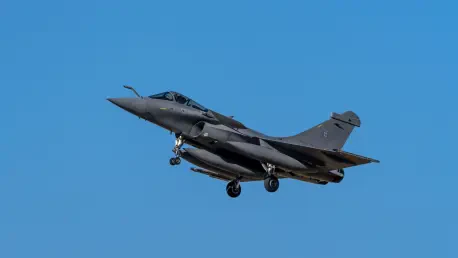

The sharp crack of a supersonic jet engine shattered the morning calm over the Arabian Sea on October 29 as a Rafale Marine fighter precisely caught the arrestor wire of the INS Vikrant. This flawless touchdown represents the transition from shore-based testing to live maritime operations, signaling a transformative leap in naval power projection. By marrying a French-built fighter with an indigenous aircraft carrier, the Navy has solidified a technical partnership that secures maritime dominance.
A Flawless Touchdown: A New Era for Indian Naval Aviation
Accomplished with precision on the first attempt, this maneuver signifies the technical marriage between an indigenous aircraft carrier and a world-class fighter. This integration proves that the vessel can support the most advanced carrier-borne jets in modern service. The transition from the Shore Based Test Facility in Goa to the active deck represents a milestone in operational maturity.
This achievement moved the naval aviation program toward a future of enhanced tactical flexibility. It marked a pivotal shift in how the nation projects influence across international waters, ensuring the carrier fleet remains a potent instrument of maritime diplomacy. Such progress highlights the successful synergy between sophisticated foreign aviation technology and domestic naval engineering.
Strategic Imperatives in the Indian Ocean Region
The integration of the Rafale Marine is a direct response to the evolving security architecture of the region. As maritime threats become more sophisticated, the Navy requires platforms capable of delivering superior air defense and precision-strike capabilities. This ensures the naval fleet can counter regional challenges with a technologically superior edge that deters potential adversaries.
By validating the compatibility of the INS Vikrant with modern standards, the nation is bridging a critical capability gap. These operations provide a platform for projecting power far beyond coastal boundaries, securing vital trade routes. The presence of such advanced fighters on an indigenous carrier sends a clear message of regional stability and defense readiness.
Anatomy of the ₹63,000 Crore Intergovernmental Defense Pact
The procurement is governed by a massive $7.5 billion agreement signed in April 2025. This comprehensive package includes 26 Rafale Marine aircraft, consisting of 22 single-seat combat jets and four twin-seat trainers, alongside advanced weaponry and high-fidelity flight simulators. These assets are vital for maintaining a modern and capable carrier air wing.
Long-term logistical support structures are also in place to ensure high mission-availability rates through 2030. This comprehensive approach streamlines operational readiness while providing the necessary infrastructure for sustained maritime combat effectiveness. The agreement emphasizes not just the acquisition of hardware, but the total lifecycle support required for modern naval warfare.
Validating Technical Synergy and Operational Suitability
The landing serves as a definitive endorsement of the carrier’s design and the aircraft’s adaptability. While initial tests were confined to shore facilities, the move to the carrier deck proved that the arresting gear and flight deck geometry are fully optimized. This technical validation is essential for the safety of pilots and the longevity of the airframes.
This milestone confirms that a high-performance jet can be deployed from a domestically built platform. It reinforces the credibility of the indigenous shipbuilding program while demonstrating seamless interoperability with modern international aerospace standards. The success of these trials paves the way for full-scale operational deployment in the near term.
A Framework for Self-Reliance and Industrial Aerospace Growth
The deal is a cornerstone of the “Atmanirbhar Bharat” initiative, promoting a deep industrial partnership. Roadmap goals include establishing domestic fuselage production and specialized maintenance centers for engines and advanced sensors to enhance technical sovereignty. This move ensures that the expertise required to maintain these sophisticated machines remains within the country.
The successful integration laid the groundwork for a robust maritime strategy. This achievement solidified the synergy between global technology and domestic engineering, ensuring the naval force remained resilient while securing the industrial base through local manufacturing. The partnership effectively established a new standard for defense procurement and technical self-reliance.