
The global automotive industry is currently witnessing a tectonic shift as traditional manufacturing heartlands adapt to the unrelenting demand for high-performance electrified mobility solutions. Renault Group has recently signaled a major strategic pivot by designating its Palencia facility in Spain as the primary assembly hub for a new generation of electric SUVs, effectively expanding its high-tech production network beyond the borders of France. This move represents a foundational component of the company’s Fifth Industrial Plan for Spain, showcasing a commitment to regional diversification and logistical optimization. By integrating high-profile models like the Renault Rafale and the Scenic into the Palencia workflow, the manufacturer is not merely updating a factory; it is redefining the economic role of the Spanish automotive sector within the broader European context. This evolution suggests that the future of electric vehicle production relies on distributed centers that can handle multi-brand requirements while maintaining sustainability.
Industrial Shift and Production Roadmaps
Scaling Output: Strategic Model Consolidation
The operational metamorphosis of the Palencia plant is structured around a multi-phase rollout that prioritizes technical stability and workforce readiness over the coming years. Beginning in mid-2028, the facility will initiate the production of the Renault Rafale, a flagship SUV that embodies the brand’s sophisticated design language and advanced electronic systems. Following this initial launch, the plant will broaden its scope in 2029 to include the fully electric Renault Scenic and the electric iteration of the Mitsubishi Eclipse Cross. This aggressive schedule is meticulously designed to allow for the gradual integration of specialized tooling and robotic assembly lines that are specifically tuned for electric powertrains. By sequencing these launches, the factory can maintain its current output of hybrid and internal combustion models, such as the Austral, ensuring that there is no gap in revenue or regional market supply during the transition. This deliberate pacing highlights a pragmatic approach to industrial transformation that balances immediate market needs.
Central to this industrial strategy is the consolidation of multiple models onto a single, highly flexible production line capable of handling diverse brand requirements simultaneously. By grouping the Rafale, Scenic, and Eclipse Cross under one roof, the Palencia facility is projected to reach an annual output of approximately 150,000 units, a volume that justifies a return to a robust two-shift labor structure. This increase in utilization not only secures thousands of jobs in the region but also guarantees the facility’s economic relevance through at least the next decade. The synergy achieved by manufacturing these vehicles on a shared architecture allows for significant cost savings in parts procurement and logistical management, as many of the internal components are interchangeable across the three distinct models. Such efficiency is critical in a market where production costs for electric vehicles remain a primary barrier to wider consumer adoption. Consequently, Palencia is positioned to become a benchmark for high-volume, cost-effective manufacturing that serves multiple global partners while maintaining high quality.
Economic Resilience: Sustaining the Spanish Workforce
The successful transition to a high-tech electric production hub is deeply dependent on the comprehensive upskilling of the existing workforce at the Palencia facility. As traditional internal combustion engines are phased out in favor of complex power electronics and 800-volt battery systems, the group has implemented extensive training programs to ensure that employees can manage the intricacies of modern electric vehicle assembly. These initiatives focus not only on mechanical assembly but also on high-voltage safety, digital diagnostics, and the calibration of sophisticated sensor arrays required for advanced driver assistance systems. By investing in the human capital of the region, the company is fostering a culture of innovation that extends beyond the factory walls and into the local community. This focus on workforce development ensures that the transition is socially sustainable, preventing the displacement of experienced workers while attracting a new generation of technical talent. Consequently, the plant has become a focal point for vocational training in Spain.
Beyond the assembly lines, the modernization of the Palencia plant acts as a powerful catalyst for the regional supply chain, encouraging local suppliers to adapt to the specific requirements of electric vehicle manufacturing. The proximity of suppliers for critical components like battery housings and electronic control units helps to reduce the carbon footprint associated with logistics while also mitigating the risks of global shipping delays. Furthermore, the plant itself is undergoing a series of environmental upgrades to align with carbon-neutrality goals, such as the installation of renewable energy sources and advanced waste heat recovery systems. These improvements demonstrate that industrial growth does not have to come at the cost of environmental degradation, as the facility aims to become one of the most sustainable sites in the group’s global network. By creating a localized ecosystem of high-tech production, the company is ensuring that the economic benefits of the electric vehicle transition are felt throughout the Palencia region.
Technological Advancements in Vehicle Architecture
Engineering the Foundation: RGEV Medium 2.0
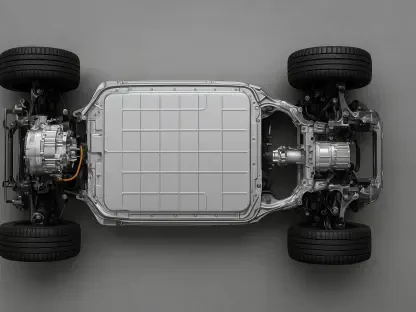
The technological backbone supporting this production surge is the RGEV Medium 2.0 platform, a cutting-edge 800-volt architecture that represents a significant leap forward in power management and charging speeds. This system is engineered to support ultra-fast charging capabilities, drastically reducing the time vehicles spend at charging stations and making long-distance travel more feasible for the average driver. A key innovation within this framework is the implementation of Cell-to-Body engineering, where the battery housing is integrated directly into the vehicle’s structural chassis. This design choice eliminates redundant weight from traditional battery enclosures and enhances the overall rigidity of the vehicle, which improves both safety and handling dynamics. By treating the energy storage system as a stressed member of the frame, engineers have managed to optimize the interior space for passengers while providing a lower center of gravity. This holistic approach to design ensures that every model produced in Palencia offers a superior driving experience and industry-leading efficiency.
Flexibility remains the defining characteristic of the RGEV Medium 2.0 foundation, as it has been developed to accommodate a wide variety of battery chemistries ranging from high-density nickel-manganese-cobalt to more cost-effective lithium-iron-phosphate options. This adaptability allows the plant to tailor specific vehicle trims to different market segments, whether the focus is on extreme performance or maximum affordability. Furthermore, the platform is optimized to deliver an impressive driving range of up to 750 kilometers on a single charge, placing these upcoming SUVs at the forefront of the long-range electric vehicle market. The integration of such advanced technical specifications into the Palencia production line signifies a shift away from entry-level electric mobility toward a more premium, high-voltage ecosystem. This technical maturation is essential for competing with global rivals who are also pushing the limits of energy density and thermal management. As the facility masters the complexities of this 800-volt system, it will serve as the primary knowledge hub for the group.
Driving Efficiency: Next-Generation Powertrains
Beyond standard battery setups, the Palencia-produced SUVs featured cutting-edge, rare-earth-free synchronous motors designed for high highway efficiency and lower production costs. This platform also accommodated Electric Range Extender technology, which utilized a small internal combustion engine as a generator to extend the total driving range to 1,400 kilometers. Industry leaders emphasized that the transition required a workforce proficient in high-voltage systems and digital diagnostics. To maintain this momentum, stakeholders prioritized the expansion of local charging networks and the integration of recycled materials into the battery supply chain. These proactive measures ensured that the facility remained a competitive force in the global market while adhering to strict environmental standards. Ultimately, the successful conversion of the factory proved that large-scale industrial shifts were achievable through clear production roadmaps and collaborative alliance synergies. This project established a definitive framework for sustainable automotive manufacturing.
Manufacturers seeking to replicate this transition should focus on modular platform sharing to offset the high costs of research and development. The implementation of 800-volt systems required significant upgrades to existing assembly lines, which Palencia managed by integrating robotic precision early in the conversion process. Future considerations involved the use of solid-state battery technology, which researchers suggested would eventually replace current liquid electrolytes to further enhance safety and energy density. Policy makers also played a role by providing incentives for local battery manufacturing, which stabilized the supply chain during the production ramp-up. The use of a range extender provided a necessary psychological bridge for consumers who remained concerned about public charging reliability. As the facility moved toward full capacity, the data gathered from its automated logistics systems informed the optimization of other global assembly plants. This holistic strategy ensured that the Palencia plant not only met its initial production goals but also paved the way for the next generation of electrified transport.