
Dependency on foreign nations for the “Vital 40” list of medicines creates a precarious single point of failure for the American healthcare system. The current pharmaceutical landscape is defined by a reliance on international supply chains that, while cost-efficient, have proven dangerously brittle under the weight of geopolitical tensions and global logistics crises. While the United States has long led the world in pharmaceutical innovation and drug discovery, the actual physical production of the medications used by millions of citizens every day has largely migrated to overseas facilities. This shift has left the domestic market exposed to sudden shortages of critical generics, ranging from common antibiotics to life-saving oncology treatments. Addressing this vulnerability requires a fundamental shift in how the nation views its industrial assets. Rather than committing decades to building new infrastructure, the strategy is shifting toward the rapid modernization of domestic plants that currently sit idle.
Statistical Vulnerabilities in Modern Medicine
The API Innovation Center has identified a specific roster of medications, known as the “Vital 40,” which represent the most essential components of the national pharmaceutical inventory. These drugs are clinically indispensable, yet they are also the most susceptible to persistent shortages that disrupt hospital operations and patient care. Statistical analysis reveals a stark reality: for approximately 47 percent of the Key Starting Materials required to manufacture these forty drugs, China serves as the sole global source. This geographic concentration means that a single regional lockdown, environmental regulation change, or trade dispute in a single foreign province could theoretically paralyze the American supply of critical medicine. This dependency is not merely an economic concern but a profound national security risk that leaves the public health infrastructure at the mercy of global variables beyond domestic control. Diversification of these sources is now viewed as an urgent necessity.
Beyond the raw materials, the production of Active Pharmaceutical Ingredients (APIs) shows an equally concerning level of concentration outside of North America. Current data indicates that of the top one hundred most frequently prescribed generic drugs in the United States—which account for nearly ninety percent of all prescriptions filled—eighty-three rely entirely on active ingredients produced in foreign facilities. This systemic reliance on offshore manufacturing limits the ability of the Food and Drug Administration to perform consistent, unannounced inspections and complicates the oversight of drug purity and potency. Furthermore, the lack of domestic production capacity makes the American market a “price taker,” forced to accept fluctuations driven by overseas labor markets and energy costs. To secure the pharmaceutical safety net, the federal government and private stakeholders must focus on bringing the synthesis of these high-volume generic ingredients back to American soil.
Technological Shift to Continuous Flow Chemistry
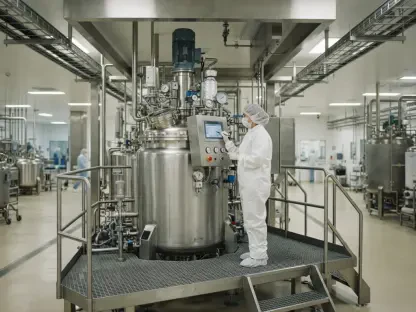
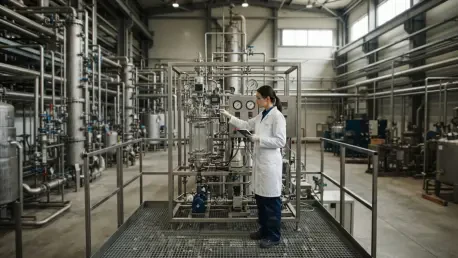
Transitioning pharmaceutical production back to the United States requires more than just moving existing equipment; it necessitates a fundamental leap in manufacturing technology. Traditional drug manufacturing typically relies on batch processing, where large volumes of chemicals are mixed in massive, multi-story vats. This method is often slow, requires significant manual intervention, and generates substantial waste because each step must be completed and tested before the next one begins. In contrast, advanced continuous flow chemistry allows chemical reactions to take place in a streamlined, uninterrupted sequence within a closed system. This technology enables manufacturers to produce high-quality medicinal compounds in significantly shorter time frames while utilizing a much smaller physical footprint. By adopting flow chemistry, domestic plants can achieve higher yields with lower energy consumption, making American facilities more competitive against low-cost labor markets.
The integration of in-line monitoring and automated quality control systems further distinguishes advanced manufacturing from the legacy methods of the past. In a continuous flow environment, sensors provide real-time data on the chemical composition, temperature, and purity of the product at every stage of the process. This allows for immediate adjustments, ensuring that every milligram of the final Active Pharmaceutical Ingredient meets the most rigorous safety standards without the need for the time-consuming retrospective testing required in batch manufacturing. Moreover, the modular nature of this equipment allows for greater flexibility, enabling a single facility to switch between different drug products with minimal downtime. This technological agility is essential for a domestic industry that must respond quickly to shifting market demands and sudden public health crises, providing a level of resilience that offshore, high-volume batch plants simply cannot match.
Economic Feasibility of Retrofitting Over New Construction
One of the primary economic barriers to reshoring has historically been the prohibitive cost and extended timeline of “greenfield” construction. Building a brand-new pharmaceutical manufacturing facility from the ground up is an enormous undertaking that can require four to six years of planning, construction, and regulatory validation before the first commercial batch is produced. For generic drug manufacturers, who operate on razor-thin profit margins, the massive capital expenditure and the long delay in return on investment often make domestic expansion a non-starter. This temporal gap is particularly dangerous when the goal is to address immediate supply chain vulnerabilities. If the nation relies solely on new construction, it will remain exposed to foreign supply disruptions for the better part of a decade. Consequently, the focus has shifted toward finding ways to leverage the existing industrial landscape to achieve pharmaceutical independence in a much shorter timeframe.
The United States currently possesses a significant amount of underutilized industrial infrastructure that could serve as the backbone of a reshored drug industry. Industry reports suggest that roughly fifty percent of the existing domestic pharmaceutical manufacturing capacity is currently shut down or operating well below its design potential. Retrofitting these idle plants with modern, continuous flow equipment offers a significantly faster and more cost-effective pathway to production than new construction. While a greenfield project takes years, a focused renovation of an existing facility can be completed and brought online in as little as six months. Because advanced manufacturing equipment is compact, it can often be installed within the existing footprint of older buildings without the need for major structural changes. This approach dramatically reduces the initial capital burden, making it financially viable for companies to produce generic medications locally.
Bridging the Implementation Gap Through Policy
Successfully scaling domestic production requires addressing the inherent risks associated with early adoption of new technologies. Generic pharmaceutical companies are often reluctant to invest in advanced manufacturing lines because the initial development and validation costs are high, and long-term market stability is not guaranteed. To overcome this inertia, industry leaders are advocating for a shared-risk model between the public and private sectors. Organizations like the API Innovation Center play a crucial role in this transition by proving the technical feasibility of reshoring specific medicines and lowering the barrier to entry for commercial manufacturers. By subsidizing the initial research and development phases, the government can help de-risk the transition to continuous flow chemistry. Once the processes are validated, the inherent efficiencies of the technology allow manufacturers to sustain profitable operations without ongoing long-term subsidies.
Beyond risk-sharing, the creation of a stable domestic market for American-made pharmaceuticals is essential for long-term sustainability. Policy levers such as tax incentives for domestic sourcing and “preferred provider” frameworks can encourage healthcare systems and distributors to prioritize medications produced in high-quality domestic facilities. For instance, creating financial rewards for purchasers who commit to long-term contracts with American manufacturers provides the volume certainty needed to justify infrastructure investments. Legislative efforts are also focusing on transparency in the supply chain, requiring drug labels to clearly state the origin of the Active Pharmaceutical Ingredients. This allows consumers and healthcare providers to make informed choices that support national resilience. By aligning the business logic of the private sector with the strategic goals of public health policy, the nation can build a robust ecosystem that values security as much as cost.
Strategic Path Toward National Health Security
Achieving full-scale pharmaceutical reshoring requires a cultural shift within the healthcare purchasing industry. Beyond the technical and economic hurdles, there is a collective commitment to valuing supply chain security as a core component of patient safety. Healthcare providers and hospital systems drive this change by incorporating resiliency metrics into their procurement processes, favoring manufacturers that maintain domestic production lines. This demand-side pull creates a virtuous cycle where increased domestic volume leads to further technological refinements and even lower costs. As American facilities demonstrate their ability to consistently deliver high-quality generic drugs without the interruptions common in the offshore model, the perceived risk of shifting away from low-cost foreign suppliers continues to diminish. The ultimate goal is to create a self-sustaining ecosystem where innovation in manufacturing and excellence in public health are inextricably linked for the benefit of all.
The initiative to modernize idle pharmaceutical plants successfully demonstrated that domestic production is both technically feasible and economically sound. By prioritizing the retrofitting of existing infrastructure, stakeholders bypassed the multi-year delays associated with new construction and addressed the critical vulnerabilities of the “Vital 40” list in record time. Advanced manufacturing technologies like continuous flow chemistry proved to be the decisive factor in offsetting foreign labor advantages, ensuring that American-made generics remained competitive on the global stage. Government leaders and industry experts coordinated their efforts to provide the necessary risk-sharing frameworks and purchasing incentives that stabilized the nascent industry. These actions established a blueprint for future reshoring efforts across other critical sectors, reinforcing the importance of industrial sovereignty. The nation moved forward with newfound confidence in its ability to secure its medical supply chain.