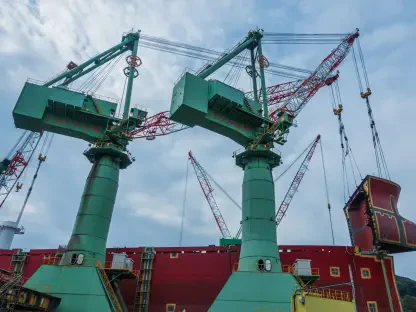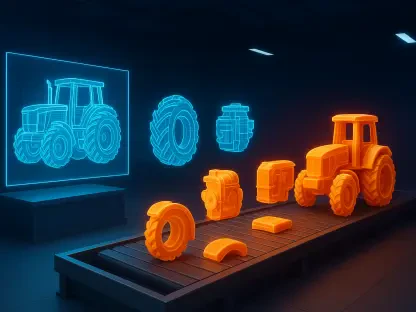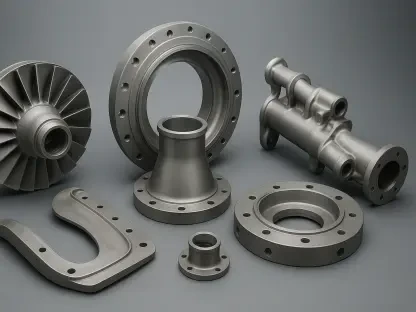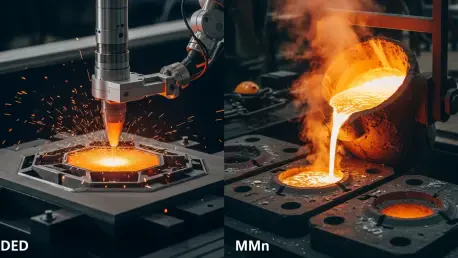

Steel that cuts emissions without cutting performance is no longer a promise but a playbook taking shape on mining sites and in pilot foundries across Europe, and SUMMSEED shows how to use it. This guide distills the program’s practice-proven approach into actionable steps that align alloy design with casting and laser-wire Directed Energy Deposition, moving from lab evidence to certifiable results on real cone crusher components.
Why Low-Carbon MMn Steels and Laser-Wire DED Matter Now
SUMMSEED is an industry-driven European effort to deliver sustainable medium-manganese steels optimized for both casting and wire-based DED. The program connects universities, technology providers, and steelmakers to close the gap between metallurgy and deployment, focusing on mining parts where abrasion and impact define success.
Best practices matter because they bind decisions across the lifecycle. Design choices influence castability and DED behavior; process windows shape microstructures that govern wear; and quality records unlock audits and field acceptance. This guide emphasizes sustainability by design, dual-process tailoring, mining performance, circularity through repair, evidence and certification, and coordinated roles for UPC and CIM UPC, Sidenor, TUBAF, TU Delft, Sandvik, and Meltio.
Tangible Benefits of Following Proven Practices
Lean MMn chemistries paired with repair-first DED workflows lower embodied carbon from melt to many lives-in-service. Repairing mantles and bowls on equipment avoids scrap and shortens transport loops, while lower-alloy steels reduce upstream impacts and material risk.
Pilot casting plus on-equipment DED repair compress lead times and inventory, cutting downtime and waste. Carefully balanced strength, toughness, and wear targets aim for Hadfield-class duty with reduced critical elements, advancing materials security aligned with EU priorities. Integrated modeling, trials, and standards-ready documentation accelerate industrial readiness and de-risk compliance.
Best Practices for Developing and Deploying MMn Steels for Casting and Laser-Wire DED
Adopt sustainability and service performance as co-equal constraints from the first spreadsheet to the first pour. Use trade-off matrices that weigh strength–toughness–wear against cost and emissions, steering compositions away from critical elements without eroding durability in high-impact, abrasive duty.
Translate choices into field relevance early. UPC can lead down-selection of two bracketing MMn grades, while Sandvik screens them on lab wear rigs before pilot casting at Sidenor, ensuring only viable candidates progress.
Design Alloys for Sustainability and Service Performance
Define target chemistries that retain work-hardening and crack resistance while trimming alloying intensity compared with Hadfield. Calibrate carbon and manganese to stabilize the desired phase mix under service loads, minimizing reliance on scarce additions.
Use property–process–cost maps to lock in long-life behavior. When two grades bracket toughness and wear, push both through equivalent tests so durability choices are evidence-based rather than intuitive.
Tailor Alloys Concurrently for Casting and DED
Bake castability and hot-cracking resistance into criteria alongside DED solidification behavior. Consider segregation control, fluidity, and hot strength for castings, while ensuring the same alloy resists cracking under steep thermal gradients in multi-pass DED.
Align heat treatments and thermal cycles so new and repaired parts share a metallurgical baseline. A cone crusher component piloted at Sidenor can be rebuilt by Meltio with the same wire, enabling apples-to-apples comparison in the field.
Engineer a Repair-First DED Workflow for Mining Components
Standardize inspection, damage mapping, toolpaths, interpass temperature, and post-heat to deliver repeatable geometry and properties. Control dilution to preserve chemistry, and monitor residual stress to prevent distortion or premature cracking.
Define acceptance criteria for profile accuracy, hardness bands, and defect limits. Meltio and CIM UPC can lock a parameter set that restores crusher mantles within tight tolerances, shaving weeks off lead time.
Integrate Modeling and Accelerated Testing Loops
Use thermodynamics, kinetics, and process simulations to predict phases, segregation, and hardness after multi-pass DED and casting. Model retained austenite targets, then pressure-test stability under impact and abrasion to tune interpass strategies.
Validate predictions with coupons before pilots. TU Delft simulations can guide process envelopes, while small-scale trials confirm microstructural intent, shortening iteration cycles.
Develop Qualified Wire Feedstock and Robust Process Windows
Specify wire chemistry, cleanliness, diameter control, and surface condition, then map power, feed, and travel speed envelopes. Document relationships among parameters, bead geometry, porosity, and hardness so shop-floor teams can act with confidence.
TUBAF can define wire specs and corner cases, while Meltio demonstrates low-porosity beads across extremes to set production windows that hold up under real repairs.
Embed Quality Assurance, NDE, and Certification Pathways
Establish inspection plans using UT, PT, hardness mapping, and sampling rates tied to risk. Build digital traceability from wire batch to torch path and heat lot to hardness map.
Prepare PQRs and WPSs aligned with relevant standards and end-user criteria. Sandvik’s field validation on repaired mantles can package microstructure, impact, wear, and service hours into an audit-ready data pack.
Operationalize Circularity and Take-Back Logistics
Set return, triage, and material segregation rules for worn parts. Define when to repair, when to recast, and how to preserve traceability between lives to support warranties and data analytics.
Track carbon and material savings in dashboards usable for ESG reporting. A mine-site take-back loop can extend mantle life by a full cycle, turning repair decisions into measurable sustainability gains.
Govern the Consortium and Data for Faster Scale-Up
Clarify roles across UPC and CIM UPC, Sidenor, TUBAF, TU Delft, Sandvik, and Meltio. Maintain shared databases, parameter change-control, and decision logs that tie models to pilots and pilots to shop instructions.
Plan staged TRL gates from coupons to pilots to on-equipment trials. Only validated windows should graduate into guidelines, protecting quality and compressing time to industrial readiness.
Final Take: Where SUMMSEED Fits and How to Proceed
SUMMSEED offered a credible, certifiable route to complement or replace Hadfield steels with lean MMn grades across casting and DED, pairing emissions cuts with competitive performance. Mining operators and maintenance providers saw uptime gains and lower lifecycle costs; steelmakers added circular-ready grades; OEMs designed for repair and faster spares; policymakers aligned decarbonization with materials security.
The next steps had been clear: verify property equivalency for both cast and DED-repaired states; control heat input, interpass temperature, and post-heat for stable microstructures; budget for PQR/WPS, NDE, and training; secure consistent wire feedstock; match geometries and wear modes to DED feasibility; and embed take-back and data reporting in contracts. Taken together, these practices translated metallurgy into durable business value and positioned adopters to scale circular, low-carbon steel solutions across heavy industry.