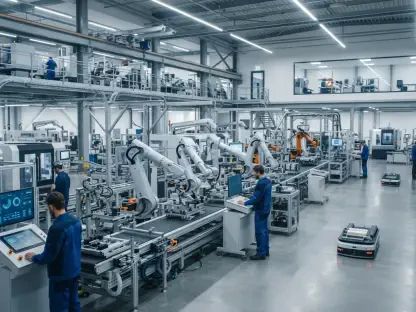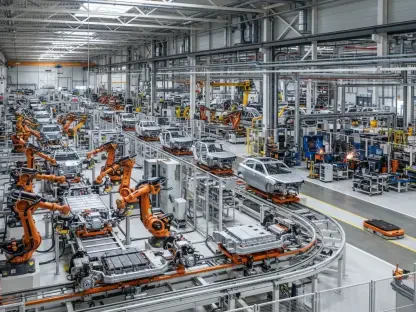

The modern manufacturing floor is a sensory overload of rhythmic clanking, the sharp scent of ozone from welding, and the constant hum of high-speed assembly lines. But behind this physical productivity lies a digital nervous system that is increasingly under siege, according to the latest findings from the Verizon Data Breach Investigations Report. To navigate these turbulent waters, we are joined by Kwame Zaire, a manufacturing expert and thought leader in production management and predictive maintenance. In this discussion, we dive into why vulnerability exploitation has overtaken stolen credentials as the top entry point for hackers and how the “Shadow AI” phenomenon is creating hidden risks within internal data. We examine the 240 percent surge in the abuse of remote management tools and explore how AI is shrinking attack timelines from months to mere hours. Kwame provides a roadmap for securing the future of industrial production by focusing on identity visibility, patching discipline, and the critical need for a resilient security culture that treats every digital actor as a high-risk identity.
With 80 percent of manufacturing breaches now targeting internal data, how should leaders shift their focus from protecting the perimeter to securing the core intellectual property within?
Manufacturing leaders have to move away from the traditional “castle and moat” mentality because the intruders are already focused on the crown jewels deep within our internal databases. When 80 percent of reported breaches specifically target internal data, it tells me that the attackers are no longer just looking to cause a temporary headache; they want the blueprints, the proprietary recipes, and the operational logic that gives a company its competitive edge. We are seeing three specific patterns—system intrusion, social engineering, and basic web application attacks—accounting for a staggering 91 percent of these incidents. It’s a gut-wrenching feeling for a plant manager to realize that the very data they use to optimize a production line is being siphoned off by an actor who gained access through a simple web flaw. To combat this, we have to prioritize visibility into who is touching what data and move toward a model where every internal movement is verified, rather than trusted by default. This shift requires treating internal data as a dynamic asset that needs constant monitoring rather than a static file stored safely behind a firewall.
Ransomware and malware are present in a staggering 75 percent of sector breaches. How does this constant threat change the “cost of doing business” on a day-to-day operational level?
The “cost of doing business” has evolved from a simple line item for equipment maintenance into a massive financial and psychological burden that can paralyze a facility without warning. When 75 percent of breaches involve malware and the majority—specifically 61 percent—are fueled by ransomware, the atmosphere on the factory floor shifts from productive to paranoid the moment a screen freezes or a programmable logic controller stops responding. It isn’t just about the ransom payment itself; it’s about the eerie silence of a production line that should be producing thousands of units an hour and the frantic, sweaty-palmed realization that your recovery costs might exceed your annual profit margin. This environment forces a shift in leadership where we have to treat cybersecurity with the same rigor as physical safety protocols on the shop floor. We aren’t just protecting bits and bytes anymore; we are protecting the physical heartbeat of the company, and failing to do so means accepting a 61 percent chance that your next major disruption will be at the hands of an extortionist. Leaders must now factor these recovery costs into their long-term capital expenditure plans, acknowledging that resilience is just as important as throughput.
Vulnerability exploitation has become the leading access vector, yet the median remediation time remains at 43 days. How can manufacturers close this gap when dealing with legacy environments that cannot be easily patched?
The irony is that the very tools we use to stay lean and responsive—those Remote Monitoring and Management (RMM) tools that allow a technician to fix a machine from three states away—have become the front door for attackers, with their prevalence as a threat tool jumping 240 percent in just a year. In a manufacturing setting, where we run complex legacy OT and IT environments, patching is a logistical nightmare because you cannot just reboot a critical furnace or a robotic arm without planning for weeks. This is why we see a median remediation time of 43 days, a gap that is frankly terrifying when you consider that vulnerability exploitation has overtaken credential abuse as the leading initial access vector, now accounting for 31 percent of breaches while stolen credentials have fallen to 13 percent. We have to stop trying to patch everything by volume and instead focus on “patching by reachability,” where we isolate the most exploitable flaws that actually provide a path to critical systems. It’s about building a hardened identity and authorization control plane so that even if an attacker uses an unpatched vulnerability to get in, they find themselves in a digital “room” with no doors and no way to move laterally through the factory network.
How is the rise of “Shadow AI”—where 45 percent of employees are using unapproved tools—creating a new class of risk for manufacturing intellectual property and operational safety?
The rise of “Shadow AI” is a double-edged sword; it shows our workforce is hungry for efficiency, but it also means 45 percent of our employees are potentially feeding sensitive data into black-box models. This creates a massive risk of accidental data leakage where source code, technical documents, or proprietary production schedules could be ingested by a public AI, becoming part of its training set and losing all confidentiality. We are seeing a new class of privileged, machine-speed actors where an AI agent can connect to tools, move data, or trigger workflows across the enterprise. If an agent makes the wrong decision at machine speed, the consequences for a manufacturing line could be catastrophic, leading to equipment damage or safety hazards. The response shouldn’t be a blanket ban, which usually fails anyway, but rather governance with teeth that treats these AI agents and service accounts as high-risk identities. We need to enforce least privilege and ensure there is always a human in the loop for high-risk actions, while rehearsing our response for when an agent inevitably makes a mistake.
Third-party involvement in breaches has jumped 60 percent year over year. In an interconnected supply chain, how do you manage a “blast radius” that extends far beyond your own network?
We can no longer afford to treat our suppliers and integration partners as separate entities when 48 percent of all breaches now involve a third party. This 60 percent year-over-year increase shows that our perimeter is effectively gone; our security is only as strong as the smallest vendor who has a persistent connection to our network. When I walk through a plant, I see dozens of different vendors—HVAC specialists, logistics providers, and specialized equipment maintenance crews—all plugged into our ecosystem, and each one represents a potential vector for a system intrusion. To manage this, we must extend our continuous, adversarial pressure testing across the full attack surface, including every vendor and integration partner we rely on. No single security product can close this gap; it requires a structural change in how we calibrate our budgets, moving away from annual assessments to a model of constant vigilance. We have to assume that our partners will be breached and design our network so that the “blast radius” of a third-party incident is contained before it can reach our core production systems.
The report highlights that a culture of secure behavior is as vital as technical controls. What does it look like to move security from a “soft initiative” to a core operational foundation on the shop floor?
Security culture on the plant floor isn’t about boring PowerPoint presentations or annual compliance checks; it’s about making sure every technician understands that a compromised credential or an unapproved AI tool is just as dangerous as a faulty safety valve or a frayed high-voltage cable. When we see that credentials were compromised in 26 percent of incidents and personally identifiable information theft accounted for 17 percent, it highlights a fundamental gap in how we value identity and data privacy in an industrial setting. We need to build a “trust layer” where secure behavior is the path of least resistance, ensuring that workers don’t feel the need to bypass security protocols just to hit their daily production quotas. If 45 percent of people are using unapproved tools, it’s a clear signal that our official systems aren’t meeting their needs, so we have to bridge that gap with secure, sanctioned alternatives that empower the workforce. A true security culture means that when someone sees an anomaly or a suspicious remote access request, they feel the same urgency to hit the “emergency stop” as they would if they saw a physical hazard on the line.
What is your forecast for the state of manufacturing cybersecurity as we look toward 2027 and the emergence of advanced AI-focused threat models?
My forecast is that we are entering a period of “industrialized exploitation” where the barrier to entry for complex cyberattacks will vanish, leading to a surge in automated, persistent threats that target the heart of manufacturing. We will see the gap between “time-to-exploit” and “time-to-remediate” widen even further as AI models like Anthropic’s Mythos or DeepMind’s Big Sleep accelerate vulnerability discovery to a point where human-led patching becomes essentially obsolete. This shift will force a long-overdue maturation in the industry, where manufacturers finally embrace “reachability analysis” and identity-bound access as the only viable way to contain the blast radius of an inevitable breach. By 2027, the successful companies won’t be the ones who never faced an incident, but the ones who designed their systems with the assumption of compromise, ensuring that a breach in one segment doesn’t bring down the entire global production chain. The future belongs to those who treat their digital infrastructure with the same predictive maintenance and safety discipline they’ve applied to their physical machinery for decades, moving from a reactive stance to a proactive, resilient foundation.