
The global race to provide affordable weight-loss medication hit a massive roadblock when Dr. Reddy’s Laboratories, a titan of the generic industry, unexpectedly pulled the plug on its burgeoning semaglutide production line. This decision reverberated through the pharmaceutical sector, especially as the world grappled with an insatiable hunger for GLP-1 therapies. What began as a promising venture to democratize access to metabolic health has morphed into a rigorous technical investigation, forcing the company to pivot away from immediate commercial goals to address precision errors.
The halt was not a matter of waning interest but rather a consequence of “out of specification” batches identified during a critical scaling phase. While existing stock remained safe for the public, the company found discrepancies in the active pharmaceutical ingredient that made mass production untenable under current protocols. This sudden pause illustrated the precarious nature of biologics, where even a minor deviation in chemical composition can derail a multi-billion-dollar supply chain.
The Sudden Brake on a Pharmaceutical Success Story
The global pharmaceutical landscape is currently navigating a period known as the patent cliff, where original brand-name protections expire and the floodgates for generics swing wide. In regions like India and Canada, generic semaglutide was hailed as a revolutionary tool for public health, offering a fraction of the cost of branded alternatives. Dr. Reddy’s was expected to lead this charge, but the current production bottleneck serves as a stark reminder that entering this market requires more than just legal clearance; it demands flawless manufacturing execution.
Navigating these complexities has proved more difficult than many analysts anticipated. The transition from laboratory-scale success to industrial-volume output often reveals hidden vulnerabilities in the formulation of complex proteins. As Dr. Reddy’s encountered these hurdles, the industry realized that the gold rush for affordable GLP-1s would be a marathon rather than a sprint, requiring deep investments in specialized infrastructure that simply did not exist at scale just a few years ago.
The Significance of the Generic Semaglutide Gold Rush
The financial and logistical consequences of this halt are staggering, with Dr. Reddy’s slashing its delivery projections for the current fiscal period. Originally, the firm aimed to distribute roughly 12 million injection pens, but those estimates have plummeted to a mere 6 or 7 million units. This shortfall has created a vacuum that competitors have struggled to fill, leading to a broader market instability that might persist until late 2027.
This disruption triggered a chain reaction among other manufacturers, such as Torrent Pharmaceuticals, which initiated its own precautionary recalls. These companies recognized that the technical issues plaguing one giant could easily manifest in their own lines, given the shared reliance on specific API sources and specialized hardware. This ripple effect has tightened the global supply of metabolic treatments, leaving patients and healthcare providers in a state of uncertainty as they wait for a stabilized production cycle.
Technical Hurdles: The Ripple Effect on Global Supply
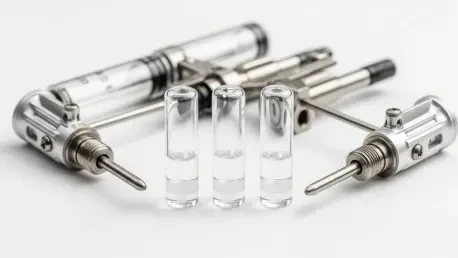
Industry analysts and leadership at Dr. Reddy’s, including CEO Erez Israeli, have emphasized that the primary constraint is not a lack of demand but a severe lack of specialized capacity. Producing these therapies involves a highly sophisticated ecosystem that goes beyond the drug itself, requiring precision-engineered glass cartridges and complex injector devices. The scarcity of these components has turned the generic rollout into a logistical nightmare, where the medicine is ready but the delivery mechanism is not.
Experts noted that the industry is likely facing a struggle toward the end of the decade to align manufacturing capabilities with global patient needs. While contract manufacturers like OneSource Specialty Pharma have maintained stable operations, they represent a small portion of the overall requirement. The broader consensus suggested that until the global infrastructure for peptide production is modernized, the market will remain vulnerable to these types of sudden, localized production freezes.
Expert Insights: Manufacturing Vulnerabilities and Capacity Gaps
Organizations recognized that navigating biologic scale-up required a shift in strategy, prioritizing rigorous pre-validation testing over aggressive launch timelines. Successful firms implemented deep-dive audits into their API supply chains to catch inconsistencies before they reached the assembly line. By diversifying their sourcing for specialized glass and mechanical components, these companies managed to buffer themselves against the supply shocks that nearly paralyzed the market during the initial semaglutide shortage.
Strategies: Managing Biologic Scale-Up and Quality Control
Transparency with regulatory bodies became the cornerstone of maintaining public trust throughout these technical investigations. Leaders who proactively shared data regarding their manufacturing hurdles found that the market was more forgiving of delays than of hidden defects. This period of industry-wide correction ultimately paved the way for a more resilient manufacturing framework that prioritized patient safety and long-term reliability over short-term financial gains.