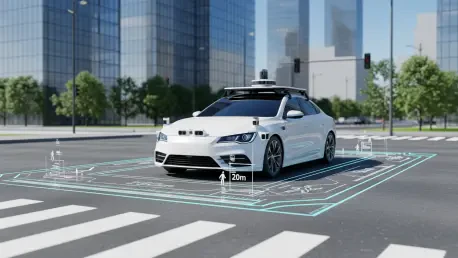

The daily commute across congested metropolitan corridors has long been characterized by the unpredictable nature of human error, which serves as the primary catalyst for millions of vehicular collisions annually. Recent data from the Insurance Institute for Highway Safety suggests that this paradigm is undergoing a fundamental shift as Waymo’s autonomous fleet demonstrates a measurable lead in road safety over traditional drivers. While the prospect of fully autonomous transit once felt like a distant aspiration, the current deployment of Level 4 vehicles in Phoenix, San Francisco, and Los Angeles provides a robust laboratory for evaluating real-world efficacy. These cities serve as the frontline for a high-stakes experiment where sensor arrays and complex algorithms compete against the intuition and occasional fallibility of the human mind. The findings indicate a significant reduction in crash frequency, though the path to universal adoption remains complicated by varying geographic challenges and the nuances of urban navigation. These statistics represent a tangible reduction in the risks faced by pedestrians.
Measuring Real-World Safety Success
Regional Disparities and High-Stakes Accident Rates
Analyzing the performance of autonomous systems across different urban landscapes reveals that geographical familiarity is as crucial for software as it is for human commuters. In established markets like Phoenix, Waymo vehicles recorded a crash rate that was a staggering 76% lower than the human benchmark, suggesting that the predictable layouts and clear visibility of the Southwest are ideal for sensor-based navigation. However, the transition to the dense, fog-heavy streets of San Francisco presented a more complex challenge, resulting in a still impressive but lower 35% reduction in incidents. These regional variations highlight the fact that an autonomous system’s safety profile is not a static figure but rather a dynamic interaction between the vehicle’s capabilities and the specific environmental variables of the city it inhabits. Even in newer test environments like Austin, the technology showed a higher collision rate, which underscores the importance of local training and environmental adaptation for driverless systems.
Impact of Automation on Serious Collision Frequency
Beyond the simple tally of total collisions, the severity of these incidents provides a much more telling picture of how autonomous technology interacts with the physical world. The study highlighted that Waymo’s fleet was involved in 81% fewer injury-causing accidents compared to human-driven vehicles, a statistic that directly correlates with the software’s ability to maintain constant vigilance. Unlike human drivers who may suffer from momentary lapses in judgment, Level 4 systems utilize a suite of LiDAR and camera technology to maintain a 360-degree view of their surroundings at all times. This constant monitoring has led to an 85% reduction in single-vehicle crashes, which are frequently caused by drivers drifting out of lanes or failing to perceive stationary objects. By effectively removing the most common types of high-impact human errors from the equation, autonomous systems are proving that they can mitigate the most dangerous aspects of modern road travel effectively through superior spatial awareness.
Defining the Scope of the Technology
Moving Beyond Partial Driver Assistance
Understanding the safety implications of driverless cars requires a clear distinction between the Level 4 autonomy used by Waymo and the Level 2 driver assistance features common in modern consumer cars. Level 2 systems, such as advanced cruise control and lane-keeping assistance, still require a human operator to remain fully engaged and ready to take control at any moment. This creates a psychological phenomenon known as attention fatigue, where the driver becomes lulled into a false sense of security and fails to react quickly enough when the system encounters a situation beyond its capabilities. In contrast, Level 4 vehicles are designed to manage every aspect of the driving task within a defined geographic area, removing the human from the operational loop entirely. This structural difference is critical because it eliminates the risk of mode confusion, where a driver is unsure of their responsibilities, leading to a more consistent and predictable safety profile on the road.
Neutralizing the Human Factor in Transit
The shift toward full autonomy represents a fundamental change in how the industry approaches the concept of vehicular safety, moving away from reactive measures toward proactive avoidance. When a human is removed from the steering wheel, the risk factors associated with fatigue, emotional stress, and chemical impairment are completely neutralized. This is particularly significant during nighttime driving or long shifts, periods when human cognitive performance naturally declines and the likelihood of serious accidents increases. Level 4 technology operates with a consistent logic that does not waver based on the time of day or the duration of the trip, providing a level of reliability that human physiology simply cannot match. By focusing on these high-automation tiers, companies are able to bypass the uncanny valley of partial automation, where the interaction between human and machine often creates new types of safety risks that were not previously present in the driving environment for traditional motorists.
Bridging the Gap in Safety Monitoring
The Crisis of Reporting and Transparency
Despite the promising statistics currently available, the industry faces a significant challenge regarding the lack of standardized federal reporting requirements for autonomous vehicle data. While Waymo has chosen to share its vehicle miles traveled voluntarily, many other companies operating in the space remain guarded, creating what experts call a data vacuum. Without a mandatory requirement for all autonomous operators to disclose their total mileage alongside their crash reports, it is nearly impossible to calculate a truly accurate and comparable crash rate for the entire sector. This lack of transparency hinders the ability of regulators and the public to differentiate between safe implementations and those that may be cutting corners. Establishing a unified framework for data disclosure is essential for moving past anecdotal evidence and toward a scientifically rigorous understanding of how these fleets perform as they scale into more complex and diverse urban environments across the country.
Creating a Fair Comparison with Human Drivers
Another layer of complexity in evaluating autonomous safety is the historical discrepancy between how robot-involved incidents and human-involved crashes are recorded and reported to authorities. Studies suggest that roughly half of all minor human-involved fender-benders are never reported to the police or insurance companies, leading to an artificially low benchmark for human safety. Conversely, autonomous vehicle companies have historically been under intense scrutiny, often reporting every minor contact, such as a tire brushing a curb or a low-speed tap that leaves no visible damage. To create a fair comparison, researchers had to meticulously filter the data to include only those incidents that would typically result in a police report. This process revealed that only about 22% of initially reported autonomous crashes were serious enough to be included in a balanced study, highlighting the need for more nuanced metrics that focus on relevant and impactful road safety events during the analysis.
Establishing a Federal Path Forward
The integration of Level 4 autonomous systems into the national infrastructure necessitated a fundamental reassessment of road safety metrics and regulatory expectations during the early phases of adoption. Stakeholders recognized that maintaining a competitive edge in safety required not only better software but also a commitment to standardized data sharing across the entire automotive sector. Moving forward, the focus shifted toward establishing clear federal guidelines that mandated the reporting of vehicle miles traveled to ensure that safety claims remained grounded in verifiable reality. Authorities also prioritized the creation of dynamic safety zones where autonomous performance could be monitored against live human driving data to provide real-time insights. By implementing these rigorous oversight measures, the industry provided a clear path for scaling technology that prioritized human life while fostering innovation. These actions ensured that the transition to a driverless future remained transparent and accountable.