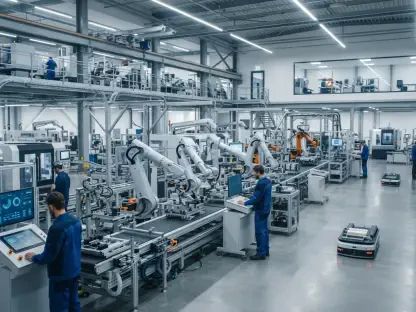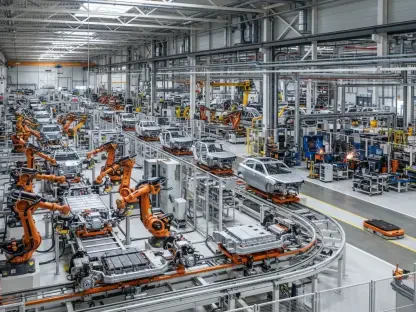

The sight of a flashing red light on a production floor dashboard no longer represents just a problem to be solved by a human operator, but rather a trigger for an intelligent system to autonomously evaluate and resolve the underlying issue before the shift even ends. In the current manufacturing landscape, the sheer volume of data generated by Internet of Things sensors and enterprise resource planning systems has reached a point where manual interpretation has become a bottleneck for growth. Traditional diagnostic tools were designed to tell managers what happened or why it happened, but they often left the actual resolution to exhausted supervisors. As margin pressures mount and labor shortages continue to tighten their grip on industrial hubs, the focus has shifted from mere visibility to the necessity of autonomous execution. Agentic AI represents this fundamental change, moving beyond simple forecasting and predictive analytics to a state where digital agents can plan and execute complex tasks with minimal human intervention. This evolution allows organizations to move past the limitations of traditional dashboards, which frequently act as static graveyards for information that arrives too late to make a difference in real-time operations.
1. The Shift: Transitioning from Data Insights to Direct Action
Modern industrial facilities are increasingly moving away from passive monitoring systems toward active execution frameworks that leverage the power of agentic technology. For years, predictive AI provided a window into the future, offering forecasts that helped procurement teams anticipate shortages or maintenance crews predict machine failures. However, knowing a breakdown is imminent is only half the battle; the real value lies in the coordinated response that follows that insight. Agentic AI bridges this gap by functioning as a reasoning engine that does not just alert a human but also formulates a plan and initiates the necessary work orders. This transition marks a departure from the “human-in-the-loop” model for every minor adjustment and moves toward a more efficient “human-on-the-loop” oversight approach. By reducing the reliance on manual intervention for routine logistical hurdles, manufacturers can ensure that their operations remain fluid even when unexpected variables threaten to disrupt the primary production schedule.
Addressing modern manufacturing challenges requires a level of agility that traditional manual processes simply cannot provide in an increasingly volatile global market. Margin pressures have become more acute, necessitating a drive for efficiency that leaves zero room for the delays associated with multi-layered approval chains and siloed communication. Furthermore, the persistent labor shortage in specialized technical roles has created a vacuum where experienced floor managers are stretched too thin to handle every micro-decision required for optimal throughput. Agentic AI addresses these systemic issues by acting as a force multiplier, taking on the burden of administrative and coordination-heavy tasks that once required hours of human deliberation. This allows the remaining workforce to focus on high-level strategy and creative problem-solving rather than being bogged down by the minutiae of supply chain reconciliations or scheduling conflicts. Consequently, the shift to agentic systems is not merely a technological upgrade but a strategic necessity for maintaining a competitive edge.
2. System Architecture: Defining Agentic AI within the Factory
The core functionality of agentic AI in a factory setting involves its ability to bridge the persistent gap between identifying a critical problem and taking corrective action. In a traditional environment, an automated alert might sit in an inbox for hours before a manager can verify the data and contact the relevant department to initiate a fix. Agentic systems, conversely, are designed to interpret the context of an alert and immediately interact with other enterprise software to resolve the issue. If a sensor detects a temperature spike in a curing oven, the agent can simultaneously check the current batch requirements, consult the maintenance schedule, and re-route subsequent orders to a secondary line. This level of responsiveness ensures that the time between detection and resolution is measured in seconds rather than shifts, effectively eliminating the “latency of human decision-making” that often results in significant waste and lost production time across the entire facility.
Managing non-linear dependencies is perhaps the greatest strength of an agentic framework, as it understands how a single delay in one department creates a ripple effect across production, shipping, and finance. In complex manufacturing, a late delivery of raw materials is not just a procurement issue; it alters the labor requirements for the assembly line, changes the delivery window for logistics partners, and affects the quarterly revenue projections for the finance team. Agentic AI excels at managing these cross-functional workflows by maintaining a real-time map of how different operational levers interact. Instead of isolated departmental functions working in vacuums, the agent serves as a central nervous system that updates every relevant stakeholder and system automatically. This coordinated approach ensures that when a change occurs in one area, the rest of the organization adapts instantly, maintaining balance and preventing the accumulation of hidden costs that typically arise from poorly communicated production shifts.
3. Strategic Implementation: Identifying High-Potential Entry Points
Successful adoption of agentic technology begins with a focus on coordination-heavy tasks rather than attempting to achieve fully autonomous production from the outset. While the vision of a “lights-out” factory is compelling, the most immediate returns are found in the administrative friction points that slow down the movement of goods and information. Processes that are repeatable, rules-based, and data-rich serve as the ideal training grounds for initial agent deployments. By targeting workflows that already have clear logic—such as cross-referencing shipping manifests against received goods—manufacturers can demonstrate the reliability of the AI without risking the core integrity of the production line. This incremental approach allows the organization to build trust in the system and refine the underlying logic before expanding the scope of the agents to more critical or nuanced operational decisions that may require higher levels of contextual reasoning.
Initial starting points for implementation often include high-frequency, high-friction areas such as purchase order exceptions, inventory policy updates, and quality triage. For example, when a supplier sends a partial shipment that does not match the original purchase order, a digital agent can automatically check current inventory levels, determine the impact on upcoming production runs, and decide whether to accept the partial load or request an expedited replacement. Similarly, inventory policies that often remain static for months can be dynamically updated by agents that monitor market demand fluctuations and material lead times in real-time. By automating the preliminary quality triage process, agents can also ensure that inspection data is routed to the correct engineers for approval immediately, preventing bottlenecks in the shipping department. These focused applications prove the concept and generate measurable ROI, paving the way for more integrated and expansive agentic networks.
4. Operational Excellence: High-Value Applications for Digital Agents
Adaptive scheduling represents one of the most high-value applications for agentic AI, as it allows for the automatic adjustment of production plans based on real-time material availability and shifting demand. Traditional scheduling software often struggles to account for the minute-by-minute realities of the factory floor, such as a machine going offline or a sudden priority order from a key customer. An agentic system can ingest these variables and recalibrate the entire production sequence to maximize efficiency and minimize downtime without a human scheduler needing to manually move blocks in a spreadsheet. This dynamic capability ensures that the factory is always working on the most valuable tasks available given the current constraints. Furthermore, because the agent communicates directly with the warehouse and logistics systems, the material flow is synchronized with the new schedule, preventing both shortages and excessive work-in-progress inventory.
Maintenance orchestration takes the concept of predictive analytics a step further by moving from simply predicting a breakdown to automatically ordering parts and scheduling the necessary downtime. When a vibration sensor on a robotic arm indicates a high probability of failure within the next forty-eight hours, the agentic system does more than just issue a warning; it checks the spare parts inventory, places an order with the supplier if the part is missing, and finds a gap in the production schedule to perform the repair. This level of automation ensures that maintenance is performed at the least disruptive time possible, preserving the lifespan of the equipment while protecting the delivery dates promised to customers. In the realm of quality management, agents can automate the collection of inspection data from various stages of the assembly process and route comprehensive reports to the correct approvers. This ensures that compliance standards are met without manual data entry, reducing the risk of human error and accelerating the release of finished goods.
5. Implementation Framework: Practical Steps for Scalable Adoption
Building a robust agentic ecosystem requires a systematic approach that begins with the isolation of a single, well-defined decision cycle. Manufacturers should choose a specific workflow where delays are historically expensive and results are easy to quantify, such as the approval process for emergency maintenance or the resolution of supplier shipping delays. By starting small, the technical team can ensure that the AI is interpreting the data correctly and that the automated actions align with company policy. Once this single loop is perfected, it serves as a blueprint for subsequent agents. Simultaneously, refining data sources is a critical prerequisite; the master data, including parts lists, standard operating procedures, and supplier contracts, must be digitized, accurate, and accessible. If an agent is working with flawed or incomplete information, its actions will inevitably lead to operational errors, making data integrity the foundation of the entire strategy.
Maintaining simplicity in the initial design is essential for long-term scalability, as it allows for the creation of agents that handle the smallest possible tasks with high precision. These individual components act as modular building blocks that can be linked together later to manage larger, more complex processes across the enterprise. During this phase, establishing clear oversight rules is vital to ensure that the AI operates within safe parameters; defining which actions require a human signature versus which can be fully automated is key to maintaining security and compliance. Furthermore, prioritizing team transition and education helps staff understand the logic behind the AI’s choices, preventing the system from becoming an opaque “black box.” When employees feel confident in their ability to intervene and understand why an agent took a specific action, they are more likely to support the technology’s expansion and find new ways to leverage it in their daily work.
6. Risk Mitigation: Navigating Technical and Governance Obstacles
Integration hurdles remain a significant challenge for many organizations, as they often operate with a fragmented mix of modern ERP systems, legacy manufacturing execution software, and manual spreadsheets. Connecting a sophisticated agentic AI to these disparate data sources requires a robust middleware strategy and a commitment to breaking down technical silos. Without a unified data layer, agents may struggle to gain the full context required to make accurate decisions, leading to fragmented or contradictory actions. Manufacturers must also be wary of the risk of over-automation, which occurs when a company tries to automate a process that is fundamentally unstable or poorly defined. If the underlying human process is chaotic, adding AI will only accelerate the chaos; therefore, process optimization must often precede or accompany the deployment of agentic systems to ensure that the automation is building upon a solid operational logic.
Security and governance are equally important considerations as the number of automated agents within a facility grows. The rise of “shadow AI,” where individual departments deploy unauthorized tools to solve local problems, can create significant security vulnerabilities and data compliance issues if not properly managed. To prevent this, leadership must implement a centralized governance framework that ensures all automated actions are auditable and transparent. Every decision made by an agent should be logged, allowing managers to trace the reasoning behind an automated purchase or a scheduling change if a problem arises. This audit trail is not only necessary for internal quality control but is also increasingly required for external regulatory compliance in industries such as aerospace and medical device manufacturing. By establishing these guardrails early in the adoption process, organizations can reap the benefits of agentic AI while minimizing the risks to their intellectual property and operational stability.
7. Final Perspectives: Achieving New Standards of Production Speed
The transition toward agentic systems proved to be a decisive factor in how manufacturers maintained their competitive edge during periods of extreme volatility. Organizations that prioritized the removal of friction points between detection and resolution found themselves better equipped to handle the rapid fluctuations of the global market. By automating the handoffs and approvals that previously stalled production for hours or days, these facilities successfully reduced the time to action, ensuring that insights were never allowed to sit idle. The integration of specialized agents into the workforce redefined the standard for operational speed, moving the industry away from a reactive posture and toward a model of constant, fluid adjustment. This shift demonstrated that the value of AI was not found in its ability to generate reports, but in its capacity to drive meaningful, tangible results on the factory floor through autonomous coordination and execution.
In the long term, the ultimate goal was the reduction of the window between identifying an issue and achieving a resolution, a metric that became the primary indicator of industrial health. As manufacturers looked toward future expansions, they focused on creating more interconnected networks of agents that could collaborate across different geographical locations and product lines. This allowed for a global optimization of resources that was previously impossible to manage through human effort alone. The lessons learned during the initial stages of adoption emphasized the importance of high-quality data and clear human oversight, ensuring that technology remained a tool for empowerment rather than a replacement for professional judgment. By focusing on the most persistent friction points in the production cycle, companies successfully transformed their insights into immediate action, securing a position of strength in an increasingly automated and fast-paced industrial landscape.