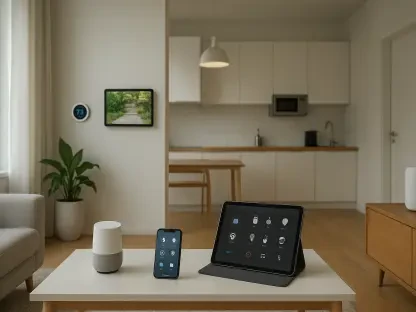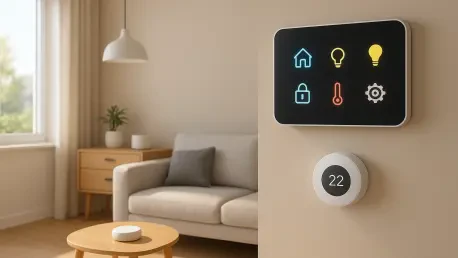

Integrating smart home hubs directly into streaming boxes allows users to monitor security camera feeds on their televisions without the need for separate, high-priced dedicated networking equipment. This technical evolution marks a significant shift in the 2026 consumer electronics market, where the traditional boundaries between budget-friendly hardware and luxury flagships are rapidly dissolving. For years, the prevailing consumer sentiment suggested that high-end performance was an exclusive privilege of those willing to invest several hundred dollars into a single device. The assumption was that anything priced under the $100 mark was inherently “disposable,” lacking the durability, sophisticated software, and specialized components required for a truly premium experience. However, recent evaluations of the landscape reveal that manufacturing efficiencies and the commoditization of advanced silicon have allowed entry-level products to punch well above their weight class. By focusing on objective data from sources like Consumer Reports, which bypasses the marketing noise of major brands, it becomes clear that the “sweet spot” for value has migrated significantly downward. Consumers are now discovering that they can secure professional-grade utility without paying a premium for a globally recognized logo or unnecessary aesthetic flourishes that do not contribute to functional excellence.
High-Quality Audio Without the Luxury Tax
Breaking Down the Barriers to Active Noise Cancellation
The Anker Soundcore Life Q20 stands as a definitive case study in how active noise cancellation (ANC) has transitioned from a luxury feature to a standard expectation in budget audio. While the most expensive models on the market utilize complex arrays of four or six microphones to create a near-silent environment, the Q20 focuses its processing power on the low-frequency hums that most commonly disrupt daily life. By neutralizing the consistent drones of airplane engines, subway tracks, and office air conditioning units, these headphones provide the primary benefit of ANC at a fraction of the cost of legacy brands. The engineering trade-off is often found in the higher frequency ranges, where sharp noises like human voices or sirens might still penetrate the seal, yet for the vast majority of commuters, the isolation provided is more than sufficient for deep focus or relaxation. This pragmatic approach to hardware design ensures that the average traveler can enjoy a peaceful flight without an exorbitant financial commitment, highlighting a trend where “good enough” engineering actually meets ninety percent of user needs.
Building on the foundation of functional isolation, the longevity of modern budget headphones has begun to surpass that of their premium counterparts. The JBL Tune 660NC, for instance, offers an impressive 44 hours of playtime with noise cancellation active, a figure that many flagship models struggle to match due to their more power-hungry processors and bloated software suites. When manufacturers cannot compete on the absolute peak of audio fidelity or brand prestige, they often pivot toward extreme utility, such as battery endurance and lightweight ergonomics. This creates a competitive advantage for the budget sector, as many users find that a headset which lasts an entire work week on a single charge is far more valuable than one with marginal gains in soundstage or spatial audio. The use of lightweight polycarbonates instead of heavy metals further enhances this utility, providing a comfortable on-ear experience that allows for hours of wear without the physical fatigue often associated with bulkier, “premium” designs that prioritize style over long-term comfort.
Compact Design and Ecosystem Compatibility
For consumers who find over-ear designs cumbersome, the Sony WF-C710N earbuds provide a professional-grade alternative that bridges the gap between office productivity and casual listening. These earbuds are specifically engineered to prioritize clear call quality and voice pickup, utilizing beamforming technology that was previously reserved for the $300 tier of the Sony product line. While they may lack the high-bitrate audio codecs like LDAC found in top-tier models, the balance of price and performance makes them an indispensable tool for the modern remote worker who spends hours in digital meetings. The reliability of the Bluetooth connection and the simplicity of the pairing process ensure that these devices function as reliable tools rather than finicky gadgets. This emphasis on core functionality over niche technical specifications is a hallmark of the 2026 budget market, where manufacturers are stripping away the “extra” features to perfect the essential ones that impact daily productivity.
The strategic shift toward accessibility is also evident in the Beats Studio Buds +, a product from a brand once synonymous with high-priced fashion statements. By optimizing these earbuds for both Android and iOS ecosystems, the manufacturer has acknowledged that modern users often move between different operating systems and require seamless integration without being locked into a single “walled garden.” While these buds do not include the most advanced spatial audio tracking or the proprietary silicon found in the highest-tier Apple products, they offer a level of cross-platform parity that is rare in the luxury segment. This move reflects a broader industry trend where “ecosystem” perks, such as one-tap pairing and find-my-device services, are being democratized. As a result, the value proposition of a $90 earbud now includes software features that were once used as hooks to justify a $250 price point, proving that stylish design and smart functionality are no longer mutually exclusive with affordability.
Connectivity and the Future of Home Entertainment
Redefining the Smart Home Interface
In the realm of home entertainment, the Roku Ultra demonstrates that a streamlined, intuitive user interface can often provide a superior experience compared to the complex and advertisement-heavy operating systems found on many “premium” smart televisions. By adhering to a clean, tile-based layout that prioritizes speed and ease of navigation, Roku caters to a demographic that values a frustration-free interaction above all else. Technical refinements in the latest iterations, such as the inclusion of a rechargeable USB-C remote and support for Wi-Fi 6 standards, ensure that the hardware does not become a bottleneck for modern 4K streaming services. This focus on the fundamental “lean-back” experience allows the budget-friendly box to remain relevant even as home theater technology evolves. The hardware is designed to stay out of the way, providing a reliable bridge between the user and their content without the lag or system crashes that frequently plague lower-quality, unoptimized streaming sticks.
Taking a more integrated approach, the Google TV Streamer acts as a sophisticated central hub for the entire smart home, leveraging a faster processor to handle demanding applications and multitasking. Beyond simple media consumption, this device allows users to monitor security camera feeds and manage smart lighting directly from the television screen, effectively replacing more expensive dedicated home automation controllers. This fusion of media playback and home security illustrates a significant leap in how modern budget hardware is utilized, transforming a simple streaming device into a command center for the household. By including support for the Matter smart home standard, the Google TV Streamer ensures long-term compatibility with a vast range of third-party devices, protecting the consumer’s investment against future technical shifts. This level of versatility was once the sole domain of high-end home theater PCs or custom-installed automation systems, but it is now accessible to any household with a standard HDMI port.
Affordable Networking and Wi-Fi 6 Standards
Upgrading a home network to support the latest wireless standards was previously a daunting financial task, but the Netgear Nighthawk AX4 has fundamentally changed that narrative for small to medium-sized households. This router provides the high throughput and low latency necessary for modern gaming and 4K video streaming at a fraction of the cost associated with expensive “mesh” systems or flagship tri-band models. By focusing on a dual-band configuration that maximizes the efficiency of the 5GHz spectrum, the AX4 delivers a stable connection that can handle the typical load of a 2026 household. The device serves as a reminder that for many users, a high-quality traditional router is a more effective and economical solution than a complex multi-node system that may introduce unnecessary latency or configuration hurdles. It represents a pragmatic approach to networking where the goal is consistent, reliable speed rather than theoretical maximums that are rarely achieved in real-world scenarios.
However, navigating the budget networking space requires a nuanced understanding of technical trade-offs, such as the absence of multi-user technology like MU-MIMO in some entry-level models. While the AX4 is remarkably fast and reliable for a standard number of simultaneous connections, it is not designed to support dozens of high-bandwidth devices running at once. This distinction is critical for the informed consumer: budget performance is about identifying which features are essential for a specific environment and which are superfluous. For an apartment or a small home, the extra hundreds of dollars spent on a “pro” router often result in zero perceptible improvement in daily internet usage. By selecting hardware that matches the actual device count and square footage of the living space, users can achieve a premium networking experience without overspending on “enterprise-grade” features that remain dormant in a residential setting.
Tracking Trends and the Reality of Ownership
The Total Cost of Connected Hardware
The emergence of the Cube GPS Tracker introduces an important consideration for the budget category: the transition toward “subscription-based hardware” models. While the physical device itself is exceptionally affordable and built with high-grade, durable plastics that can withstand harsh environments, its ultimate utility is tied to a recurring monthly service fee for real-time tracking capabilities. This shift highlights a reality where the initial purchase price is merely one component of the total cost of ownership over the device’s lifespan. Consumers must now weigh the low entry cost against the long-term financial commitment required to keep the device functional. This model allows for more advanced cellular and satellite tracking technology to be placed in a budget-friendly shell, but it demands a higher level of financial literacy from the buyer who must calculate whether the ongoing expense aligns with the value of the item being tracked.
A significant and positive trend across the entire spectrum of recommended budget gadgets is the universal adoption of USB-C and an aggressive emphasis on battery longevity. When manufacturers realize they cannot compete with the absolute peak of technical specifications found in a $1,000 flagship, they pivot their engineering efforts toward convenience and “quality of life” features. This has led to a market where $80 headphones often feature 60-hour runtimes, vastly outperforming luxury models that prioritize high-resolution internal displays or active tracking sensors that drain power rapidly. For the average user, the ability to use a single charging cable for their phone, laptop, and headphones—while only needing to plug them in once a week—offers more tangible day-to-day value than the nearly imperceptible improvements in audio or video bitrates offered by the highest-end equipment. This prioritization of practical utility is what has allowed budget gear to achieve a “premium” feel in the ways that actually matter for daily routines.
Navigating the Performance Plateau
The consumer electronics industry has reached what analysts describe as a “good enough” plateau, where the functional differences between price tiers are no longer revolutionary. For the vast majority of standard activities—whether it is commuting with noise-canceling headphones, working out with wireless earbuds, or streaming high-definition content—the gap between a sub-$100 device and a luxury flagship has become increasingly marginal. In many instances, the additional hundreds of dollars are being spent on brand heritage, premium materials like leather or brushed aluminum, and “prestige” software features that many users never actually configure. While budget gadgets may utilize high-quality polycarbonates that feel less substantial to the touch, their internal components—including the processors, Bluetooth radios, and sensors—are often derived from the same supply chains as their more expensive counterparts, ensuring that the actual performance remains robust and reliable over several years of use.
The analysis of the market revealed that consumers who prioritized objective technical benchmarks over marketing narratives successfully secured premium-level performance at a fraction of the traditional cost. This shift suggested that future purchasing decisions should focus less on the initial MSRP and more on the specific hardware protocols supported, such as Matter compatibility for smart homes or Wi-Fi 6E for networking. The most successful strategies involved auditing home environments before upgrading, ensuring that new budget acquisitions were not throttled by outdated infrastructure or incompatible software. By moving away from emotional brand attachments and focusing on empirical reliability data, users managed to maintain high standards of functionality while preserving significant financial flexibility. The transition toward hardware that delivers exactly what is needed—without the bloat of unnecessary luxury features—became the definitive blueprint for smart consumption in the modern technological era.