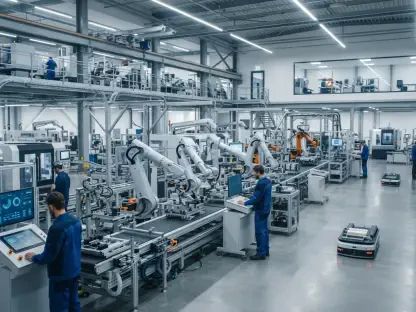

The landscape of personalized medicine is currently undergoing a radical transformation as the pharmaceutical industry shifts from manual labor to high-throughput automation to meet patient demand. Cellares, functioning as an Integrated Development and Manufacturing Organization, is leading this charge by participating in the U.S. Food and Drug Administration’s PreCheck pilot program. This initiative is designed to bridge the historical gap between complex drug discovery and the large-scale commercial production required for global distribution. At the center of this effort is the company’s state-of-the-art smart factory in Bridgewater, New Jersey, where advanced robotic systems prepare chimeric antigen receptor T-cell therapies for patients. This collaboration marks a significant pivot toward modernizing the regulatory environment, which has frequently struggled to keep pace with the logistical complexities of advanced biologics. By aligning high-tech automation with rigorous federal oversight, the partnership seeks to transform manufacturing from a traditional bottleneck into a streamlined facilitator of medical innovation.
Streamlining Regulatory Approval Through Early Engagement
The FDA PreCheck pilot program serves as a strategic intervention against the frequent facility-related setbacks that have historically hindered the pharmaceutical sector’s progress. By selecting only seven companies from a competitive pool of over eighty applicants, the agency has prioritized those organizations demonstrating the highest potential for domestic manufacturing resilience. This program essentially moves critical regulatory assessments further upstream, allowing federal inspectors to evaluate production readiness long before a drug developer submits a final biologics license application. This proactive engagement shifts the burden of proof from a late-stage hurdle to an ongoing collaborative validation process. For Cellares and its various industry partners, this approach drastically reduces the financial and operational risks associated with launching new therapies. Traditionally, unforeseen facility deficiencies discovered late in the review cycle resulted in costly delays or rejection letters, even when clinical data was excellent.
Beyond the immediate benefit of faster approvals, the PreCheck framework establishes a transparent and continuous dialogue between manufacturers and regulatory bodies. This relationship ensures that the underlying manufacturing infrastructure is fully validated and operational by the time a therapy receives clinical approval from the FDA. This strategic alignment addresses the “valley of death” that often occurs when a company moves from successful clinical trials to the commercial scale-up phase. By vetting the automated workflows and cleanroom environments in advance, the agency provides a level of certainty that encourages further investment in cell and gene therapy sectors. The Bridgewater facility stands as a primary test case for this model, proving that advanced manufacturing technologies can meet stringent safety standards without sacrificing speed. This shift allows developers to focus on the biological efficacy of their treatments, knowing the production pathway is already secured.
Advanced Automation: The Cell Shuttle Platform
Central to the operational success of this modernized manufacturing approach is the proprietary Cell Shuttle platform, an end-to-end automated system developed by Cellares. Unlike conventional cell therapy production methods that rely heavily on manual intervention and are susceptible to human error or contamination, this platform automates the entire process from cell isolation to final formulation. The technology has been specifically engineered to handle high-throughput production, making it the only system of its kind to earn the FDA’s Advanced Manufacturing Technology designation. This status confirms that the platform represents a significant technological advancement over existing manufacturing methods and adheres to modern quality-by-design principles. By integrating sophisticated robotics with closed-loop systems, the Cell Shuttle provides a controlled environment that significantly enhances the reproducibility of complex biological products. This level of precision is essential for autologous therapies where the patient’s own cells are the primary raw material.
Integration of the Cell Q automated quality control system further strengthens this technological foundation by providing real-time data monitoring throughout the production cycle. This system satisfies the rigorous safety and efficacy standards required by federal regulators while simultaneously maximizing the facility’s total output. Smart factories equipped with these automated tools can minimize the physical footprint of production while increasing the volume of patient doses delivered annually. The FDA’s direct involvement in evaluating these industrial tools signals a broader commitment to evolving regulatory frameworks alongside the rapid pace of technological development. As these automated systems become the industry standard, the reliance on human-centric cleanroom operations is expected to diminish, leading to lower costs and higher reliability. This evolution represents a departure from the artisanal origins of cell therapy toward a robust, industrialized future where personalized medicine is accessible to a much larger patient population across the globe.
Global Blueprints: Solving Local Manufacturing Challenges
While the PreCheck program remains a domestic initiative focused on American infrastructure, the manufacturing principles are being applied to a standardized global blueprint. Because autologous therapies rely on a patient’s specific cells, they are inherently time-sensitive and present significant logistical challenges when shipped across international borders. To mitigate these risks, Cellares is implementing a decentralized manufacturing strategy by constructing identical smart factories in New Jersey, Japan, and the Netherlands. This geographic distribution ensures that manufacturing remains close to the clinical point of care, reducing the transit time for these fragile living medicines. This “blueprint” model relies on identical hardware configurations and IT infrastructure across every site, which enables what is known as “digital speed” technology transfers. By removing the variability associated with different facility designs, the company can ensure that a treatment manufactured in Europe is identical in quality to one produced in North America or Asia.
The ability to replicate perfected manufacturing processes across a global network almost instantaneously provides a massive competitive advantage for drug developers seeking rapid market expansion. Once a specific manufacturing workflow is validated at one facility, the digital parameters can be cloned and deployed to all other connected sites without the need for extensive retraining or local process development. This approach ensures that while production is localized for efficiency and logistical proximity, the underlying methodology remains consistent and compliant with varying international regulatory standards. Moreover, this standardized network provides a level of redundancy that protects the global supply chain from localized disruptions, such as equipment failure or regional transit delays. By treating the manufacturing process as a modular, digital asset, the industry can move away from the traditional, siloed approach to facility management. This transition facilitates a more resilient healthcare ecosystem that can respond to the urgent needs of patients regardless of their location.
Economic Resilience: Domestic Sovereignty and Financial Expansion
Beyond the technical innovations in robotics and software, Cellares occupies a critical role within the American Industrial Alliance, an organization dedicated to creating a sovereign biomanufacturing ecosystem. This collective effort is focused on reducing the industry’s historical dependence on foreign manufacturing frameworks and securing the domestic supply chain for essential medicines. By establishing robust, high-tech infrastructure within the United States, the company helps align private sector growth with federal strategic goals for national biosecurity and economic leadership. This mission is particularly relevant as global trade dynamics shift and the need for reliable, domestic production of critical biopharmaceuticals becomes a matter of national importance. The American Industrial Alliance serves as a conduit for collaborative innovation, ensuring that technological breakthroughs remain grounded in the local workforce and industrial base. This focus on domestic sovereignty helps stabilize the pricing and availability of advanced therapies for the American healthcare market.
The company’s rapid trajectory toward industrial leadership is bolstered by a substantial financial foundation, including three hundred twenty-seven million dollars in Series D funding. High-profile investors such as ARK Invest and BlackRock have signaled their confidence in this automated manufacturing model, providing the capital necessary to scale operations internationally. With an eye toward an Initial Public Offering in late 2027, the organization is currently focused on hitting key financial and operational milestones, such as reaching a one hundred million dollar annual revenue run rate. The upcoming commercial launch at the Bridgewater facility will serve as the final proof of concept, demonstrating that this integrated approach can successfully navigate the complexities of federal regulation and commercial scale-up. As financial markets increasingly value reliability and scalability in the biotech sector, this model offers a clear roadmap for other firms aiming to transition from research-driven entities to profitable, industrial powerhouses. The success of this facility will likely influence future investment trends.
Strategic Implementation: Actionable Pathways for Industrial Evolution
The successful operationalization of the Bridgewater smart factory demonstrated that the fusion of advanced automation and proactive regulatory engagement was the most viable solution to modern manufacturing bottlenecks. By embracing the FDA’s PreCheck pilot program, industry leaders proved that early transparency could eliminate the traditional delays that previously left thousands of patients without access to life-saving treatments. Stakeholders in the biopharmaceutical sector observed how the implementation of the Cell Shuttle platform standardized quality across multiple global sites while reducing production costs significantly. This milestone marked the moment when cell therapy moved beyond its artisanal roots into a fully industrialized era of personalized medicine. Moving forward, pharmaceutical executives and investors looked toward these automated blueprints as the necessary standard for any therapeutic candidate entering late-stage clinical trials. The integration of high-throughput robotics and real-time quality control established a resilient framework that prioritized patient outcomes over logistical constraints.
Future developments in this field necessitated a continued focus on digital technology transfers and the expansion of domestic manufacturing alliances to ensure long-term biosecurity. Regulatory bodies expanded the scope of their collaborative programs, recognizing that the safety of advanced biologics depended as much on the manufacturing process as it did on the clinical data. Companies that failed to adopt these integrated manufacturing models found themselves struggling with the high costs and low yields of manual production, eventually losing market share to more efficient competitors. The path forward for the industry relied on the widespread adoption of modular, automated factories that could be rapidly deployed to meet emerging medical crises or shifts in patient demographics. By treating manufacturing as a strategic asset rather than a secondary concern, the medical community ensured that the next generation of therapies would be both affordable and available. These lessons from the collaboration between Cellares and the FDA became the foundation for a more equitable and robust global healthcare infrastructure.