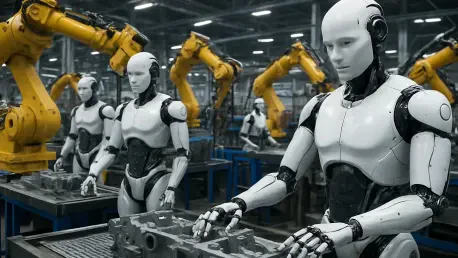

The rhythmic clang of assembly lines in the American heartland is undergoing a quiet transformation as the rigid boundaries between human workers and mechanical systems begin to dissolve entirely. While industrial robots have been a staple of production for decades, they have historically been confined to cages, performing repetitive tasks with little room for environmental variation. Today, however, a new generation of machines is stepping out of the shadows. These humanoid robots are designed not to replace the factory floor but to inhabit it, moving with a bipedal grace that allows them to navigate the same stairs, narrow aisles, and workstations originally built for people.
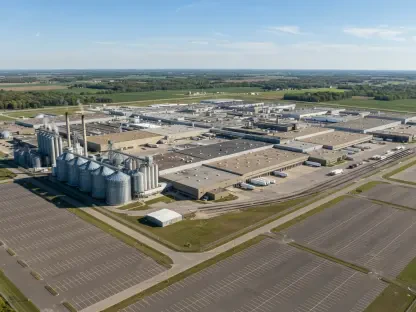
The most significant evidence of this shift is the recently finalized agreement between AGCO, a global leader in agricultural machinery, and Agility Robotics. Starting in 2027, the two companies will launch a comprehensive pilot program at the AGCO production facility in Hesston, Kansas. This initiative marks a critical turning point where the theoretical potential of humanoid robotics meets the practical demands of large-scale industrial manufacturing. By integrating these robots into active workflows, the program aims to prove that bipedal machines can serve as the missing link between manual labor and the high-speed, stationary automation that currently dominates the sector.
The Dawn of the Humanoid Teammate in Industrial Spaces
Transitioning from stationary automation to flexible humanoid robotics represents a departure from the “robot-first” design philosophy that has defined factories for half a century. Historically, if a company wanted to automate a task, the entire workspace had to be redesigned to accommodate the machine’s limitations. In contrast, the current movement focuses on robots that adapt to existing human environments. This flexibility allows manufacturers to deploy automation in older facilities where installing miles of conveyor belts or massive robotic cells would be physically or financially impossible.
The 2027 pilot program in Kansas is particularly noteworthy because it targets the agricultural sector, an industry known for its complex and often irregular components. In this environment, the humanoid robot is viewed as a “teammate” rather than a standalone tool. This distinction is vital; the goal is to create a collaborative space where robots handle the physically taxing, repetitive motions that lead to human fatigue and injury, while people retain the roles that require nuanced judgment and dexterity. By bridging this gap, humanoid robots allow for a more fluid and responsive production line.
Evolution of Factory Automation: From Fixed Arms to Mobile Humanoids
Traditional industrial automation has long relied on two primary archetypes: the fixed robotic arm and the autonomous mobile robot (AMR). Fixed arms are exceptional at high-speed precision but are anchored to a single spot, while AMRs are excellent at moving goods from point A to point B but lack the limbs necessary to interact with those goods. This has created a persistent “functional gap” in the center of the factory floor. Many tasks, such as retrieving a specific part from a shelf and placing it onto a moving assembly line, still require a human to bridge the distance between these two types of machines.
Mobile humanoids are the first technology capable of closing this gap by combining movement with manipulation. Because they possess both legs and arms, they can navigate complex human-centric workflows that would stump a wheeled robot, such as stepping over a spilled pallet or climbing a short flight of stairs to reach a mezzanine. This ability to operate in environments designed for people without requiring extensive infrastructure overhauls is the primary driver behind the current surge in corporate interest. It allows for “brownfield” automation, where existing plants are upgraded without being shut down for months of reconstruction.
Key Advancements and the Rise of the Digit Platform
At the forefront of this movement is Digit, a humanoid robot that has moved from a research prototype to a commercially viable industrial tool. Unlike earlier humanoid designs that prioritized lifelike appearance, Digit is built for utility. Its unique leg geometry allows it to fold into compact spaces and maintain stability on uneven surfaces. This platform has reached several critical milestones over the last year, demonstrating that bipedal robots can maintain high levels of uptime in demanding environments while performing tasks that require both strength and delicacy.
The strategic deployment of Digit focuses on “work in between” tasks—those small but essential steps in the manufacturing process that connect major production stages. By handling the transitions between machines, Digit ensures that the flow of materials remains constant. This integration of mobility and manipulation is not just a technical achievement; it is a strategic one, allowing companies to maximize the value of their existing automated assets by ensuring they are never left waiting for a human to deliver the next batch of parts.
Multi-Functional Manipulation and Mobility
The true power of the humanoid form lies in its ability to manage diverse objects, such as totes, bins, and individual engine components, using a single hardware platform. While a traditional machine might need a specific end-effector for every different part it touches, Digit utilizes integrated sensors and advanced grippers to adapt to varying shapes and weights. This dexterity is combined with sophisticated navigation software that allows the robot to calculate the most efficient path through a crowded facility in real time.
This combination of features allows humanoid robots to take over the “pick and place” tasks that are common in logistics and sub-assembly. By moving totes from a delivery truck to a storage rack and then to an assembly station, the robot mimics the workflow of a human logistics worker. However, unlike a human, the robot can perform these tasks with mathematical consistency, reducing the errors and delays that often occur during the manual handling of materials.
The Agility Arc and RoboFab Ecosystem
Scaling humanoid robotics from a single pilot to a global fleet requires more than just good hardware; it requires a robust management and production infrastructure. Agility Robotics has addressed this through Agility Arc, a cloud-based management system that allows plant managers to monitor and coordinate entire fleets of robots from a single interface. This system provides real-time data on performance, battery life, and task completion, ensuring that the robots are always integrated into the broader factory management software.
Furthermore, the opening of the RoboFab facility has moved humanoid production into the realm of mass manufacturing. By creating a dedicated factory to build the robots themselves, Agility has ensured that they can meet the growing demand from global industrial leaders. This ecosystem approach makes fleet deployment commercially viable for large organizations, providing the reliability and support needed to treat humanoid robots as a standard part of the industrial toolkit rather than an experimental curiosity.
Strategic Pilots with Global Industrial Leaders
The adoption of humanoid technology is no longer restricted to a single company or region. Evidence of its reliability can be seen in partnerships with global giants like GXO Logistics, Toyota, and Schaeffler. In logistics settings, Digit has already moved over 100,000 totes, proving that the hardware can withstand the rigors of multi-shift operations. These pilots provide the necessary data to refine the robots’ software, improving their ability to navigate around human coworkers safely and efficiently.
Toyota and Schaeffler have focused on integrating these robots into the highly structured world of automotive and motion technology manufacturing. These partnerships are designed to prove real-world reliability in environments where even a few minutes of downtime can cost thousands of dollars. By successfully operating in these high-stakes settings, humanoid robots have earned their place as a viable solution for complex industrial problems, paving the way for broader adoption across other sectors such as aerospace and heavy machinery.
Defining the Humanoid Advantage in Complex Workflows
The primary advantage of the humanoid form is its inherent flexibility when contrasted with the rigid limitations of traditional fixed automation. Fixed robots are fast but fragile in their logic; if a part is slightly out of place, the entire process grinds to a halt. Humanoids, however, utilize advanced computer vision and machine learning to adapt to imperfections in their environment. This “plug-and-play” nature allows them to be moved from one task to another as production needs change, making them a more versatile investment than specialized machinery.
Moreover, the humanoid’s ability to utilize existing walkways and workstations means that the “teammate” philosophy is actually a cost-saving measure. Companies can augment their capacity without the massive capital expenditure required to redesign a factory floor. This approach prioritizes the human element of the workforce, using robots to perform the “dull, dirty, and dangerous” tasks while humans oversee the operation. This synergy creates a more resilient manufacturing ecosystem that can quickly pivot to new products or workflows without the need for extensive retraining or retooling.
Current State of Integration and the 2027 Vision
As the 2027 pilot at the Hesston facility approaches, the focus is narrowing on the specific ergonomic and safety benefits of the deployment. The facility, which produces high-end agricultural equipment, provides a perfect testing ground for sorting and stacking tasks that are notoriously hard on the human body. The goal of the pilot is to demonstrate that Digit can maintain a consistent pace of work while operating safely alongside human employees, adhering to strict industrial safety standards and protocols.
Current adoption statistics from the International Federation of Robotics (IFR) highlight the accelerating pace of this transition, with humanoid sales showing significant growth as the technology moves out of the prototype phase. Real-world applications have already moved beyond simple demonstrations; for instance, the successful movement of over 100,000 totes in logistics settings has provided a mountain of data on how these robots handle wear and tear. This data is being used to optimize the next generation of humanoid software, ensuring that the 2027 vision of a fully integrated robotic workforce is grounded in operational reality.
Reflection and Broader Impacts
Reflection
The emergence of humanoid robots in the industrial sector has highlighted both the immense strengths of the technology and the hurdles that remain for widespread adoption. One of the clearest benefits was the significant reduction in workplace injuries, particularly those related to chronic strain and heavy lifting. By taking over these hazardous duties, the robots allowed companies to preserve their most valuable asset: the health and experience of their human workforce. However, achieving consistent “shift after shift” uptime across different environments remained a challenge that required constant refinement of the cloud-based management systems.
Stakeholders also had to grapple with the complexities of calculating a clear return on investment in the early stages. While the robots reduced labor costs and injury claims, the initial setup and integration into existing facility software required a forward-thinking approach to capital allocation. Success was ultimately measured not just by speed, but by the reliability of the robots as they navigated the unpredictable variables of a busy factory. The lessons learned from these early reflections helped shape more robust deployment strategies for the future.
Broader Impact
The global manufacturing labor shortage was the primary catalyst that pushed humanoid robotics into the mainstream. With nearly 1.9 million roles expected to remain vacant in the coming years, these machines provided a necessary buffer to prevent supply chain stagnation. Beyond the factory floor, the impact of these robots began to ripple through the agriculture, logistics, and assembly sectors. The ability of a single robotic platform to perform diverse tasks meant that even smaller enterprises could begin to consider automation as a viable strategy for growth.
Furthermore, the development of the humanoid workforce encouraged a shift in the types of skills required by human employees. As robots took over manual handling, the demand for technicians capable of managing, maintaining, and programming these fleets increased. This transition helped modernize the industrial workforce, making careers in manufacturing more attractive to a tech-savvy generation. The broader impact was a more flexible and responsive global production network that was better equipped to handle sudden shifts in market demand.
Conclusion: Shaping the Future of the Industrial Workforce
The integration of humanoid robotics into modern facilities established a new paradigm for how work was performed across the globe. These machines effectively closed the gap between manual labor and stationary automation, offering a level of flexibility that was previously unattainable. The pilot programs in 2026 and 2027 demonstrated that the path toward efficiency did not require the removal of the human element, but rather the support of it through intelligent, mobile technology. Industry leaders recognized that the successful factory of the future was one that adapted to the needs of its workers, using robots to bridge the functional divides that had slowed production for decades.
This transition toward safer and more ergonomic ecosystems was not merely a technological milestone but a strategic necessity. Decision-makers determined that the next logical step involved the standardizing of humanoid fleets across international logistics and assembly networks. By prioritizing the interoperability of these systems, the industry paved the way for a more resilient and sustainable manufacturing landscape. Ultimately, the humanoid robot moved from being a futuristic concept to becoming the definitive standard for modern industrial facilities, ensuring that the global workforce remained capable of meeting the challenges of a rapidly evolving economy.