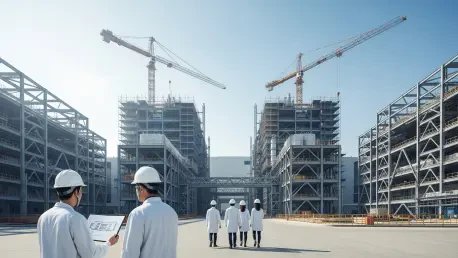

The global economic landscape stands at a critical crossroads as Western nations attempt to navigate the intricate and expensive process of diversifying supply chains away from Chinese dominance while facing a staggering projected price tag of twenty-three point six trillion dollars over the coming decade. This shift represents one of the most significant reallocations of capital in modern history, moving from an era of hyper-efficiency toward a future defined by national security and supply chain resilience. As of 2026, the initial stages of this decoupling have already begun to strain corporate balance sheets and government budgets, raising questions about the long-term sustainability of such a massive financial undertaking. The transition involves not just moving factory lines but rebuilding entire industrial ecosystems that have relied on Chinese infrastructure for decades. Markets must now reconcile the desire for political autonomy with the harsh reality of increased operational costs. This complex dynamic forces a reevaluation of technological dependencies.
The Financial Burden: Re-Industrializing Domestic Markets
Building advanced semiconductor fabrication plants and large-scale battery manufacturing facilities requires an unprecedented level of investment that few private entities can sustain without substantial government intervention. The current push for domestic production in North America and Europe has necessitated massive subsidy programs, such as the renewed chips initiatives that are currently funding new projects from 2026 to 2030. These facilities are incredibly capital-intensive, often costing upwards of twenty billion dollars for a single site, and they require a highly specialized workforce that is currently in short supply. Beyond the initial construction, the ongoing operational costs in Western jurisdictions are significantly higher than those found in traditional Asian manufacturing hubs. This discrepancy is driven by higher energy prices, stricter environmental regulations, and more expensive labor markets. Consequently, the finished products emerging from these new facilities often carry a premium price tag that tests the willingness of consumers to pay for security.
The move away from a China-centric trade model introduces a structural inflationary pressure that central banks and economists are struggling to mitigate in the current economic environment. For several decades, the global economy benefited from a deflationary dividend provided by China’s massive labor pool and efficient manufacturing clusters, but this era has effectively come to an end. As companies diversify their production bases to higher-cost regions, the added expenses are inevitably passed down to the end-user, impacting everything from consumer electronics to automotive components. This resilience tax is becoming a permanent fixture of the global economy, forcing businesses to find new ways to maintain margins without sacrificing their commitment to de-risking. Furthermore, the fragmentation of trade leads to less optimal resource allocation, as redundant supply chains are established in multiple regions to ensure continuity. While this redundancy provides a safety net against geopolitical shocks, it simultaneously reduces the efficiency of the trade system.
Strategic Evolution: Implementing Resilient Global Solutions
Governments and industry leaders recognized that the path to economic sovereignty required more than just protectionist policies or short-term subsidies. They adopted a multifaceted approach that combined technological innovation with deep diplomatic engagement to create a more balanced global trade architecture. By prioritizing automation and advanced manufacturing techniques, Western firms successfully offset some of the higher labor costs associated with domestic production. This technological leap allowed factories to operate with higher precision and lower waste, making the $23.6 trillion investment more palatable over a twenty-year horizon. Additionally, the establishment of a formal Resilience Alliance among G7 nations helped to standardize trade protocols and shared stockpiles of essential components. These coordinated efforts ensured that no single nation bore the full weight of the transition costs. This collective strategy provided a blueprint for navigating the complexities of a multi-polar world while maintaining a commitment to economic stability.
The successful navigation of this fiscal challenge depended on the ability of the private sector to pivot toward long-term value creation rather than quarterly gains. Investors eventually embraced the higher cost of doing business as a necessary premium for stability in an increasingly volatile geopolitical climate. Strategic stockpiling and the diversification of sourcing became standard practices that mitigated the impact of sudden trade disruptions. Furthermore, the integration of circular economy principles helped to reduce the total demand for raw materials, alleviating some of the pressure on new mining projects. This holistic shift in economic thinking proved that while the initial costs were staggering, the long-term benefits of a secure and resilient industrial base outweighed the financial risks. Leaders also implemented robust education programs to train the next generation of technicians and engineers needed to operate the new infrastructure. These proactive measures transformed the global trade landscape into a more robust system that favored security over mere speed.