
In Manchester, ACMT has expanded into a third facility to create dedicated clean rooms for its increasingly complex composite and sheet-metal fabrication operations. This move reflects a broader trend across the state where the lines between commercial success and defense necessity have blurred into a single, massive surge of industrial activity. For decades, the aerospace industry followed a counter-cyclical pattern; when civilian travel dipped, military spending often rose, and vice versa. However, the current landscape has shattered this historical norm, as both sectors are now accelerating simultaneously at a pace that has left even the most seasoned manufacturers scrambling to keep up. From the shoreline to the Quiet Corner, small precision shops and massive assembly plants alike are grappling with a trillion-dollar global backlog that shows no signs of slowing. This unprecedented convergence of high demand and limited supply has turned Connecticut’s manufacturing corridor into a high-stakes testing ground for industrial resilience.
Industrial Expansion and Capacity Management
Scaling Operations to Meet Order Backlogs
The sheer velocity of the current market has pushed many manufacturers to their physical limits, necessitating massive investments in infrastructure. At the local level, companies are struggling with binding constraints where factory floors are so congested that machines must be powered down just to move inventory safely through the shop. To combat this, businesses are pivoting toward lean manufacturing techniques and expanding into additional buildings to create dedicated spaces for specialized tasks like clean-room assembly and sheet-metal fabrication. For example, Crescent Manufacturing in Burlington has seen its annual sales nearly triple in just a few years, growing to over $15 million recently. This surge has forced the company to triple its physical footprint to accommodate a $24 million order backlog. These expansions are not merely strategic choices but vital steps to prevent production bottlenecks from stalling the entire global supply chain that relies on these critical parts.
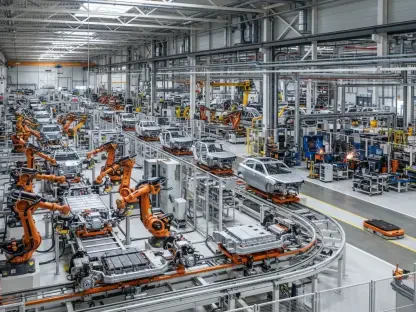
Beyond physical space, the management of massive backlogs requires a fundamental redesign of how components move from raw material to finished product. Precision fasteners and intricate engine parts are currently in high demand on a global scale, serving both Boeing and Airbus interiors as well as military drones and advanced missiles. As companies scale, they are finding that traditional manufacturing workflows are no longer sufficient to handle the volume of specialized orders. Consequently, there is an aggressive push toward automating the material handling process to ensure that the influx of new work does not lead to a chaotic shop environment. The goal is to create a seamless transition where every square foot of the factory floor contributes directly to output. This focus on efficiency is particularly critical because any delay in a small Connecticut shop can have cascading effects on the delivery schedules of major airframes worldwide, making capacity management a top priority.
Strategic Shifts in Labor and Productivity
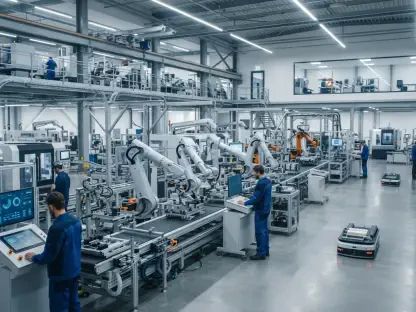
With the local labor market remaining exceptionally tight, manufacturers are finding it difficult to hire enough skilled workers to match their explosive growth. Instead of relying solely on headcount increases, companies are focusing on maximizing the productivity of their existing workforces through technology and process optimization. This involves integrating more advanced robotics and AI-driven monitoring systems that allow a single operator to manage multiple machines simultaneously. Larger aerospace anchors are also offloading legacy work—the maintenance and production of older engine models—to smaller, specialized shops. This shift allows major players to dedicate their internal resources to high-level development and the production of next-generation engines while ensuring older fleets remain operational. By subcontracting these mature programs, the industry is creating a tiered ecosystem where every level of the supply chain operates at its peak efficiency without overextending its manpower.
The training and retention of talent have also undergone a significant transformation, with manufacturers investing heavily in internal apprenticeships and upskilling programs. Since the pool of experienced machinists is limited, the focus has shifted toward taking entry-level employees and rapidly training them in highly specific technical skills required for aerospace tolerances. This strategy not only fills immediate gaps but also builds a loyal workforce that is well-versed in the unique quality standards of the industry. Furthermore, the collaboration between technical colleges and private enterprises has reached a new level of intensity, ensuring that the curriculum matches the real-world needs of modern factories. These educational partnerships are designed to create a steady pipeline of talent that can handle the complexities of additive manufacturing and advanced materials. In this environment, productivity is not just about working faster but about working smarter with machines.
The Influence of Global Aerospace Titans
Engines of Economic Growth and Exports
The momentum seen at the supplier level is largely driven by the state’s aerospace giants, Pratt & Whitney and Sikorsky. Pratt & Whitney has recently secured hundreds of new orders for its geared turbofan engines, which are vital for fuel-efficient commercial fleets worldwide. These engines represent the pinnacle of modern aviation technology, offering significant reductions in carbon emissions and noise levels. On the defense side, a multi-billion dollar contract for F-35 engine parts ensures a steady flow of work for years to come, providing a secure financial anchor for the entire regional economy. These massive contracts create a critical trickle-down effect, providing a stable foundation of orders for the hundreds of smaller machine shops across the state that provide specialized components. When the major manufacturers succeed, they pull the entire supply chain along with them, fostering an environment where even the smallest precision shops can plan for long-term capital investments and expansion.
The economic impact of these major players is clearly reflected in the state’s trade data, with aircraft parts standing as the primary export. In 2026, aerospace products accounted for nearly 30% of the total export value, totaling billions of dollars. This regional success aligns with a broader national trend where the U.S. aerospace and defense industry recently surpassed $1 trillion in annual revenue. As airlines modernize their fleets to meet environmental standards and nations replenish their military inventories, the demand for Connecticut-made technology continues to outpace production capacity. This export-driven growth has transformed the state into a global hub for aviation technology, attracting international buyers who seek the reliability and precision that local manufacturers provide. The strength of the export market acts as a buffer against domestic economic shifts, ensuring that the local industry remains robust even when national consumer spending fluctuates.
Navigating Competition and Global Pressures
Persistent international conflicts have depleted military hardware stockpiles, leading to an aggressive push for defense modernization and inventory replenishment across several continents. Simultaneously, the commercial sector is witnessing a surge in air travel that has exceeded pre-pandemic levels. Airlines are now investing heavily in next-generation, fuel-efficient aircraft to lower their operating costs and meet new environmental regulations, ensuring that order books for new planes and engines remain filled for the next decade. This dual-track demand means that manufacturers are no longer waiting for one sector to pick up; both are running at full throttle simultaneously. The resulting pressure on the supply chain is immense, as raw materials like titanium and specialized alloys are being diverted to both military and commercial production lines. This situation requires a delicate balancing act to ensure that both national security needs and commercial travel demands are met.
The strategic shifts made during this period established a new benchmark for industrial excellence that prioritized long-term resilience over temporary gains. Manufacturers effectively navigated the constraints of the super-cycle by integrating advanced automation and rethinking their facility layouts to optimize every inch of production space. These actions ensured that the region remained the primary source for critical components, even as secondary tech sectors competed for resources. To maintain this momentum, stakeholders focused on deepening the collaboration between educational institutions and private industry to secure a specialized talent pipeline. This proactive approach to labor and technology successfully bridged the gap between historical manufacturing methods and the digital future. As the industry moved forward, the emphasis shifted toward maintaining these high-efficiency standards to prevent the return of bottlenecks during future shifts in demand.