
Asia is increasingly becoming a structural export platform for cartonboard and tissue, placing immense pressure on European margins as excess overseas supply flows into international markets. This shift happens as the European pulp and paper industry navigates a period of profound structural change, driven by a convergence of macroeconomic headwinds and shifting consumer behaviors. To maintain long-term viability, the sector is being forced to rethink its traditional operational models in favor of large-scale digitalization. As demand for traditional products declines and raw material costs rise, the transition from manual, siloed processes to “intelligent mills” has shifted from a luxury to a strategic necessity for regional producers. In 2026, the urgency is palpable as domestic players seek to defend their market share against highly efficient global competitors who have already embraced the digital frontier through massive investment and structural reform.
Navigating Demographic Shifts and Market Volatility
Demographic trends in the European Union are creating a challenging landscape for fiber-based materials, with a projected population decline and an aging demographic expected to dampen consumption growth. This shift is compounded by rapid digital penetration, which has led to a long-term contraction in the demand for graphic paper as businesses and consumers adopt digital-first behaviors. While the packaging sector remains more resilient, its growth is increasingly driven by value rather than volume, as the transition from plastic to fiber-based solutions moves slower than previously anticipated. The stagnation in domestic demand requires a pivot toward higher-margin specialty products and a more sophisticated understanding of the consumer lifecycle. Mills are no longer just producing paper; they are participating in a complex value chain where agility and responsiveness to niche market segments determine financial health in a crowded field.
Regional Challenges and Shifting Consumption
Furthermore, the shifting landscape is influenced by the internal migration of wealth and changing urban density within Europe, which alters the logistics and distribution requirements for mill outputs. As e-commerce continues to mature from 2026 to 2030, the demand for lightweight and sustainable packaging becomes more specialized, requiring mills to adjust their production lines with unprecedented frequency. This volatility in product specifications places a strain on older, less flexible facilities that were designed for high-volume, low-variety production runs. Consequently, European producers must find ways to balance the traditional need for scale with a newfound requirement for extreme customization. The ability to forecast these micro-trends through advanced data analytics has become a key differentiator, allowing proactive mills to secure contracts by offering more tailored solutions that meet the specific sustainability and branding needs of modern retailers.
Supply Chain Pressures and Global Competition
European producers are operating in a high-cost environment defined by significant volatility in the prices of pulp, energy, and wood. The loss of specific wood imports and biological disruptions to timber yields have tightened fiber availability, while non-integrated mills remain heavily exposed to fluctuations in natural gas prices. Furthermore, the rise of Asia as a structural export platform has forced local mills to find new ways to differentiate themselves against lower-cost overseas supply. The competitive pressure is not merely about price; it is about the cost-to-serve and the ability to maintain consistent margins in the face of unpredictable input costs. Many facilities are finding that their legacy cost structures are insufficient to absorb the frequent price shocks that have become standard in the current geopolitical climate. Securing a stable supply of raw materials now involves deeper integration into the circular economy and diversifying fiber sources for the long term.
Implementing the Intelligent Mill Framework
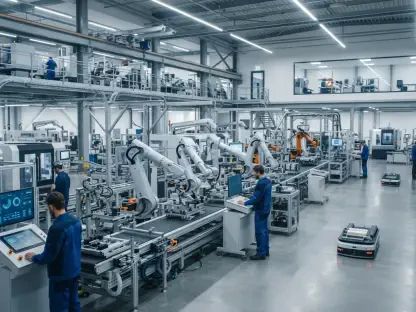
Historically, the paper sector has been slow to adopt automation, resulting in a significant productivity gap that can only be closed through digital integration. Moving away from fragmented AI use cases and adopting a core “intelligent mill” model allows companies to unlock substantial improvements in EBITDA. This transformation requires a total redesign of the enterprise around integrated operating models that treat digital tools as essential components of business management rather than isolated experiments. In 2026, the focus has shifted toward creating a unified data architecture that connects every stage of the production process, from the initial pulping to the final shipment. By breaking down the information silos that have traditionally plagued mill management, operators can gain a holistic view of their performance. This systemic approach ensures that digital investments are not wasted on surface-level improvements but are instead driving deep, structural efficiency throughout the mill.
Bridging the Productivity Gap Through Technology
Implementing this digital core involves more than just installing new software; it requires a fundamental shift in the workforce’s skillset and the mill’s culture. Engineers and floor operators must be empowered with real-time data and the analytical tools necessary to interpret it, turning traditional manufacturing roles into high-tech positions. This transition is critical as the industry competes for talent in a labor market that increasingly values digital literacy and technological innovation. Organizations that successfully bridge this human-technology gap find that their ability to innovate accelerates, as insights from the mill floor are more quickly translated into commercial advantages. The productivity gains realized through this integration provide the financial cushion needed to reinvest in further technological advancements, creating a virtuous cycle of improvement. Ultimately, the intelligent mill is a living ecosystem where data-driven decisions replace intuition for more predictable outcomes.
Optimizing Operations with the Integrated Engine
The integrated engine concept replaces fragmented planning cycles with advanced scheduling systems that evaluate operational trade-offs in real-time. In an intelligent mill, digital twins and AI-enabled systems manage the daily complexities of papermaking, allowing for real-time fiber mix optimization and precise chemical dosing. These technologies enable mills to maintain high product quality while minimizing raw material waste and dynamically adjusting energy loads to account for price fluctuations in high-cost regions. By simulating various production scenarios before they are executed, mills can identify the most efficient path forward, reducing the risk of errors and material loss. This level of precision was previously impossible with manual oversight, but it has now become the standard for facilities aiming for peak operational excellence. The integrated engine acts as the brain of the mill, processing vast amounts of data to ensure that every resource is utilized to its maximum potential.
Enhancing Reliability and Maintenance
Predictive maintenance represents a cornerstone of the digitalized paper mill, utilizing sensors and data analytics to identify potential equipment failures before they result in costly downtime. By transitioning from reactive to predictive maintenance strategies, producers can significantly lower their long-term repair costs and stabilize production quality. This proactive posture allows mills to maximize the lifespan of their assets and ensure a more consistent output, which is critical for maintaining competitiveness in a volatile market. The use of vibration analysis, thermal imaging, and acoustic monitoring provides a continuous stream of health data for critical machinery like paper machines and boilers. When the system detects a deviation from the norm, it alerts maintenance teams to perform targeted interventions during scheduled pauses rather than waiting for a failure. This shift not only saves money but also improves the safety of the work environment by reducing the need for emergency repairs.
Strategic Commercial and Organizational Evolution
Digital transformation extends beyond the factory floor into the commercial side of the business, where generative AI is being deployed to enhance lead generation and pricing accuracy. By utilizing AI-enabled pricing corridors and elasticity modeling, firms can move away from static pricing logic to achieve SKU-level visibility into profitability. This data-driven approach allows companies to identify which customers and products are truly contributing to the bottom line, preventing value leakage in fragmented markets. Sales teams are now equipped with predictive tools that suggest the optimal time to reach out to clients and the most competitive price points to offer, based on real-time market data and historical purchasing patterns. This commercial discipline ensures that the efficiency gains achieved in the mill are not lost through poor pricing decisions or inefficient sales processes. The ability to defend margins in a low-growth environment depends on this level of granular commercial insight.
Sustainability as a Regulatory and Value Driver
Sustainability has evolved from a voluntary advantage to a baseline regulatory requirement, heavily influenced by the Packaging and Packaging Waste Regulation. While consumers express a preference for green packaging, they remain hesitant to pay a premium, creating a gap that producers must bridge through operational efficiency. By integrating sustainability metrics directly into the core operating model, companies can better navigate regulatory ambiguity and provide the transparency that modern stakeholders demand. A successful digital transition requires an organizational shift that prioritizes margin and capital productivity over simple volume metrics. This involves creating single centers of control and embedding analytics teams that bridge the gap between technical operations and executive leadership. By fostering a culture that values data-driven decision-making, paper companies can ensure that their technological investments translate into tangible financial performance and long-term resilience.
Overcoming Barriers to Industry Transformation
Industry leaders prioritized technological maturity to transform market volatility into a distinct competitive advantage through bold strategic shifts. They moved past defensive postures and committed to systemic redesigns that integrated sustainability and efficiency into a unified framework. Decision-makers successfully deployed cross-functional teams to manage the transition from legacy assets to intelligent systems, ensuring that every capital investment was tied to measurable productivity gains. These organizations recognized that traditional restructuring was no longer sufficient and instead focused on deep digital integration to counteract global pressures. By embedding advanced analytics into their commercial and operational cores, they secured their positions in an increasingly polarized market. The next steps involved scaling these digital solutions across global portfolios and continuing to refine the interaction between human talent and artificial intelligence. This proactive evolution established a robust foundation for future growth.