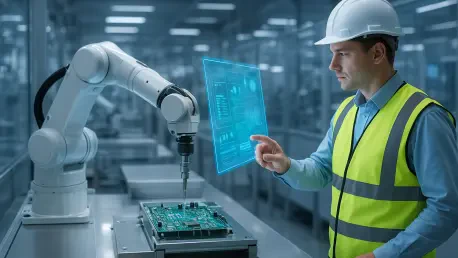

Successful AI integration requires a clear-eyed leadership approach to avoid technology solutions that add unnecessary complexity without providing real business value. As of 2026, the industrial landscape has transitioned from the initial hype of digital transformation into a mature phase where artificial intelligence acts as the central nervous system of the production floor. This evolution is characterized by a move toward Industry 5.0, where the focus expands beyond raw automation to include human-centricity and systemic resilience. Manufacturers are no longer merely collecting data; they are utilizing autonomous agents to interpret that data in real-time, creating a seamless loop between physical assets and digital twins. The current challenge for executives lies in navigating this high-density technological environment to identify which applications offer the highest return on investment.
The rapid maturation of machine learning models has allowed for a deeper understanding of equipment lifecycles and operational bottlenecks that were previously invisible. By deploying advanced sensor arrays and leveraging the Industrial Internet of Things, facilities now maintain a constant pulse on every mechanical component. This connectivity facilitates a proactive stance on maintenance, moving away from reactive repairs that historically drained capital and disrupted delivery schedules. As organizations look toward 2027 and 2028, the goal is to achieve near-zero unplanned downtime through the use of prescriptive analytics. These systems do more than identify a potential failure; they provide specific instructions on how to resolve the issue while optimizing the production schedule to account for the necessary intervention.
Asset Optimization: The Role of Predictive and Prescriptive Analytics
The shift toward predictive maintenance represents one of the most significant financial wins for modern manufacturing enterprises. In the current 2026 fiscal environment, unplanned equipment failure is often cited as the primary cause of margin erosion across heavy industry. By utilizing sophisticated AI algorithms, companies can now correlate minor fluctuations in vibration, temperature, and power consumption with the specific wear patterns of critical components. This allows for a maintenance strategy that is both highly targeted and incredibly efficient. Instead of replacing parts based on a generic timeline, technicians are dispatched only when the data indicates a genuine necessity. This precision extends the useful life of expensive assets and ensures that capital expenditure is directed toward growth rather than unnecessary replacements.
Beyond simple failure prediction, prescriptive analytics has become the standard for operational excellence. These systems analyze thousands of variables to recommend the best course of action during unforeseen events. For instance, if a primary production line experiences a slowdown, the AI can instantly recalculate the entire facility’s throughput to compensate for the lost time. This level of agility is essential as we move from 2026 to 2028, a period expected to be defined by increased demand for customization and shorter product cycles. The ability to pivot production without a total loss of efficiency provides a competitive edge that legacy systems cannot replicate. Leadership must view these analytics not just as maintenance tools, but as strategic assets that protect the bottom line and ensure consistent delivery.
Furthermore, the integration of digital twins has revolutionized how manufacturers approach scenario modeling. A digital twin serves as a virtual replica of the entire factory, allowing for risk-free experimentation with new production methods or equipment layouts. In 2026, these models are fed with real-time streaming data, ensuring that the virtual environment is a perfect reflection of reality. Executives can simulate the impact of a 10% increase in production speed or the introduction of a new raw material before making any physical changes. This data-driven decision-making process significantly reduces the risks associated with scaling operations and allows for a more aggressive approach to innovation. It transforms the factory from a static environment into a dynamic, learning organism.
Quality Assurance: Implementing Computer Vision for Precision
High-fidelity production is now heavily reliant on computer vision systems that surpass human capabilities in both speed and accuracy. These AI-driven inspection tools are integrated directly into the assembly line, providing real-time monitoring of every unit produced. As of 2026, these systems can detect microscopic defects in circuitry or surface finishes that would be invisible to the naked eye. This immediate feedback loop allows the production system to halt or adjust before a large batch of defective products is manufactured. The result is a dramatic reduction in scrap material and a significant decrease in the costs associated with rework and warranty claims. This level of precision is particularly critical in sectors like aerospace and medical device manufacturing, where the margin for error is non-existent.
Computer vision also plays a vital role in ensuring that workers are performing complex assembly tasks correctly. Augmented reality overlays can guide employees through intricate procedures, with the AI monitoring their progress and flagging any deviations from the standard operating protocol. This collaborative approach reduces the time required for training and onboarding, which is a major benefit given the current labor shortages in specialized trades. As we progress into the late 2020s, the synergy between human dexterity and AI oversight will define the standard for quality across the industry. This technology does not replace the worker; rather, it provides a safety net that ensures excellence is achieved on the first attempt, every single time.
The data generated by these vision systems provides valuable insights into the root causes of quality issues. By analyzing patterns in defect occurrence, AI can identify if a specific machine is misaligned or if a batch of raw materials from a certain supplier is consistently substandard. This enables a level of root-cause analysis that was previously impossible. In 2026, quality is no longer a separate department that checks products at the end of the line; it is an inherent characteristic of the manufacturing process itself. By embedding intelligence into every step of production, manufacturers can guarantee a level of consistency that builds brand trust and minimizes the financial impact of quality failures in the global marketplace.
Supply Chain Agility: Demand Forecasting in a Volatile Global Market
Resilience has become the primary metric for supply chain success in the current economic climate. AI agents are now capable of monitoring global logistics networks, geopolitical shifts, and market trends to provide manufacturers with a comprehensive view of their supply chain health. In 2026, demand forecasting has moved away from simple historical analysis toward multi-variable modeling that accounts for real-world volatility. This allows companies to adjust their procurement strategies in real-time, securing raw materials before price spikes or shortages occur. The ability to sense demand shifts and respond with surgical precision prevents the accumulation of excess inventory and ensures that capital is not tied up in products that the market no longer requires.
The automation of procurement and supplier management is another area where AI is delivering tangible value. Autonomous systems can now handle routine negotiations, track supplier performance, and even initiate re-orders when inventory levels hit a calculated threshold. This reduces the administrative burden on procurement teams, allowing them to focus on high-level strategic partnerships. Between 2026 and 2028, the integration of AI across the entire supply chain will create a “borderless” flow of information between manufacturers and their partners. This transparency minimizes the bullwhip effect and ensures that every link in the chain is aligned with the final customer’s needs. It is a fundamental shift from a push-based system to a highly responsive, pull-based model.
Furthermore, AI-driven logistics optimization is significantly reducing the carbon footprint and transportation costs of manufacturing firms. Algorithms can determine the most efficient shipping routes and consolidate loads to maximize vehicle utilization. In an era where sustainability is becoming a regulatory and consumer mandate, these efficiencies are more than just cost-saving measures; they are essential for long-term viability. By the end of 2026, companies that successfully leverage AI for supply chain orchestration will be far better positioned to handle the unexpected disruptions that have become a hallmark of the modern era. The focus is no longer on simply moving goods, but on moving them with the intelligence required to navigate a complex global landscape.
Human-Centric Innovation: Strengthening the Workforce via Augmented Systems
The transition toward Industry 5.0 emphasizes the importance of the human element within the automated factory. Collaborative robots, or cobots, are now standard equipment on many shop floors, designed to work alongside humans rather than behind safety cages. These machines handle the physically demanding or repetitive tasks, such as heavy lifting and precise soldering, while human workers focus on problem-solving and process improvement. In 2026, the goal is to create a workplace that is both safer and more engaging. AI-powered safety systems monitor the environment in real-time, alerting workers to potential hazards or automatically slowing down machinery if a human enters a dangerous zone. This proactive approach to safety has led to a significant reduction in workplace accidents.
Investment in workforce augmentation is also a primary strategy for addressing the ongoing skills gap in the manufacturing sector. Generative AI tools are being utilized to create personalized training modules that adapt to the specific learning pace and style of each employee. Digital assistants provide on-demand technical support, allowing workers to access complex maintenance manuals or troubleshooting guides using natural language queries. This democratization of knowledge ensures that even less experienced employees can perform high-level tasks with confidence. As the industry moves toward 2028, the most successful companies will be those that view AI as a tool for employee empowerment, fostering a culture of continuous learning and technological fluency across the entire organization.
The social impact of AI in manufacturing also extends to the design phase, where generative algorithms assist engineers in creating more efficient and sustainable products. By inputting specific performance requirements and material constraints, designers can use AI to explore thousands of potential configurations that would be impossible to conceive manually. This results in products that are lighter, stronger, and easier to manufacture. In the context of 2026, this speed of innovation is vital for staying ahead of competitors. The human-machine partnership allows for a level of creative exploration that was previously hindered by time and resource limitations. Ultimately, the integration of AI in manufacturing is not about the removal of the human, but the elevation of human potential through intelligent technology.
Strategic Resilience: The Path Forward for Industrial Leadership
The transformative power of artificial intelligence in the manufacturing sector was clearly demonstrated throughout the successful initiatives documented in the first half of the decade. Leaders who embraced a data-first mindset moved beyond the challenges of legacy system integration and achieved a unified operational view. They recognized that the true value of AI resided in its ability to provide actionable insights that directly correlated with financial performance and worker safety. By prioritizing strategic alignment over technological hype, these organizations fostered a resilient infrastructure that was capable of adapting to the rapid market shifts seen between 2026 and the present.
The path forward required a commitment to ongoing education and a willingness to dismantle traditional departmental silos. Companies that integrated their supply chain data with real-time floor metrics realized superior outcomes compared to those that maintained fragmented systems. As the industry looked toward the upcoming years, the focus remained on refining the collaboration between human expertise and machine intelligence. The transition to an AI-driven model was not merely a technological upgrade but a fundamental shift in organizational culture. It empowered workers, protected capital, and established a new benchmark for global manufacturing excellence that will continue to evolve as new capabilities emerge in the digital landscape.