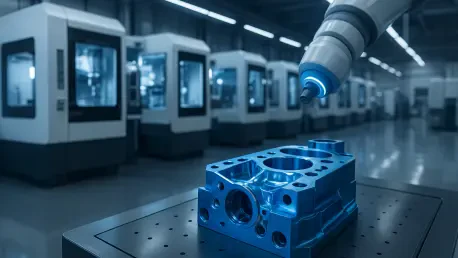

The modern industrial landscape is currently defined by a relentless pursuit of microscopic perfection where a single deviation of ten microns can compromise the structural integrity of a satellite or the functionality of a life-saving medical implant. As of 2026, the precision CNC machining industry stands as the invisible backbone of global progress, bridging the gap between digital design and physical reality through highly automated subtractive processes. This review examines the current state of Computer Numerical Control technology, evaluating its performance across diverse materials and its critical role in the manufacturing ecosystems of China and beyond. By analyzing the integration of multi-axis capabilities and advanced surface treatments, this assessment provides a comprehensive look at how the sector has adapted to the rigorous demands of the aerospace, automotive, and medical industries.
Introduction to Precision CNC Machining Technology
The transition from manual machining to fully automated Computer Numerical Control (CNC) represents a fundamental shift in how human ingenuity interfaces with physical matter. In the current manufacturing environment, the reliance on subtractive manufacturing has reached its zenith, with high-tolerance components serving as the essential framework for high-tech infrastructure. Precision CNC machining allows for the removal of material from a solid block with a level of repeatability and speed that ensures global supply chains remain resilient. This technology has evolved from a tool for simple replication into a sophisticated system capable of interpreting complex digital models to produce parts with absolute fidelity.
The progression from basic 3-axis milling to complex multi-axis and Swiss-turning centers has redefined the boundaries of mechanical design. In the past, complex geometries required multiple setups, each introducing a potential point of failure through human error or slight misalignments. Today, modern 5-axis machines execute synchronized movements that allow the cutting tool to approach the workpiece from any angle, ensuring that internal cavities and compound curves are machined in a single continuous process. This leap in capability is not merely an improvement in efficiency; it is a necessity in an era where components must be lighter, stronger, and more geometrically optimized than ever before.
China has solidified its position as a central pillar in this global landscape, transitioning from a volume-focused producer to a hub for high-precision engineering. Specialized providers such as Rejin CNC, Runsom Precision, and Gensun Precision have integrated advanced machining capabilities with sophisticated quality management systems to meet international aerospace and medical standards. These companies have moved beyond simple fabrication, offering integrated services that include complex assembly and intricate surface treatments. This development reflects a broader industry trend toward consolidation, where a single partner manages the entire lifecycle of a component, ensuring that material integrity and dimensional accuracy are maintained from the first cut to the final inspection.
Key Features and Technical Components of Modern Machining
Multi-Axis Milling and Turning Capabilities
The performance metrics of modern milling and turning machines are now measured by the fluidity of their synchronized movements and the efficiency of their tool-changing cycles. In a 5-axis configuration, the machine manipulates the workpiece or the cutting tool along five different axes simultaneously, which is indispensable for creating impellers or turbine blades with constant curvatures. This level of synchronization eliminates the “stack-up” of tolerances that occurs when a part is moved between different machines. By completing the machining process in a single setup, manufacturers achieve a level of geometric accuracy that is critical for aerospace applications where even a minor vibration can lead to mechanical failure.
Swiss-turning centers represent a specialized peak of CNC technology, particularly for the production of slender, high-precision components used in the medical and electronics sectors. Unlike traditional lathes, Swiss machines utilize a sliding headstock that feeds the material through a guide bushing, meaning the cutting always occurs within millimeters of the support point. This design minimizes material deflection and allows for the production of long, thin parts with extremely tight tolerances. This capability is vital for the production of surgical screws and connector pins in high-end consumer electronics, where the ratio of length to diameter would cause standard lathes to vibrate or bend the material beyond usable limits.
Material Versatility and Surface Treatment Integration
The dynamics of machining vary significantly depending on the properties of the material, ranging from lightweight aluminum alloys to resilient engineering plastics like PEEK and POM. Aluminum 6061 and 7075 remain the workhorses of the industry due to their excellent strength-to-weight ratios and machinability. However, machining 7075-T6 aluminum requires careful thermal management during high-speed milling to prevent internal stresses from warping the final part. In contrast, stainless steel grades such as SUS316 present challenges related to work-hardening and heat dissipation, requiring specific tool geometries and advanced coolant strategies to maintain a clean cutting edge and a smooth surface finish.
Integrating secondary processes like anodizing, heat treatment, and laser etching into a single production workflow has become a hallmark of leading manufacturers. This integration is not merely a matter of convenience; it is a critical factor in maintaining batch consistency and material traceability across a production run. When a part moves from the CNC machine directly to a specialized anodizing tank within a managed facility, the risk of surface contamination or physical damage is drastically reduced. For high-stakes industries like automotive manufacturing, where an Oil Pump Cover must meet IATF 16949 standards, this end-to-end control ensures that every part in a large-scale run is identical to the verified prototype.
Recent Innovations and Industry Trends
The shift toward “smart” factories in the current year involves the deep integration of the Internet of Things (IoT) to monitor machine health and tool wear in real-time. Sensors embedded within the spindle and the tool holders provide a continuous stream of data regarding vibration, temperature, and torque. By analyzing this data, manufacturers can predict tool failure before it occurs, preventing the production of scrapped parts and significantly reducing unexpected downtime. This proactive approach to maintenance allows for a more stable and predictable production environment, benefiting the end-user through lower costs and more reliable delivery schedules for complex projects.
Micro-machining has also seen a surge in demand, specifically within the semiconductor and medical device industries where components are becoming increasingly miniature. As parts shrink, the machines used to produce them must operate with sub-micron resolution, often utilizing specialized micro-tools smaller than a human hair. Furthermore, the growing importance of Design for Manufacturing (DFM) software allows engineers to identify potential machining issues during the initial design phase. This software can flag unreachable internal corners or overly thin walls before any material is cut, thereby optimizing material usage and drastically reducing lead times for rapid prototyping and mass production alike.
The sourcing behavior of major tech firms has shifted toward manufacturers that offer combined metal and plastic assembly services. This trend simplifies the supply chain by allowing a single vendor to produce both the structural metal chassis and the insulating plastic components of a device. This holistic approach to manufacturing ensures that mating parts fit together perfectly, as they are produced and inspected within the same quality control ecosystem. This shift toward integrated assembly services is a direct response to the increasing complexity of modern devices, which often require the seamless blending of different materials and manufacturing processes.
Real-World Applications and Sector Deployments
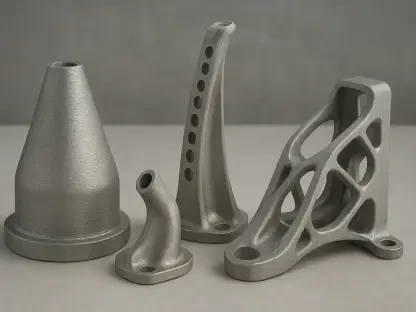
In the aerospace and defense sector, the focus remains on achieving high strength-to-weight ratios for components such as UAV brackets and structural frames. These parts must withstand extreme gravitational forces and thermal fluctuations while remaining as light as possible to maximize operational efficiency. Precision CNC machining allows for the removal of every unnecessary gram of material, creating complex lattice structures that would be impossible to achieve through traditional casting. The use of multi-axis milling ensures that these parts are produced with high integrity, free from the internal stresses that can occur in welded or forged alternatives.
The automotive industry continues to rely on CNC machining for critical engine parts, such as Oil Pump Covers, where precision is a matter of safety and longevity. These components must interface perfectly with other moving parts, requiring tight tolerances and superior surface finishes to prevent fluid leaks and reduce friction. Compliance with IATF 16949 is mandatory in this sector, necessitating a rigorous quality management system that tracks every step of the production process. Similarly, in consumer electronics, the tactile quality and cosmetic finish of high-end audio faceplates and enclosures are paramount. CNC machining provides the crisp edges and flawless surfaces that define premium products, often combined with complex bead-blasting techniques to achieve a specific aesthetic.
In the medical device industry, CNC machining is essential for both the prototyping and production of surgical instruments and implants. Using biocompatible plastics like PEEK and metals such as titanium, manufacturers produce instruments that must be both incredibly precise and easy to sterilize. The ability to create custom implants tailored to the specific anatomy of a patient is a significant advantage of CNC technology. Because these parts often have complex, organic shapes, 5-axis machining is the only viable method for producing them with the necessary accuracy and surface quality required for long-term implantation.
Challenges and Technical Limitations
One of the most persistent technical hurdles in the industry is maintaining a tolerance of +/-0.01 mm across large production volumes and varying thermal environments. Thermal expansion is a constant adversary; as a machine runs, it generates heat, causing the metal components of the machine itself to expand and shift slightly. Advanced manufacturers mitigate this through climate-controlled shop floors and real-time compensation software that adjusts the tool path based on the current temperature of the spindle and the workpiece. However, achieving this level of precision consistently requires a level of environmental control that significantly increases the cost of production.
Material-specific obstacles also present significant limitations, such as the heat deformation inherent in engineering plastics and the work-hardening common in stainless steel. When machining plastics, the friction from the cutting tool can easily melt the material if the speeds and feeds are not perfectly calibrated. Conversely, if the cutting speed on stainless steel is too slow, the surface can become harder than the tool itself, leading to rapid tool wear and dimensional inaccuracies. These challenges require a high level of operator expertise and constant monitoring, which can become a bottleneck in high-volume production environments where speed is prioritized over constant manual oversight.
Regulatory and certification barriers remain a substantial hurdle for many manufacturers looking to enter high-stakes markets. The necessity for verified ISO 9001 and ISO 13485 credentials means that a shop must invest heavily in documentation, material traceability, and standardized inspection protocols. For many smaller providers, the cost of maintaining these certifications and the required inspection equipment, such as Coordinate Measuring Machines (CMM), can be prohibitive. This creates a market where only a few top-tier providers can compete for the most lucrative contracts, potentially limiting the diversity of the supply chain and increasing the reliance on established manufacturing hubs.
Future Outlook and Technological Trajectory
The trajectory of precision machining is moving toward a symbiotic relationship between artificial intelligence and physical manufacturing. Potential breakthroughs in AI-driven path optimization are expected to further reduce cycle times by calculating the most efficient way for a tool to move through a workpiece. This goes beyond simple automation; it involves the machine learning from each cut to identify patterns that lead to tool wear or surface defects. From 2026 to 2028, this integration of AI will likely transform CNC machines into self-correcting systems that can adjust their own parameters in real-time to maintain tolerances without human intervention.
Hybrid manufacturing, which combines 3D printing with CNC finishing, is set to become a dominant force in the industry. This process involves using additive manufacturing to create a near-net-shape part, which is then finished using the high precision of a CNC mill. This approach drastically reduces material waste, particularly when working with expensive materials like titanium or specialized alloys. By only machining the critical surfaces and features, manufacturers can produce complex parts faster and with a significantly smaller environmental footprint. This long-term impact on the industry will be seen in the production of aerospace components and medical implants where weight and material cost are primary concerns.
Sustainability goals are also driving the development of more energy-efficient machines and closed-loop recycling systems for metal chips and coolants. In the coming years, the global supply chain will likely see a shift toward increased transparency and the integration of digital twins for remote quality audits. A digital twin allows a client to monitor the production of their part in real-time from across the globe, viewing the exact dimensions and machine conditions through a virtual model. This level of transparency will reduce the need for physical inspections and speed up the approval process, making the manufacturing cycle more efficient and environmentally conscious.
Final Assessment and Review Summary
The review demonstrated that the precision CNC machining industry has transitioned into a highly digitized and integrated ecosystem that is essential for modern technical advancement. The analysis of leading providers indicated that success was no longer defined solely by the hardware on the shop floor but by the quality management systems and software integration that managed the entire production lifecycle. It was observed that the ability to synchronize 5-axis milling with complex secondary treatments allowed manufacturers to meet the stringent demands of the aerospace and automotive sectors with unprecedented consistency. The evaluation of material dynamics showed that specialized knowledge in handling both high-grade alloys and engineering plastics was a key differentiator for top-tier service providers.
The findings indicated that the industry successfully addressed many of the historical challenges related to tolerance stack-up and material deformation through the use of synchronized multi-axis setups and real-time thermal compensation. The review established that the shift toward smart factories and IoT integration provided a more stable production environment, reducing waste and improving the reliability of delivery schedules. It was noted that while technical limitations like work-hardening and thermal expansion remained present, the methods for mitigating these issues became more sophisticated and automated. The assessment also highlighted the growing importance of IATF 16949 and ISO 13485 certifications as necessary benchmarks for quality in the global market.
Actionable insights from the review suggested that buyers should prioritize partners who offer in-house surface finishing and assembly to ensure the highest level of material traceability. The analysis showed that the integration of DFM software was a critical step in reducing lead times and avoiding costly redesigns during the production phase. It was concluded that the future of the industry lay in the continued adoption of hybrid manufacturing and AI-driven optimization, which promised to make precision machining both more efficient and more sustainable. Moving forward, the focus was expected to remain on increasing digital accountability and transparency through the use of digital twins and remote auditing technologies to streamline the global supply chain.