When an automated system fails due to stale or inconsistent data, the resulting accountability gap remains a major concern for manufacturing leadership. As the industry navigates the current technological landscape, the traditional role of Enterprise Resource Planning software has fundamentally shifted from a passive ledger to a proactive participant in the supply chain. Historically, these platforms served as centralized repositories for financial and logistical records, but the current volatility in global markets demands more than mere historical documentation. Manufacturers are now finding that their legacy architectures are struggling to keep pace with the real-time requirements of Artificial Intelligence integration. This pressure is driving a comprehensive re-evaluation of how digital tools interact with physical production lines. The transition involves moving away from siloed data structures toward integrated environments where algorithms can identify bottlenecks before they occur, effectively turning the ERP from a system of record into a dynamic system of action that drives competitive advantage.
The Strategic Divergence: Physical Assets Versus Digital Infrastructure
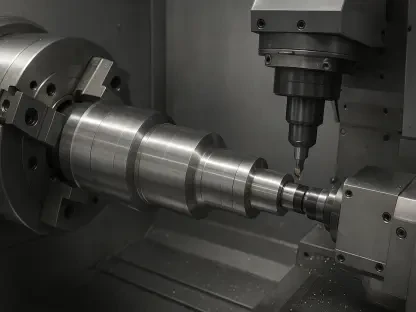
Recent market trends indicate a notable disparity in how manufacturing organizations allocate their capital, with a heavy emphasis remaining on tangible machinery. While nearly 70% of businesses are funneling investments into physical assets like advanced robotics and automated assembly lines to boost immediate throughput, only about 33% have prioritized the modernization of their underlying software stacks. This represents a significant decline in software focus compared to the previous year, suggesting that many leaders still view physical capacity as the primary lever for growth. However, this “physical-first” mentality often creates a strategic bottleneck where high-performance machinery is limited by the capabilities of outdated ERP and MES environments. Without a corresponding investment in digital orchestration, the potential efficiency gains from new hardware are frequently lost to manual data entry and fragmented communication. The result is a factory floor that operates at high speeds but remains disconnected from the broader business intelligence needed to optimize global performance.
The consequences of neglecting software modernization are becoming increasingly visible as AI technology matures into a standard industrial requirement. When physical assets are upgraded without a matching digital framework, manufacturers often find themselves with sophisticated silos that cannot share information effectively. Experts have noted that this gap prevents the deployment of predictive maintenance and real-time scheduling, leaving expensive machinery underutilized. In contrast, those who balance their capital expenditure between physical and digital assets are better positioned to harness the full potential of industry-wide automation. The current landscape suggests that the most successful operators are those who treat their ERP not just as an administrative burden, but as the central nervous system that coordinates every motor and sensor on the floor. By bridging the investment divide, companies can ensure that their technological advancements are cohesive rather than compartmentalized, allowing for a seamless flow of data from the workshop to the executive suite.
The Data Prerequisite: Ensuring Reliable Foundations for Intelligence
The efficacy of any AI implementation within a manufacturing context is strictly bound by the integrity of the data it consumes. Industry leaders emphasize that applying advanced algorithms to “dirty” or fragmented data sets is a recipe for operational failure, often leading to what is known as the “hallucination” effect. In these scenarios, AI models provide incorrect predictions or flawed logistical advice with a high degree of mathematical confidence, potentially causing catastrophic disruptions to production schedules. For an ERP system to successfully transition into an AI-driven environment, the underlying data must be clean, standardized, and authoritative across all departments. This requirement has forced many organizations to embark on rigorous data cleansing initiatives, breaking down legacy silos that have historically isolated procurement from production and sales. Ensuring that every entry is accurate and updated in real-time is no longer an optional cleanup task but a critical infrastructure project that determines the viability of future technological adoption.
Beyond the technical accuracy of information, the structural organization of data plays a pivotal role in how AI agents interpret complex manufacturing workflows. Siloed information typically prevents the holistic analysis required for autonomous decision-making, as the system remains blind to the interdependencies between different stages of the supply chain. To mitigate these risks, manufacturers are increasingly adopting unified data models that provide a single source of truth for the entire enterprise. This transition allows AI to correlate disparate variables, such as supplier lead times, energy costs, and machine wear, to produce actionable insights that were previously hidden. When the data foundation is robust, the ERP can move beyond simple reporting and begin to offer sophisticated simulations of various production scenarios. This shift enables management to move away from reactive troubleshooting and toward proactive strategy, relying on an architecture that treats data as a strategic asset rather than a byproduct of daily operations.
Evolution and Autonomy: The Transition to Intelligent Orchestration
For many established manufacturers, the prospect of a complete ERP replacement is viewed with significant trepidation due to the high costs and potential for operational paralysis. Consequently, a trend toward incremental modernization has emerged, where AI “agentic” layers are deployed on top of existing legacy systems. This approach allowed companies to introduce advanced functionality without dismantling their core transactional records, effectively extending the lifespan of older platforms. These AI agents acted as intelligent intermediaries that could navigate complex data structures to perform specific tasks, such as cross-referencing inventory levels with upcoming demand forecasts. By automating these labor-intensive analytical processes, manufacturers alleviated the administrative burden on their staff while gaining the benefits of modern computation. This layering strategy provided a lower barrier to entry for AI adoption, as it focused on solving immediate pain points rather than attempting a total digital overhaul, respecting the inherent complexity of industrial processes.
The final assessment of these transformations revealed that the value of an ERP system evolved far beyond simple data storage. Organizations found that the ability to turn static records into dynamic actions was the most significant driver of operational efficiency. Leaders recognized that maintaining a clean data foundation was a prerequisite for any meaningful advancement in AI, and they invested accordingly to eliminate silos. They also determined that incremental modernization through agentic layers provided a safer and more cost-effective path than total system replacement. Furthermore, the integration of human oversight ensured that the shift toward autonomy did not come at the expense of safety or accountability. As the industry progressed, the focus shifted toward intelligent orchestration, where the ERP functioned as a central brain coordinating every aspect of the business. These steps provided a clear roadmap for any manufacturer looking to thrive in an automated marketplace, treating digital infrastructure as a living system capable of adapting to global demands.