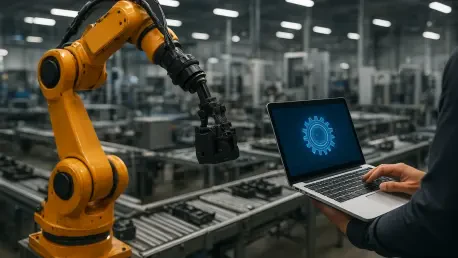

The silent hum of a modern production floor increasingly conceals a sophisticated intelligence that interprets microscopic fluctuations long before they manifest as mechanical failures. Manufacturing is currently undergoing a fundamental transformation, moving away from reactive post-mortem quality control toward a proactive, data-driven methodology. In high-stakes sectors like transportation and heavy industry, the focus has shifted from identifying what went wrong to predicting what is about to go wrong. This strategic evolution is powered by the integration of Artificial Intelligence and digital technologies, allowing global market players to prioritize prevention over correction. By leveraging complex supplier networks and rigorous digital standards, the industry is establishing a model where defects are stopped before they ever reach the assembly line, ensuring compliance with global regulations while meeting escalating customer expectations.
The current transition is not merely a technical upgrade but a philosophical shift in how industrial organizations perceive value and risk. For decades, the factory floor was a place where errors were expected and subsequently managed through sheer labor intensity and physical inspection. Today, the narrative has changed to favor the elimination of uncertainty through high-fidelity data streams and algorithmic oversight. This move toward proactivity allows organizations to maintain a lean operation while expanding their footprint in global markets. The focus on prevention ensures that the entire lifecycle of a product, from raw material sourcing to final delivery, is governed by a strategy that anticipates friction and resolves it in a virtual or early-stage physical environment.
The Modern Industrial Landscape: A Strategic Pivot Toward Proactivity
The global manufacturing sector has reached a critical juncture where the speed of production must be matched by the speed of decision-making. Traditional models, which relied on analyzing failures after the fact, are no longer viable in an environment characterized by tight margins and rapid innovation cycles. Instead, the strategic focus has pivoted toward creating a seamless flow of information that connects every stage of the manufacturing process. This connectivity allows for a more granular view of operations, where even the smallest deviation is flagged for immediate review. By moving toward this proactive stance, manufacturers are effectively reducing the volatility that once plagued large-scale industrial operations.
Moreover, this shift is deeply influenced by the necessity of managing massive, multi-tiered supplier networks. In sectors like rail and aerospace, a single component failure can have catastrophic consequences, making the quality of every input a high-priority concern. The integration of AI allows for a more sophisticated level of supplier oversight, where digital standards are enforced through real-time data sharing rather than occasional physical audits. This ensures that every player in the supply chain adheres to the same rigorous quality benchmarks, creating a unified front against defects. Consequently, the modern industrial landscape is becoming more resilient, with a clear emphasis on building quality into the process rather than inspecting it at the end.
The Evolution of Quality Management and Market Growth
Analyzing the Shift from Detection-Based to Prediction-Based Models
Traditional quality control systems, rooted in physical inspections and periodic audits, are being disrupted by emerging AI-powered vision systems and IoT integration. While legacy methods are essential for basic safety, they are inherently limited by their timing; detection usually occurs after costs have been incurred. Today’s market drivers favor real-time synthesis of thousands of data points—such as machine vibration and ambient humidity—allowing manufacturers to uncover hidden patterns invisible to conventional statistical methods. This technological capability grants organizations the gift of speed, replacing weekly performance reviews with instantaneous intervention and reducing the human margin of error through tireless automated monitoring.
The transition to prediction-based models also redefines the role of the quality professional on the shop floor. Rather than acting as a gatekeeper who rejects faulty parts, the modern quality specialist functions as a data analyst who optimizes the production environment. This shift allows for a more dynamic interaction between different departments, as quality data becomes a shared asset that informs maintenance, logistics, and design. By identifying the root causes of potential defects before they manifest, companies can adjust their parameters in real-time, effectively steering the production process away from error-prone states. This level of control represents a significant leap forward from the static inspection protocols of the past.
Market Projections and the Economic Value of Quality Data
Current market data suggests that the business case for predictive quality is rooted in the principle of cost avoidance. A defect discovered by a customer is the most expensive outcome, whereas a predicted and prevented issue represents a near-zero cost to the business. Growth projections indicate a surge in investment toward advanced analytics that identify leading indicators of risk. By focusing on subtle signals, such as minor deviations in material quality or equipment behavior, manufacturers are transitioning from crisis management to continuous improvement. This shift is expected to drastically reduce scrap rates and strengthen supply chain resilience, positioning predictive quality as a key performance indicator for industrial success.
Beyond simple cost savings, the economic value of quality data lies in its ability to unlock new revenue streams and improve market positioning. Companies that can guarantee a higher level of reliability through predictive models are better positioned to secure long-term contracts in safety-critical industries. Furthermore, the reduction in waste contributes to more sustainable manufacturing practices, which is increasingly becoming a requirement for global trade and investment. As organizations continue to refine their data collection strategies, the ability to turn raw industrial information into actionable insights will serve as the primary engine for market growth through 2028 and beyond.
Technical Obstacles and Strategies for Implementation
The primary challenge facing the industry is process drift, where production lines move gradually away from their optimal state due to equipment wear or environmental fluctuations. Traditional Statistical Process Control often fails to account for the complex interplay between multiple variables. To overcome this, organizations are deploying machine learning algorithms to establish high-fidelity baselines of normal operations. These systems detect weak signals of drift, allowing maintenance teams to perform preventive adjustments during scheduled downtime. Overcoming data silos and ensuring the integration of legacy machinery into modern digital frameworks remain significant hurdles that require robust digital transformation strategies.
Another technical hurdle involves the sheer variety of data formats and the lack of standardization across different manufacturing sites. To address this, leaders are prioritizing the creation of a centralized data architecture that can ingest and normalize information from disparate sources. This involves not only upgrading hardware but also fostering a culture of data literacy among the workforce. When technicians and engineers understand how to interpret the outputs of predictive models, they can make more informed decisions on the floor. Strategy implementation thus requires a balanced approach that combines cutting-edge technology with comprehensive training and organizational alignment.
Navigating the Regulatory Landscape and Quality Standards
As AI takes a more central role in manufacturing, the regulatory landscape is evolving to include new standards for data integrity and algorithmic transparency. Compliance is no longer just about the physical product but also about the security measures protecting the data that ensures product quality. Regulatory bodies are increasingly looking at how AI-driven decisions are documented and verified, especially in safety-critical sectors. This necessitates a closed-loop quality system where every action is measured, verified, and fed back into the system to ensure that AI-driven interventions remain within the bounds of legal and safety standards.
Furthermore, the globalization of manufacturing means that companies must adhere to a patchwork of regional regulations that are constantly being updated to keep pace with technological change. In response, many organizations are adopting international standards that provide a framework for ethical AI usage and data governance. This proactive approach to compliance not only mitigates legal risks but also builds trust with customers who are increasingly concerned about the provenance and reliability of their products. By integrating regulatory requirements directly into the digital quality workflow, manufacturers can ensure that every part produced is both high-quality and fully compliant with the latest mandates.
Future Horizons: Digital Maturity and Emerging Disruptors
The future of manufacturing lies in reaching higher levels of digital maturity, where AI is a strategic necessity rather than an experimental tool. Emerging technologies such as digital twins and autonomous self-healing production lines are set to become potential market disruptors. Future growth will be defined by the ability to connect disparate data points from supplier inputs, real-time sensors, and field feedback into a single, cohesive ecosystem. As global economic conditions fluctuate, the companies that thrive will be those that use innovation to foster a culture of proactivity, ensuring they can navigate supply chain complexities with a resilient, self-improving operation.
The concept of the self-healing production line, in particular, represents a significant milestone in industrial evolution. In such a system, the AI not only predicts a deviation but also initiates a correction without human intervention, such as adjusting a tool offset or changing a coolant flow rate. This level of autonomy would reduce downtime to an absolute minimum and allow human workers to focus on high-level strategic tasks rather than routine troubleshooting. As these technologies mature, the distinction between software and hardware will continue to blur, leading to a more integrated and responsive manufacturing environment that can adapt to changing demands with unprecedented agility.
Summary of Findings and Strategic Outlook
The shift toward predictive quality represented a fundamental reimagining of the manufacturing process that moved beyond the constraints of traditional detection. This report found that organizations successfully integrated closed-loop systems to bridge the gap between real-time data and long-term operational goals. The industry demonstrated that the ability to identify leading indicators of risk significantly reduced the financial burden of scrap and rework. Analysts concluded that the strategic focus on process drift and algorithmic transparency provided a necessary foundation for navigating the complex regulatory environments of the mid-decade. The transition proved that digital maturity was not just a technological milestone but a prerequisite for maintaining a competitive edge in a volatile global market.
Moving forward, industry leaders were encouraged to prioritize the security of their data pipelines to ensure the continued integrity of AI-driven quality decisions. The findings suggested that the most successful companies were those that fostered a culture of continuous learning, where the AI model was treated as a dynamic asset rather than a static tool. The research also pointed toward a future where digital twins would play a more central role in simulating quality outcomes before a single physical part was even produced. Ultimately, the move toward predictive quality established a new standard for excellence, proving that the most effective way to manage a defect was to ensure it never had the opportunity to exist.