
The traditional method of constructing full-scale physical models to validate aerospace engineering assumptions is rapidly becoming a relic of the past as digital transformation takes hold across the global aviation sector. Aerospace manufacturers are increasingly moving away from the expensive and slow cycles of physical prototyping in favor of a virtual-first manufacturing approach that prioritizes precision and speed. This transition is a direct response to the massive development costs and tight profit margins that define modern aircraft programs, where even a minor delay can result in millions of dollars in losses. By prioritizing digital simulations before any hardware is produced, manufacturers can address engineering challenges early, ensuring that production-ready designs are both efficient and financially sustainable. This paradigm shift allows companies to explore hundreds of design iterations in the time it once took to build a single wing spar or engine casing, fundamentally changing the economics of flight.
Mitigating Financial Risk: Validating Designs Early in the Lifecycle
Relying on physical prototypes for complex aerospace components is becoming a financial impossibility, with costs for a single part often reaching hundreds of thousands of dollars when accounting for specialized alloys and precision machining. These expenses are frequently compounded by late-stage discoveries of design flaws, which require expensive tooling changes or result in scrapped materials that cannot be recovered. Virtual prototyping offers a solution to these bottlenecks, allowing for rapid digital iteration at a fraction of the time and cost of traditional hardware-heavy methods. To maximize these savings, the industry is adopting a “Shift Left” philosophy that moves critical performance and manufacturability assessments to the very beginning of the design lifecycle. By using high-fidelity simulations to detect risks like weld distortion or casting porosity while the design is still fluid, engineering teams can resolve problems before a single piece of metal is cut.
This proactive approach ensures that parts are optimized for the actual manufacturing process, not just for their end-use performance, which is a critical distinction in high-stakes environments. When a design is validated virtually, the manufacturing instructions are often generated simultaneously, creating a seamless link between engineering intent and the factory floor. This connectivity reduces the likelihood of human error during the setup of CNC machines or additive manufacturing systems, as the digital model serves as the single source of truth. Furthermore, the ability to simulate environmental stressors such as extreme thermal gradients or high-frequency vibrations allows engineers to harden designs against failure modes that were previously only discoverable through destructive testing. As a result, companies can commit to production schedules with higher confidence, knowing that the structural integrity of their components has already been proven in a virtual environment.
Maximizing Engineering Efficiency: The Role of Hybrid Testing
The transition to virtual manufacturing is supported by clear industry data showing that companies embracing these tools experience significant gains in engineering productivity and product quality. Recent studies from leading aerospace consultancy firms indicate that using digital validation can reduce the total development cycle time by nearly a quarter between 2026 and 2028. This efficiency is driven by the integration of data-driven hybrid testing, where real-world sensor data from existing fleets is fed back into the simulation environment to improve accuracy. By blending empirical data with theoretical models, engineers can create highly accurate predictions of how new materials or aerodynamic profiles will behave under load. This reduces the number of required test flights, which are among the most expensive and time-consuming phases of any certification program. Consequently, aerospace firms are able to bring more innovative products to market faster, staying ahead of global competitors.
Moreover, the use of advanced simulation software fosters a collaborative environment where multidisciplinary teams can work on the same digital model in real-time from different geographical locations. A propulsion specialist can see how changes to an engine nacelle impact the structural loads being analyzed by a wing designer, allowing for immediate adjustments that prevent integration conflicts. This level of transparency was impossible in the era of siloed departments and physical blueprints, where communication gaps often led to costly rework. Modern software platforms now incorporate automated optimization algorithms that can suggest the most weight-efficient geometry for a component based on specified stress parameters. These tools allow engineers to focus on high-level strategy and system integration rather than tedious manual calculations. The democratization of these capabilities ensures that even smaller tier-two suppliers can contribute high-quality components.
Transforming Production Workflows: Strategic Implementation for Growth
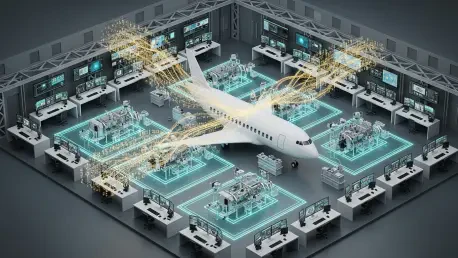
Implementing these virtual systems requires a strategic investment in both computational power and workforce training to ensure that the digital infrastructure can support complex calculations. Organizations that have successfully integrated virtual prototyping often start by creating comprehensive digital twins of their entire manufacturing facility to simulate the flow of materials and personnel. This macroscopic view allows for the optimization of assembly lines, reducing idle time and identifying potential safety hazards before they occur on the shop floor. By mapping the entire lifecycle of a product from initial concept to end-of-life recycling, manufacturers can improve the sustainability of their operations. This holistic approach ensures that the benefits of virtualization extend beyond the design office and into the very heart of the production ecosystem. Mastering these digital tools will become the primary differentiator between market leaders and those struggling to keep pace.
The industry moved toward a more integrated model where virtual prototyping served as the foundation for all subsequent manufacturing decisions. Companies that prioritized these digital workflows achieved a significant reduction in waste and successfully shortened their time-to-market for next-generation propulsion systems. It became clear that the integration of real-time data and high-fidelity simulations provided a level of predictability that physical testing alone could never match. Leadership teams recognized the necessity of investing in scalable cloud computing and advanced data analytics to maintain a competitive edge. This shift fostered a culture of innovation where engineers felt empowered to explore unconventional designs without the fear of prohibitive prototype costs. Ultimately, the transition to virtual-first methodologies redefined the standards for aerospace engineering, ensuring that safety and efficiency remained the paramount concerns. These advancements necessitated a commitment to refining digital threads across the supply chain.