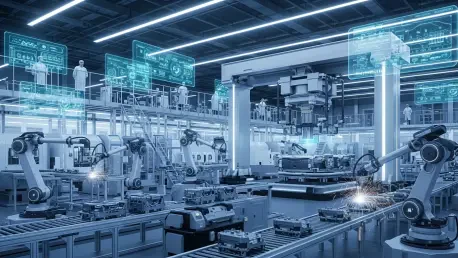

The global manufacturing sector has moved beyond the constraints of static production lines, replaced by a dynamic architecture where machines possess the cognitive ability to navigate complex environments without human intervention. In this current industrial landscape, the primary benchmark for success is no longer simply the speed of repetitive tasks but the sophisticated integration of autonomous robotics and Physical Artificial Intelligence. This technological convergence represents a fundamental transition from traditional machinery that follows a rigid script to intelligent systems capable of perception, reasoning, and autonomous action within ever-changing physical spaces. The synergy between high-precision mechanical engineering and advanced digital intelligence facilitates production environments that are remarkably more flexible and safer than those observed in previous industrial cycles. This evolution has successfully bridged the gap between virtual computation and physical labor, ensuring that factories remain resilient against labor shortages and global supply chain disruptions while maintaining a competitive edge in an increasingly automated world.
Defining the Logic of Physical AI
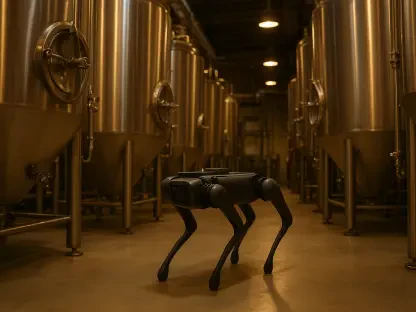
To appreciate the current state of industrial progress, one must recognize the distinction between traditional industrial robots and the contemporary generation of autonomous systems that define the modern factory floor. Traditional robots, while highly efficient at high-speed repetition, were essentially blind and inflexible units that operated within strict, caged parameters and often failed when faced with minor environmental deviations. In contrast, today’s autonomous robotics utilize a sophisticated stack of high-definition cameras, lidar sensors, and real-time edge computing to make independent operational decisions. These machines do not require a human operator to meticulously map every single movement; instead, they navigate the complex physical world by actively reacting to moving obstacles and calculating optimal paths in real time. This shift from pre-programmed motion to reactive intelligence has allowed for a more fluid integration of machinery into existing infrastructures, where robots now function as mobile participants rather than stationary tools.
Physical AI serves as the primary cognitive engine behind these autonomous actions, providing a specialized form of intelligence that is specifically engineered to interact with the material world. Unlike standard generative or analytical AI, which focuses on processing text, code, or numerical data on a screen, Physical AI integrates perception, movement, and control systems to give machines human-like spatial awareness. This technology allows a robot to judge distances accurately, recognize various three-dimensional objects, and respond to sudden motion with extreme precision. It is the critical bridge that enables a robotic arm to not only see an irregular or misaligned component but to understand exactly how to grasp it, adjust its orientation, and integrate it into a production line without causing damage. This cognitive depth ensures that the machine remains a productive asset even when the manufacturing environment is disorganized or unpredictable, effectively removing the need for perfectly structured workspaces.
Enhancing Production Flexibility and Quality Control
The immediate impact of these advanced technologies is most visible within the domain of internal logistics and material handling, which historically served as a significant bottleneck in large-scale operations. The introduction of Autonomous Mobile Robots has fundamentally changed this dynamic by automating the constant transfer of components, heavy tools, and finished products across the facility. These mobile units are capable of transporting heavy loads through busy corridors, identifying and avoiding personnel, and adapting to changing floor layouts without any manual intervention or external guidance. Because these systems adapt in real time, they provide a level of operational resilience that fixed conveyor systems or manually operated forklifts simply cannot provide. They can autonomously re-route themselves based on current traffic congestion or shift their operational focus based on real-time production demands, ensuring that every workstation remains stocked.
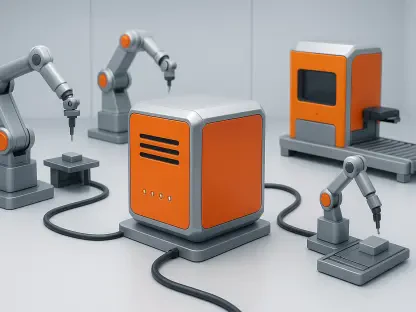
Modern consumer demands have become increasingly volatile, requiring manufacturers to pivot between different product variants with minimal notice or downtime. In the past, such transitions required extensive manual intervention to reconfigure machinery and rewrite complex automation scripts, often resulting in days of lost productivity. Autonomous robotics, powered by Physical AI, addresses this challenge through the implementation of modular and flexible production lines that can reconfigure themselves. These systems are capable of identifying different parts as they arrive, adjusting their grip strength or approach angle, and modifying their movement paths automatically to accommodate new designs. In industries like high-end electronics and medical device manufacturing, where product cycles are exceptionally short, this flexibility is a necessity. This modular approach allows intelligent machines to be reassigned to different tasks with minimal reprogramming, future-proofing facilities against rapid market shifts.
Quality assurance is also being radically redefined through the integration of Physical AI and advanced sensor fusion. Traditional inspection processes often occurred only at the end of a long production run, which meant that a single undetected error could lead to a large batch of defective goods and significant financial loss. Physical AI has changed this paradigm by enabling real-reaching, in-process inspection that occurs at every stage of the manufacturing cycle. By utilizing computer vision combined with data from multiple sources like lasers and pressure sensors, robots can identify microscopic surface defects or alignment issues the moment they occur. If a system identifies a consistent dimensional error, it can communicate with the rest of the production line to adjust mechanical parameters immediately. This proactive approach minimizes material waste and ensures that the final output meets stringent quality standards without the need for exhaustive manual oversight.
Human-Robot Collaboration and Safety Standards
A recurring theme in the advancement of Physical AI is the significant enhancement of workplace safety and the reduction of human exposure to industrial hazards. Factories are inherently high-risk environments involving heavy loads, extreme temperatures, and repetitive motions that can lead to chronic physical strain. Autonomous systems are now being deployed to handle the most hazardous tasks, such as moving molten materials or operating in oxygen-depleted confined spaces where human presence is restricted. Furthermore, the rise of collaborative robots, or cobots, represents a consensus that the future of manufacturing is human-augmented rather than human-free. These robots are equipped with sensitive Physical AI that detects human proximity and immediately adjusts speed or halts motion to prevent collisions. This creates a safer, shared workspace where machines handle the dangerous work while humans take on the roles of strategic supervisors.
Modern manufacturing has become as much about data management as it is about physical production, with every autonomous movement generating valuable insights regarding system health and efficiency. Physical AI systems analyze this stream of information to engage in continuous learning, allowing robots to refine their motion paths to save energy or increase cycle speeds over time. This data-driven approach also forms the foundation for predictive maintenance strategies that have replaced the old “run-to-fail” model of machinery management. Instead of waiting for a component to break and halt production, the system predicts when a part is nearing the end of its operational life based on vibration patterns or thermal data. This allows for scheduled maintenance during planned downtime, maximizing the investment returns and ensuring that the factory remains operational around the clock without the risk of unexpected and costly mechanical failures.
Hardware Precision and Market Growth
The success of these high-level AI systems depends entirely on the precision of the underlying hardware and the quality of the sensors that feed them information. For instance, linear measurement solutions like the Model TR1 Tru-Trac illustrate how physical hardware components support the broader goals of autonomy. For an autonomous system to track velocity, position, or distance accurately, it requires integrated units that can handle high-speed operations across various material surfaces. Whether a system is tracking the movement of a long-range conveyor or the precise position of a mobile unit, components like the TR1 provide the granular data that Physical AI needs to make accurate decisions. This highlights a critical reality in modern engineering: the intelligence of a factory is only as reliable as the physical sensors and mechanical hardware that provide the raw data for its cognitive processes.
The economic trajectory for these integrated technologies remains overwhelmingly positive as the global market reaches a state of mature adoption. The global Industrial Robotics Market is currently on track to reach a valuation of approximately $50.11 billion by 2032, representing a compound annual growth rate of 13.2% starting from the current year. This growth is driven by the decreasing cost of high-performance sensors and the increasing ease of software deployment, making autonomous solutions accessible to mid-sized manufacturers as well as industrial giants. Industry experts have reached a consensus that robotics is no longer an optional upgrade for luxury facilities but a core foundation for remaining competitive in a globalized market. The widespread adoption of these systems has created a balanced environment where humans and robots work in tandem to meet the complex demands of a rapidly changing global economy.
Establishing an Aware and Responsive Factory
The transition toward cognitive manufacturing environments effectively eliminated the inefficiencies associated with rigid automation and manual material handling. Manufacturers that prioritized the integration of Physical AI and autonomous robotics realized significant improvements in operational uptime and worker safety. By moving away from fixed programming, industrial leaders achieved a level of flexibility that allowed for rapid responses to shifting consumer behaviors and material shortages. The successful implementation of sensor fusion and real-time data analytics ensured that quality control became a proactive process rather than a reactive one. This shift in methodology provided a clear advantage in maintaining brand reputation and reducing the environmental impact of industrial waste. The move to predictive maintenance further stabilized production schedules, allowing facilities to operate with a degree of predictability that was previously unattainable in high-volume environments.
As manufacturers look toward the next phase of development, the focus must shift toward securing these intelligent systems against digital threats and ensuring deep hardware-software integration. Implementing robust cybersecurity protocols for autonomous fleets was a critical step in protecting the integrity of production data. Moving forward, stakeholders should consider investing in continuous workforce training to bridge the gap between traditional mechanical skills and the requirements of AI management. Expanding the use of modular hardware will also be essential for maintaining a responsive factory floor that can adapt to new product designs within hours rather than weeks. By prioritizing the synergy between precise hardware like linear measurement sensors and adaptive AI software, companies established a sustainable path for growth. The factories that thrived were those that embraced this convergence, creating a resilient ecosystem where technology and human ingenuity collaborated to drive the modern industrial era.