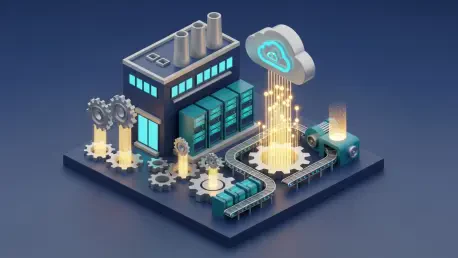

The sophisticated architecture of a contemporary manufacturing plant often conceals a fragmented reality where advanced robotic systems and cloud-based analytics platforms fail to communicate effectively. This internal dissonance creates a massive efficiency drain, leaving companies with high-tech tools that operate in isolated silos rather than as a cohesive unit. To address this structural weakness, Accenture recently announced its intent to acquire Industries eXcellence Group, better known as IndX, a specialized powerhouse in industrial digital transformation.
This acquisition marks a pivotal shift in the industrial consulting landscape, aiming to harmonize the intricate software and data analytics layers that drive modern production. IndX brings a deep history of expertise as a former division of the Engineering Group and a vital partner to Siemens Digital Industries. By absorbing this technical talent, Accenture positions itself to solve the “integration gap” that has historically prevented large-scale manufacturers from realizing the full potential of their digital investments.
Why Even High-Tech Factories Struggle to Synchronize Their Digital Tools
Modern industrial facilities frequently suffer from a phenomenon known as the “integration gap,” where the adoption of individual digital tools outpaces the ability to connect them. While a factory might utilize state-of-the-art robotics and sophisticated logistics software, these systems often rely on incompatible data formats or isolated network infrastructures. This fragmentation prevents the creation of a seamless “digital thread,” which is the continuous flow of data necessary to synchronize product design, engineering, and shop-floor execution.
Furthermore, the complexity of managing multi-site production environments complicates the deployment of updates and new technologies. Manufacturers often find that a digital solution working perfectly in one plant fails to scale across others due to varying legacy hardware or local software configurations. Without a unified approach to these digital assets, organizations remain trapped in a cycle of pilot programs that never reach full operational scale, ultimately delaying the return on investment for multi-million-dollar modernization projects.
The Growing Necessity of a Unified Digital Core in Modern Manufacturing
Survival in the current industrial climate requires more than just incremental upgrades; it demands the establishment of a robust “digital core” that serves as the nervous system of the enterprise. This core allows an organization to transcend the limitations of traditional manufacturing by turning every machine and sensor into a source of actionable intelligence. The synergy between IndX’s technical proficiency and Accenture’s global scale provides a framework for companies to build this intelligent infrastructure, ensuring that data flows predictably from the back office to the production line.
Moving toward an “Intelligent Enterprise” requires a fundamental shift in how manufacturing software is deployed and managed. Instead of viewing software as a secondary support tool, leaders now recognize it as the primary engine of competitive advantage. This holistic perspective ensures that digital tools are integrated from the design phase onward, allowing for greater agility when market demands shift. By unifying these disparate elements, manufacturers can reduce the time-to-market for new products and improve the overall reliability of their supply chains.
Breaking the Barrier Between Enterprise Systems and the Factory Floor
One of the most persistent obstacles in industrial modernization is the historical divide between Information Technology (IT) and Operational Technology (OT). Enterprise-level systems used for planning and finance have traditionally remained disconnected from the machinery and control systems that actually build the products. The technical expertise of the IndX team is specifically geared toward bridging this chasm, utilizing Siemens-specific technologies to create a transparent link between high-level business strategy and ground-level mechanical operations.
Practical implementation of this bridge involves the deployment of advanced Product Lifecycle Management (PLM) and Digital Twin technologies. These tools allow engineers to simulate production processes in a virtual environment before a single physical component is moved, significantly reducing the risk of error. Moreover, by integrating Edge Computing and SCADA systems, manufacturers can process data directly on the factory floor, allowing for real-time adjustments that prevent downtime and optimize energy consumption across the entire facility.
Strategic Insights from the Accenture and Siemens Global Partnership
The acquisition strengthens the already deep relationship between Accenture and Siemens Digital Industries Software, creating a more streamlined path for clients to access complex industrial solutions. Tony Hemmelgarn, the CEO of Siemens Digital Industries Software, has highlighted that this consolidation helps meet the market’s urgent demand for faster access to integrated digital platforms. This partnership ensures that specialized skills are not just available in isolation but are embedded within a broader strategy for global industrial growth.
A cornerstone of this expansion is the establishment of new “Centers of Excellence” in Italy and India, which serve as specialized hubs for innovation and technical support. These centers focus specifically on the Siemens ecosystem, providing manufacturers with a concentrated pool of engineering talent and research capabilities. Teodoro Lio, a leader at Accenture Italy, noted that the combination of traditional manufacturing excellence and modern engineering skills found in these regions is essential for navigating the complexities of the current digital transition.
A Roadmap for Implementing Integrated Industrial AI at Scale
Scaling industrial AI requires a workforce that understands both the nuances of machine learning and the physical realities of the factory floor. The integration of over 650 specialists from IndX into Accenture’s global network provides the human capital necessary to move AI from experimental stages to daily operational use. These specialists help manufacturers apply predictive analytics to maintenance schedules and quality control, ensuring that AI-driven insights result in tangible improvements in throughput and cost reduction.
This roadmap for implementation is particularly influential across high-stakes sectors such as Aerospace, Defense, and Automotive, where precision and speed are non-negotiable. For instance, in the automotive sector, the rapid transition to electric vehicle production requires a level of manufacturing flexibility that is only possible through highly integrated digital systems. By utilizing specialized AI models, these industries can navigate regulatory requirements and supply chain volatility with a level of precision that was previously unattainable.
The resolution of data fragmentation required a fundamental shift in how leadership perceived the factory floor as a source of intelligence rather than just a cost center. Organizations moved toward a model where the integration of IndX provided the specialized skills necessary to turn Digital Twins from theoretical concepts into operational realities. Manufacturers established new protocols for cross-departmental data sharing to ensure that real-time insights from the shop floor informed executive strategy. Stakeholders prioritized the creation of a unified digital core, which ultimately allowed the industrial sector to maintain resilience in an increasingly volatile global market. This strategic consolidation ensured that technology served as a robust backbone for long-term operational agility and sustainable growth.