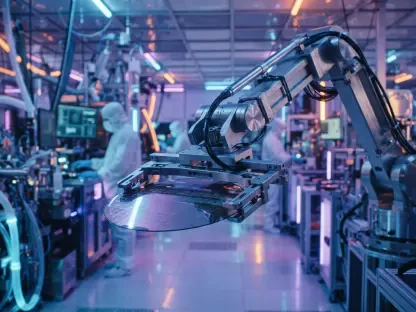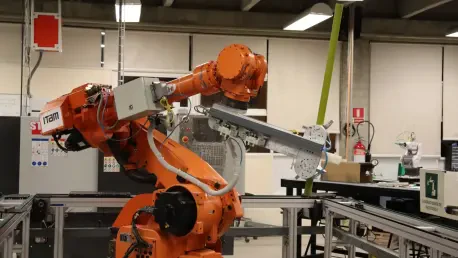

Advanced software now enables rapid tool changes and the ability to handle various product sizes, making robotics viable for small-batch production. This shift marks a significant departure from the previous era of manufacturing, where automation was almost exclusively the domain of automotive giants and multi-billion-dollar electronics firms. In the current global landscape of 2026, the adoption of industrial robotics has evolved from a strategic luxury into a fundamental necessity for business survival and long-term growth. As nations look toward 2035, the economic gap between highly automated societies and those relying on traditional labor is expected to widen significantly, with the former experiencing unprecedented surges in factory productivity and total value generation. This transition was greatly accelerated by the global disruptions seen in the early 2020s, which exposed the fragility of human-dependent supply chains and highlighted the resilience of automated facilities. Modern companies have realized that maintaining a competitive edge requires a level of consistency and remote operational capability that only advanced robotics can provide. Consequently, the conversation has moved from whether a firm should automate to how quickly it can achieve a comprehensive digital transformation to stay relevant in an increasingly volatile global market.
Technological Foundations and Global Market Leadership
Intelligence and Interconnectivity: The Modern Standard
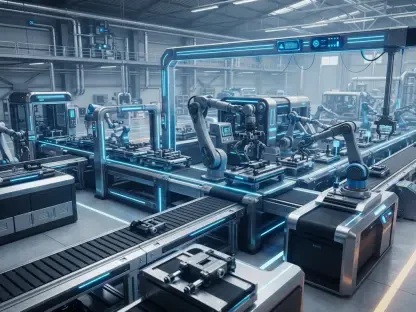
Modern industrial robotics in 2026 has transitioned from simple mechanical repetition to a state of cognitive awareness, primarily through the integration of artificial intelligence and advanced sensory arrays. Unlike the rigid systems of the past that required precisely oriented parts and controlled environments, current platforms utilize machine vision to interpret complex surroundings and adjust their movements in real-time. These vision systems allow robots to identify randomly placed components on a conveyor belt, assess their orientation, and even detect microscopic surface defects that would escape the notice of a human inspector. This qualitative shift is underpinned by sophisticated software architectures that allow machines to learn from each successive operation, optimizing their own paths for efficiency and energy conservation. By processing thousands of data points every second, these robots can anticipate mechanical wear and request maintenance before a failure occurs, ensuring that production lines remain operational with minimal downtime. The result is a manufacturing environment where the line between digital intelligence and physical execution has largely disappeared, enabling a degree of precision and adaptability that was once considered science fiction in industrial settings.
Complementing this rise in intelligence is the widespread adoption of collaborative robotics, commonly known as cobots, which have fundamentally altered the physical layout of the factory floor. Traditional robots often required heavy safety cages and exclusion zones to prevent injury to nearby personnel, effectively creating isolated islands of automation. In contrast, current cobots are equipped with high-fidelity force-torque sensors and proximity detection that allow them to work safely alongside human operators without physical barriers. This shift has unlocked new possibilities for hybrid assembly lines where human judgment handles complex, non-linear tasks while the robot provides the necessary strength or repeatable precision. These systems are particularly valuable for high-mix production environments where the product design changes frequently, as they can be easily reprogrammed or physically guided by a worker to learn new tasks in minutes. The flexibility offered by these collaborative systems ensures that even companies with diverse and rapidly evolving product catalogs can leverage the benefits of automation without the need for extensive, permanent infrastructure changes or specialized programming teams.
Market Dynamics: Regional Leaders and Sector Adoption
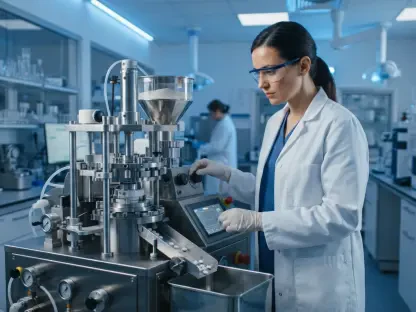
The global market for these advanced systems remains dominated by established technological powerhouses such as FANUC, KUKA, and ABB, which have expanded their offerings to include more accessible and modular robotic units. While the automotive industry continues to be the primary driver of high-volume robotics, the electronics sector has rapidly closed the gap, utilizing automated systems to handle the increasingly tight tolerances of 2026-era hardware. In modern smartphone and semiconductor assembly, the components have become so miniaturized that human manual dexterity is no longer sufficient to meet international quality standards consistently. This has made robotics the only viable path for manufacturers aiming to produce high-end consumer electronics at scale. Beyond these core sectors, we are seeing a significant diversification into industries like food processing and pharmaceuticals, where hygiene and speed are paramount. The ability of modern robots to operate in extreme temperatures or sterile environments has allowed these sectors to maximize their output while significantly reducing the risk of product contamination or human error during the packaging and sorting phases of production.
On a geographic level, the European robotics ecosystem provides a compelling case study for how medium-sized economies can leverage automation to maintain a competitive position. Slovakia, for example, has emerged as a prime example of high robot density per worker, driven largely by its robust automotive manufacturing base. By integrating sophisticated automated lines, regional players have been able to offset rising labor costs and maintain high production standards that attract foreign investment. This regional trend is mirrored in other parts of the world where traditional manufacturing hubs are facing aging populations and a shrinking workforce. In these contexts, the deployment of industrial robotics is not just about increasing profit margins; it is a vital strategy for sustaining national industrial capacity. The successful implementation of these technologies in regions like Slovakia demonstrates that the barriers to entry for advanced automation are falling, allowing smaller nations to compete on the global stage with the same efficiency as much larger industrialized economies. This globalization of technology ensures that the benefits of the robotic revolution are no longer restricted to a handful of traditional manufacturing superpowers.
Economic Dynamics and Strategic Implementation
Financial Logic: Scaling for Small and Large Enterprises
The financial case for industrial automation has become increasingly persuasive as the cost of both hardware and implementation software has plummeted between 2026 and the current cycle. In the past, the high initial capital expenditure meant that only the largest corporations could justify the investment, but the democratization of technology has changed this equation for small-to-medium enterprises. Modern robotic cells are often designed as modular units that can be integrated into existing production lines with minimal structural modification, significantly reducing the “time to value” for new adopters. Many firms now see a full return on investment within two to three years, as automated systems can operate across multiple shifts without the need for breaks, overtime pay, or medical leave. Furthermore, the reduction in waste from human error and the improved yield of raw materials provide a secondary layer of financial benefit that directly impacts the bottom line. By lowering the unit cost of production, automation allows domestic manufacturers to remain competitive against markets with significantly lower labor costs, effectively encouraging the reshoring of vital manufacturing capabilities.
Strategic adoption also focuses on the long-term scalability of robotic systems, which allow companies to grow their output without a linear increase in overhead costs. In 2026, many organizations utilize a “robotics-as-a-service” model or phased purchasing agreements that allow them to test automation in a single workstation before committing to a factory-wide overhaul. This cautious but progressive approach minimizes financial risk while providing the data necessary to justify further expansion. As these systems become more energy-efficient, they also contribute to corporate sustainability goals by reducing the carbon footprint associated with inefficient manufacturing processes and excessive material scrap. The ability to simulate new production runs in a digital twin environment before physical implementation further protects the company’s capital by identifying potential bottlenecks or errors in a virtual space. Ultimately, the economic reality of modern manufacturing dictates that the cost of inaction is far higher than the cost of transition, as firms that fail to automate are increasingly unable to match the pricing and delivery speed of their technologically advanced competitors.
Workforce Evolution: Safety and Strategic Integration
A critical component of the move toward automation is the focus on addressing the chronic labor shortages that plague sectors worldwide, specifically regarding tasks classified as “3D jobs”—dirty, dangerous, or dull. By delegating hazardous operations such as heavy lifting, chemical handling, or high-temperature welding to robots, manufacturers have drastically improved workplace safety and reduced costs related to workplace injuries and insurance. This transition does not necessarily lead to a reduction in total headcount but rather a relocation of human talent to roles that require judgment, creativity, and technical oversight. The workforce is evolving into a generation of “robot supervisors” and automation technicians who manage the performance of machines rather than performing the manual labor themselves. This shift requires a proactive approach to upskilling, where companies invest in training programs to ensure their existing employees can transition into these more meaningful and higher-paying positions. This synergy between human cognitive ability and robotic mechanical precision creates a more resilient and satisfied workforce that is shielded from the physical toll of traditional assembly line labor.
The long-term outlook for manufacturing points toward an inevitable hybrid production model where humans and machines exist in a state of mutual dependence to ensure maximum operational resilience. Successful firms have already begun identifying specific “pain points” within their operations, such as repetitive packaging or precision machine tending, and are deploying targeted robotic solutions to stabilize these areas. This gradual integration allows for a smoother cultural transition within the organization and provides the workforce with time to adapt to new workflows and technologies. Moving forward, the goal is to build a production infrastructure that is capable of withstanding external shocks, whether they be economic fluctuations or disruptions in the global labor market. By investing in scalable, intelligent systems and prioritizing the safety and development of their human capital, manufacturers are securing their place in the global economy. The transition to a robotic-centric model has moved past the experimental phase and is now a proven strategy for achieving sustainable productivity. Those who recognized this trend early and acted decisively are now the leaders of a more efficient, safe, and technologically sophisticated industrial era.
Forward-thinking executives successfully prioritized the identification of high-risk manual workstations and replaced them with flexible robotic cells. They established internal training programs to transition assembly line workers into automation technicians, ensuring the existing workforce remained relevant during the technological shift. Decision-makers also integrated machine vision systems to automate quality control, which drastically reduced the defect rate and improved overall brand reputation. By investing in scalable cobot units, these organizations achieved a faster return on investment and stabilized their supply chains against future labor market volatility. Those who implemented these strategies early secured a dominant position in the global market, effectively turning potential disruptions into clear competitive advantages. The transition required a commitment to continuous software updates and a willingness to redesign production workflows around human-machine collaboration rather than simple replacement. Ultimately, the industry moved toward a model where precision and safety were no longer negotiable requirements but standard operational results. Manufacturers who maintained these high standards through robotic integration found themselves well-prepared for the demands of the next industrial decade.