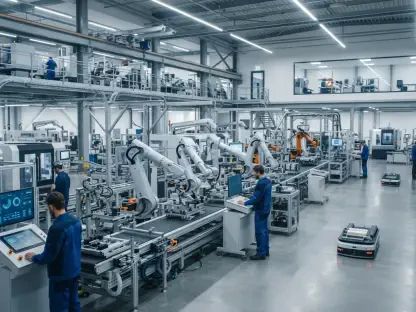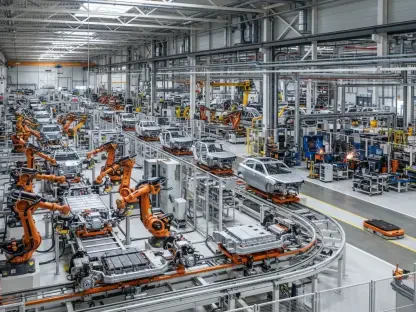

Global industrial giants are fundamentally dismantling the lean manufacturing orthodoxy that dominated the last three decades in favor of a more robust and redundant inventory strategy. The reliance on hyper-efficient, zero-inventory models left many organizations vulnerable to the cascading failures seen in recent years, prompting a radical shift toward holding significant safety stocks. Today, the priority has moved away from minimizing immediate storage costs toward ensuring long-term operational continuity. This transition involves stockpiling critical raw materials, sub-assemblies, and finished goods to insulate production lines from shipping delays and geopolitical instability. While the financial burden of maintaining these reserves is substantial, the cost of a halted factory line often dwarfs the expense of warehouse space. Modern manufacturers utilize sophisticated predictive analytics to determine exactly where these buffers are most needed, balancing the need for agility with the security of a physical surplus. This strategic pivot marks a new era where resilience is valued as highly as profitability in the global trade landscape.
Evolution of Strategy: Balancing Efficiency With Security
Implementing a buffer stock strategy requires more than just extra warehouse space; it demands an integrated digital infrastructure capable of real-time visibility across the entire tier-one and tier-two supplier network. Advanced supply chain management software now utilizes machine learning algorithms to identify potential bottlenecks before they manifest, allowing procurement teams to adjust inventory levels dynamically. For instance, semiconductor manufacturers and automotive assemblers have deployed digital twins to simulate various disruption scenarios, ranging from regional power outages to labor strikes at major ports. These digital simulations provide the data necessary to justify the capital expenditure required for larger inventories, turning a defensive measure into a competitive advantage. By leveraging these technologies, firms can maintain a resilience margin that protects them against the inherent unpredictability of international logistics. This technological backbone ensures that the shift toward increased inventory remains data-driven and financially sustainable over the long term.
The economic reality of holding excess inventory presents a complex challenge for executive teams who previously focused on maximizing cash flow through lean methodologies. Storing goods incurs costs related to warehousing, insurance, and the risk of obsolescence, particularly in high-tech industries where components evolve rapidly. To mitigate these risks, organizations are prioritizing the buffering of long-tail items—components that are difficult to source or have limited alternative suppliers—rather than stockpiling every single part. This targeted approach allows for greater protection without unnecessarily tying up excessive amounts of working capital. In the aerospace and defense sectors, where lead times for specialized alloys can span months, these buffer stocks have become a mandatory requirement for meeting delivery schedules. Companies are also exploring collaborative inventory sharing agreements with trusted partners to distribute the burden of storage costs. This nuanced management of physical assets demonstrates that modern inventory strategy is no longer a simple binary choice between lean and bloated.
Geographic Optimization: The Role of Localized Warehousing
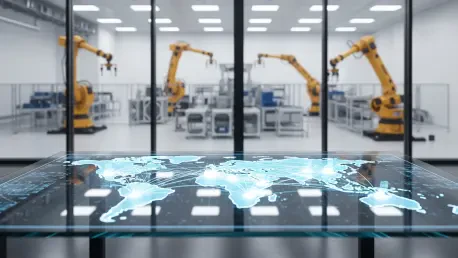
Beyond merely increasing volume, the current trend emphasizes the strategic localization of buffer stocks to minimize the geographic distance between supply and demand. By moving storage facilities closer to production hubs, manufacturers reduce their exposure to maritime shipping volatility and fluctuating freight rates that often plague long-distance logistics. This shift toward regionalization, often referred to as nearshoring or friend-shoring, complements the build-up of safety stocks by providing a secondary layer of protection against global transit delays. For example, North American electronics manufacturers are increasingly establishing satellite warehouses in Mexico to house critical components sourced from distant markets. This geographic diversification ensures that even if a major shipping lane is blocked, the localized inventory can sustain production for several weeks. Furthermore, regional hubs allow for faster response times to local market shifts, enhancing the overall agility of the supply chain. The combination of localized storage and increased inventory volume creates a multi-tiered defense system.
The evolution of supply chain management successfully transitioned from a singular focus on cost reduction to a multi-dimensional approach that prioritized structural durability. Organizations that adopted these buffer strategies moved beyond reactionary measures, instead integrating resilience directly into their corporate DNA through better data sharing and localized sourcing. They recognized that the previous era of frictionless trade had ended, necessitating a fundamental redesign of how physical goods moved through the global economy. Moving forward, the focus shifted toward the optimization of these reserves through the use of blockchain for transparency and autonomous logistics for faster replenishment. Successful leaders treated their buffer stocks not as idle capital, but as an insurance policy that enabled them to seize market share while competitors struggled with shortages. This shift encouraged a deeper level of collaboration between suppliers and manufacturers, fostering a more transparent and stable industrial ecosystem. By treating supply chain volatility as a permanent fixture, businesses built the foundations for a more stable and predictable industrial future.