
The domestic market in the United States is anticipated to reach $21.24 billion by 2035 as domestic manufacturers prioritize predictive maintenance and real-time operational visibility. This significant financial milestone reflects a broader global shift toward a fully digitized industrial landscape where data-driven decisions replace traditional intuition. As companies move deeper into the current decade, the integration of sophisticated analytical tools has become a necessity rather than a luxury for survival. The rapid adoption of cloud-based platforms allowed for the seamless aggregation of information from geographically dispersed facilities, enabling a unified view of production health. Furthermore, the push for sustainable manufacturing practices necessitated a more granular understanding of energy consumption and waste generation. By utilizing high-fidelity data streams, operators identified specific inefficiencies in their workflows that were previously hidden by legacy reporting methods. This transition established a new standard for industrial performance and resilience across the sector.
Optimizing Production Workflows: The Role of Predictive Maintenance
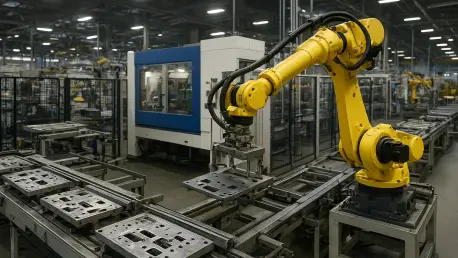
The implementation of vibration analysis and thermal imaging became a cornerstone for ensuring the longevity of critical assets on the factory floor. By attaching high-frequency sensors to robotic arms and CNC spindles, engineering teams captured minute deviations in mechanical performance that signaled impending failures weeks before they occurred. This shift to predictive maintenance eliminated the necessity for arbitrary scheduled shutdowns, which often resulted in unnecessary labor costs and the premature replacement of functional parts. Instead, the analytical software provided a ranked list of maintenance priorities based on actual wear and tear, significantly improving Overall Equipment Effectiveness across the board. These systems were increasingly integrated with automated procurement workflows, where the software triggered orders for replacement components the moment a decline in performance was detected. This level of automation reduced inventory overhead and ensured that critical repairs never faced delays due to logistics.
Beyond individual machine health, digital twins emerged as a transformative tool for optimizing entire production lines in a virtual environment before physical implementation. These high-fidelity models used real-time data from the shop floor to simulate various scenarios, allowing plant managers to identify potential bottlenecks caused by changes in product design or assembly speed. By synchronizing these virtual representations with existing Enterprise Resource Planning systems, organizations achieved a level of transparency that bridged the gap between the executive boardroom and the factory floor. This connectivity ensured that production schedules remained aligned with market demand fluctuations and raw material availability in real time. Advanced analytics also facilitated a more nuanced approach to quality control, as data from every stage of the manufacturing process was aggregated to trace defects back to their root causes. This comprehensive oversight mitigated the risk of large-scale recalls and fortified brand reputation.
Technological Synergy: Integrating Artificial Intelligence and Edge Computing
The shift toward edge computing represented a critical evolution in how industrial data was processed, particularly for latency-sensitive applications like high-speed automated inspection. By moving computational power closer to the source of data, manufacturers reduced the time required to analyze high-resolution images from computer vision systems on the assembly line. This enabled real-time anomaly detection where the system could reject a defective component within milliseconds, preventing it from moving further down the production chain and consuming additional resources. Artificial intelligence models trained on massive datasets became more adept at identifying subtle flaws that human inspectors might overlook, such as micro-fractures in aerospace components or minor solder defects in complex circuit boards. These AI-driven systems continuously learned from new data, refining their accuracy and reducing the rate of false positives over time. This cycle ensured that the manufacturing process remained lean, minimizing scrap.
Strategic leaders successfully navigated the complexities of digital transformation by prioritizing the standardization of data protocols across all business units. They recognized that the true value of manufacturing analytics resided in the ability to break down departmental silos and create a single source of truth for operational metrics. Organizations that invested in comprehensive workforce upskilling programs found that their employees were better equipped to interpret analytical insights and convert them into actionable process improvements. These companies also adopted a cloud-to-edge architectural approach that balanced the need for localized speed with the benefits of centralized long-term data storage and trend analysis. By implementing rigorous cybersecurity measures alongside their analytical deployments, manufacturers protected their intellectual property while still reaping the rewards of increased connectivity. Ultimately, the industry moved toward a model where resilience was built into the digital infrastructure of every factory.