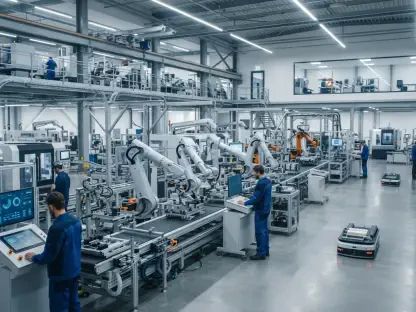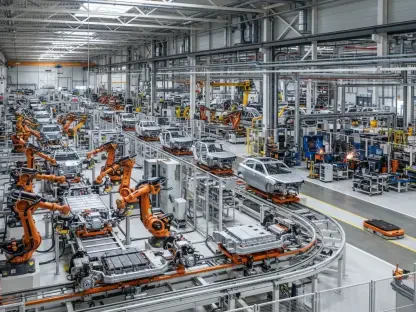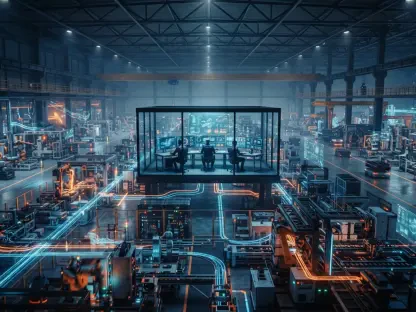

While traditional materials dominate the present market, green hydrogen has emerged as the fastest-growing segment for industries seeking to decarbonize high-heat processes. The industrial landscape across North America is currently witnessing a massive structural realignment, moving far beyond the era where environmental stewardship was merely a component of corporate social responsibility reports. In 2026, sustainable manufacturing has solidified its position as a core operational requirement, driven by the urgent need to balance economic profitability with ecological preservation. This transformation involves the implementation of sophisticated production cycles that prioritize material circularity, energy conservation, and the drastic reduction of carbon footprints. As of 2024, the market for these green industrial practices, particularly within high-tech domains like semiconductor fabrication and consumer electronics, was valued at approximately $39,716.7 million. With a projected trajectory toward $71,579.4 million by 2029, the region is maintaining a robust compound annual growth rate of 12.5 percent. This growth significantly exceeds the global average, positioning North American manufacturers as the primary innovators in the quest for a carbon-neutral industrial future.
Regional Dominance: The Economic Drivers of Green Industrialization
National Market Contributions: Analyzing Regional Growth Leaders
The United States continues to serve as the primary engine for this regional expansion, commanding a significant share of the overall market value. By 2026, the American segment has reached a valuation near $55.86 billion, representing roughly 71 percent of the total North American sustainable manufacturing landscape. This dominant position is supported by an unparalleled research and development infrastructure and a venture capital environment that aggressively funds green technology startups. Major domestic corporations, including Applied Materials and Texas Instruments, have integrated sustainable protocols into their core manufacturing pipelines, setting a high standard for the rest of the industry. These companies are utilizing advanced resource management systems to lower energy consumption and minimize waste, ensuring that the United States remains at the forefront of the technological race. The concentration of these industrial giants within specific tech corridors has created a secondary economy of specialized suppliers who must also adhere to rigorous sustainability standards to remain competitive in the modern supply chain.
Canada and Mexico are also playing critical roles in the regional ecosystem, each offering unique strengths that bolster the overall market. The Canadian market is currently valued at approximately $9.80 billion, with its growth largely defined by a national commitment to renewable energy integration and stringent carbon pricing mechanisms. These regulatory pressures have forced Canadian manufacturers to innovate rapidly, particularly in sectors related to heavy machinery and natural resource processing, turning the country into a specialized hub for carbon-neutral production. Simultaneously, Mexico has reached a market value of $5.92 billion, driven primarily by the ongoing nearshoring trend. As major corporations move their production facilities closer to their primary consumer bases in the United States, they are bringing global environmental standards to Mexican soil. This cross-border integration ensures that sustainable practices are not confined by national boundaries but are instead standardized across the continent, creating a unified and more efficient industrial block that can compete on the global stage through superior efficiency and lower environmental impact.
Policy and Regulation: The Legislative Backbone of Market Expansion
Governmental intervention has been a decisive factor in accelerating the adoption of green manufacturing technologies throughout the continent. In the United States, the CHIPS and Science Act has provided a monumental boost, offering financial incentives for companies that build high-tech facilities with low environmental impacts. Furthermore, the Environmental Protection Agency has introduced increasingly rigorous standards for industrial emissions and hazardous waste disposal, making it economically unfeasible for manufacturers to ignore their ecological footprint. These legislative frameworks provide a predictable roadmap for investors, reducing the perceived risk associated with long-term transitions to sustainable equipment. By aligning financial incentives with environmental goals, the federal government has effectively catalyzed a shift toward cleaner production methods that might have otherwise taken decades to materialize. This regulatory environment creates a level playing field where the most efficient and ecologically responsible companies are the ones that thrive.
International trade agreements and regional cooperation have further solidified the regulatory environment, ensuring that sustainability is a shared goal across North American borders. The evolving nature of environmental laws in Mexico, influenced by the requirements of the United States-Mexico-Canada Agreement, has led to a more synchronized approach to waste management and resource conservation. Canadian ministries have also been instrumental in setting high bars for industrial transparency, requiring companies to disclose their environmental impacts with granular detail. This push for transparency has empowered consumers and institutional investors to hold manufacturers accountable, creating a market-driven demand for sustainability that complements governmental mandates. As these regulations become more integrated, companies are finding that adopting a single, high-standard sustainability protocol for all North American operations is more cost-effective than managing a patchwork of varying local requirements. This harmonization is a key driver for the widespread adoption of circular economy principles across the manufacturing sector.
Material Innovations: Redefining the Industrial Supply Chain
Resource Management: The Shift Toward Circular Economy Principles
The transition from a linear “take-make-dispose” model to a circular economy is the defining characteristic of material management in 2026. Recycled steel currently represents the largest segment by value within the material offerings category, as it remains a foundational component for the construction, automotive, and heavy equipment industries. However, the most significant shift is occurring in the electronics sector, where “circular design” has become the industry standard. This approach ensures that complex products are engineered from the outset to be easily disassembled, allowing for the recovery of precious metals, lithium, and rare earth elements. Manufacturers are increasingly treating their waste streams as secondary mines, reclaiming materials that were previously lost to landfills. This shift not only reduces the environmental degradation associated with raw material mining but also provides a more stable and localized supply chain, insulating North American companies from the volatility of global commodity markets.
Water management has become another critical focus area, particularly for the semiconductor industry which requires vast quantities of ultra-pure water for chip fabrication. Modern facilities are now being equipped with sophisticated water recycle and reuse systems that allow for nearly 100 percent of the water used in the manufacturing process to be reclaimed and treated for subsequent cycles. This technological advancement is essential for maintaining production in drought-prone regions and meeting the strict environmental standards set by local municipalities. Furthermore, the rise of bioplastics and natural fiber composites is offering a sustainable alternative to petroleum-based materials in sectors like automotive and consumer goods. By integrating these “materials of the future” into their production lines, manufacturers are reducing their reliance on fossil fuels and lowering the overall carbon intensity of their products. These innovations represent a holistic approach to resource management that considers the entire lifecycle of a product, from material extraction to end-of-life recovery.
Technological Enablers: Digital Transformation and Energy Efficiency
The success of sustainable manufacturing is inextricably linked to the rapid advancement of power electronics and digital monitoring technologies. Wide Bandgap Semiconductors, such as Gallium Nitride, have become instrumental in improving energy efficiency across a wide range of industrial applications. These materials allow power conversion systems to operate at much higher voltages and temperatures while suffering significantly lower energy losses compared to traditional silicon-based components. This efficiency is vital for the performance of electric vehicle charging infrastructure, renewable energy inverters, and high-capacity industrial power supplies. By reducing the energy wasted as heat, these advanced semiconductors enable the creation of smaller, more efficient devices that contribute to a lower overall energy demand for the manufacturing sector. This technological leap is a primary catalyst for the electrification of industrial processes that were previously dependent on carbon-intensive fuels.
The integration of the Industrial Internet of Things and advanced sensor networks is providing manufacturers with unprecedented visibility into their operational efficiency. Real-time data collection allows factory managers to monitor energy consumption, water usage, and material waste at every stage of the production line. This granular level of detail enables the identification of even the smallest inefficiencies, which can then be addressed through automated adjustments or targeted maintenance. Artificial Intelligence is also playing a pivotal role by analyzing this data to predict equipment failures before they occur. By preventing machinery breakdowns, companies can avoid the energy-intensive process of “re-work” and the waste generated when faulty equipment produces defective parts. These digital tools are the essential components of the Fourth Industrial Revolution, allowing for a level of precision in resource management that was once thought impossible. The resulting increase in efficiency not only lowers environmental impact but also significantly reduces operational costs, proving that high-tech innovation is the most effective path toward sustainability.
Competitive Strategy: Navigating the New Industrial Landscape
Corporate Leadership: Major Players Shaping the Sustainable Future
The competitive landscape of the sustainable manufacturing market is characterized by a strategic alliance between industrial giants and specialized technology providers. Companies such as Siemens AG, Honeywell, and Schneider Electric have emerged as the primary architects of this green industrial infrastructure, providing the hardware and software required for advanced automation and energy management. These organizations are no longer just equipment suppliers; they are strategic partners that help manufacturers navigate the complexities of decarbonization and resource optimization. By deploying integrated software platforms, they allow facilities to synchronize their operations with the availability of renewable energy, further reducing their carbon footprint. This collaborative approach ensures that the “brains” behind the modern factory are optimized for maximum efficiency, creating a foundation upon which other sustainability initiatives can be built.
In the high-stakes world of semiconductor and automotive manufacturing, leaders like Samsung, STMicroelectronics, and Bosch are setting a rapid pace for environmental innovation. These companies are not only greening their own production processes but are also developing the energy-efficient chips and components that enable sustainability in other sectors. For instance, the development of specialized automotive electronics by Continental AG and Bosch is essential for the transition to electric vehicles, which rely on lightweight, recycled materials and highly efficient power management systems. The pressure to address “Scope 3” emissions has also led these major Original Equipment Manufacturers to demand higher standards from their entire supply chain. This top-down pressure forces smaller suppliers to adopt sustainable practices to remain competitive, creating a ripple effect that elevates the entire industrial ecosystem. This interconnected network of manufacturers and technology providers ensures that sustainability is deeply embedded in every layer of the value chain, from raw material processing to final product assembly.
Strategic Future Outlook: Solidifying a Low-Carbon Industrial Blueprint
As the North American sustainable manufacturing market entered a period of solidification, the focus shifted from experimental pilots to the standardization of large-scale green operations. Stakeholders throughout the region recognized that aligning with circular economy principles was no longer a peripheral strategy but a fundamental requirement for long-term survival in an increasingly regulated global market. The transition toward green hydrogen and high-performance recycled materials became a primary focus for investment, providing a clear pathway for the decarbonization of heavy industries that were once considered difficult to mitigate. By integrating advanced digital tools such as AI-driven predictive maintenance and IIoT sensor networks, manufacturers achieved a level of operational transparency that allowed for the near-complete elimination of process waste. This systemic change demonstrated that the integration of environmental stewardship into the manufacturing process was a primary driver of industrial resiliency.
The regional market effectively served as a global blueprint for how a mature industrial ecosystem could successfully transition to a low-carbon model while maintaining high levels of economic growth. The successful implementation of these sustainable strategies proved that the perceived conflict between profitability and ecological responsibility was a thing of the past. As companies moved toward 2029, the lessons learned during this period of rapid innovation provided the necessary framework for future industrial developments. The adoption of Wide Bandgap Semiconductors and sophisticated water recycling systems became the baseline for all new factory constructions, ensuring that the progress made was permanent. Ultimately, the North American manufacturing sector demonstrated that technological leadership and environmental accountability were two sides of the same coin, creating a robust and sustainable foundation for the decades to come. Stakeholders who prioritized these transitions early found themselves at a significant advantage, having secured their place in a new, green industrial order.