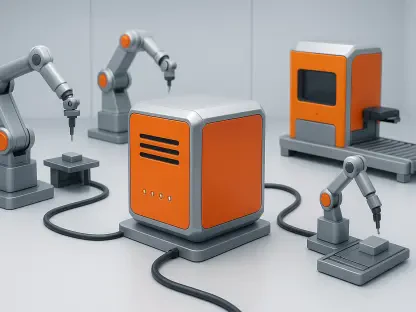

Effective industrial security strategies prioritize physical safety and process continuity over the simple data protection priorities found in IT departments. This fundamental shift marks the end of an era where manufacturing plants relied on the myth of the “air gap” to ensure operational integrity. Historically, the isolation of the factory floor provided a natural barrier against digital intrusion, but the relentless push toward the Fourth Industrial Revolution has dismantled these traditional perimeters in favor of total connectivity. Modern facilities now integrate enterprise-level analytics with machine-level control, creating a unified ecosystem where data flows from the sensor to the boardroom. While this integration unlocks unprecedented efficiency, it also exposes legacy hardware to sophisticated threats that were never anticipated during the initial design phase of most industrial control systems. Consequently, the reliance on security through obscurity has been replaced by a demand for robust, specialized firewalls capable of protecting safety-critical infrastructure.
Bridging the Gap Between IT and OT
Standard firewalls often fall short in industrial environments because they are essentially blind to the specialized languages used by programmable logic controllers and human-machine interfaces. While a corporate firewall efficiently manages web traffic, it cannot interpret the semantic nuances of industrial protocols such as Modbus, DNP3, or OPC-UA. Industrial firewalls bridge this gap by utilizing Deep Packet Inspection engines that understand the specific context of every command sent across the network. This capability allows the security appliance to differentiate between a standard telemetry request and a potentially catastrophic instruction to override a safety setpoint or halt a critical cooling pump. By enforcing granular control at the protocol level, these devices ensure that only authorized, well-formed commands reach the production hardware. This level of oversight is vital for maintaining the delicate balance between high-level operational visibility and the granular security needed on the floor.
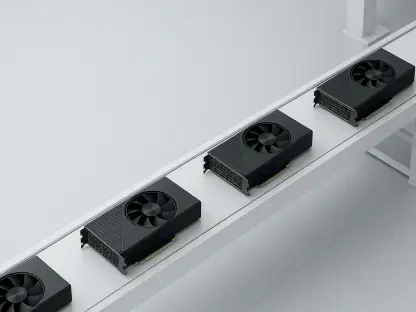
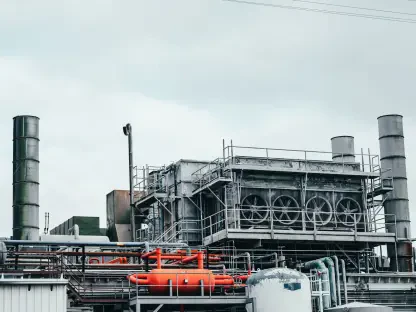
Beyond the software logic, the physical demands of the factory floor necessitate a complete departure from the hardware standards of traditional data centers. Industrial firewalls are engineered to withstand extreme temperatures, constant mechanical vibrations, and heavy particulate matter that would cause a standard rack-mounted appliance to fail within days. Furthermore, these devices are optimized for ultra-low latency, which is a non-negotiable requirement for high-speed manufacturing processes where millisecond timing is the difference between precision assembly and mechanical collision. In a standard IT environment, a brief delay in packet delivery might result in a slow-loading webpage, but in an automated production line, that same delay can desynchronize robotic arms and lead to significant physical damage or worker injury. Therefore, the selection of industrial security hardware has shifted toward units that combine ruggedized exterior shells with specialized internal processing architectures designed for real-time control.
Architectural Defense: The Purdue Model
Effective network segmentation remains the cornerstone of modern industrial defense, typically organized around the framework of the Purdue Reference Model. This structural approach divides the facility into distinct zones and conduits, ensuring that communication only occurs between verified endpoints and through specific, monitored pathways. By placing industrial firewalls at the boundaries of these functional layers, organizations create a series of internal checkpoints that prevent a compromise in the business office from migrating to the production cells. This strategy is particularly effective at stopping the lateral movement of malware, which often enters a network through a compromised corporate laptop or an infected external drive. By isolating the supervisory control layer from the basic control layer, manufacturers can maintain a state of operational readiness even if the enterprise-level network is under active cyberattack. This structural isolation is now considered a foundational requirement for any facility.
Integrating this segmented architecture provides a critical layer of protection for legacy systems that were designed long before cybersecurity became a primary concern for plant managers. Many existing programmable logic controllers lack basic security features such as encryption or multi-factor authentication, making them inherently vulnerable once they are connected to a broader network. To address this, the implementation of “defense-in-depth” strategies places the burden of security on the network infrastructure rather than the individual hardware components. Leading regulatory bodies and industry standards, including those from NIST, have emphasized that these firewalls must act as the primary enforcement point for security policies that the legacy hardware cannot support on its own. By surrounding vulnerable assets with a protective perimeter of industrial firewalls, companies can extend the operational life of their existing machinery while simultaneously meeting the rigorous security requirements of the modern, interconnected manufacturing landscape.
Prioritizing Process Continuity and Safety
A unique and critical differentiator in the deployment of industrial firewalls is the specific philosophy regarding failure behavior and process continuity. In a standard information technology environment, a firewall that experiences a hardware malfunction or software error is typically configured to “fail-closed,” effectively severing all connections to protect the integrity of the data. However, in a safety-critical industrial setting, an abrupt loss of communication can be far more dangerous than the threat it was intended to block. Industrial firewalls are often configured with “fail-safe” or “fail-open” modes, ensuring that vital control signals can still reach their destination during a security appliance failure. This allows a complex chemical reaction or a high-speed machining process to reach a controlled and safe stopping point rather than triggering an emergency shutdown that could lead to equipment damage or hazardous material spills. This focus on physical safety over data confidentiality remains a defining trait of operational technology.
The practical application of these specialized firewalls has become non-negotiable across a wide variety of sectors, from automotive assembly to pharmaceutical production. In the automotive industry, where assembly line downtime can cost thousands of dollars every minute, firewalls protect robotic welding and painting cells from unauthorized interference that could disrupt production schedules. Within the food and beverage sector, the focus shifts toward protecting the integrity of automated recipes and sanitation cycles, where any unauthorized change to mixing ratios or temperatures could result in a significant public health crisis. Furthermore, in critical infrastructure like water treatment facilities, these firewalls serve as the primary defense for SCADA systems that manage distribution and quality control. By tailoring firewall policies to the specific risks of each industry, operators have successfully managed to embrace digital transformation while significantly reducing the potential for catastrophic physical events or production failures.
Resilience Through Strategic Implementation
Organizations that successfully navigated the complexities of IT-OT convergence recognized that industrial firewalls were not merely optional accessories but essential components of a modern resilience strategy. These entities transitioned away from outdated concepts of physical isolation and instead focused on building a layered defense that prioritized the semantic understanding of industrial protocols. By adopting the Purdue Model and enforcing strict zone-based segmentation, they effectively mitigated the risks associated with increased connectivity and remote diagnostics. Technical teams prioritized the deployment of ruggedized hardware that could withstand the environmental stressors of the factory floor while maintaining the low-latency communication required for real-time control. This holistic approach allowed manufacturers to leverage the benefits of high-level production analytics without exposing their safety-critical hardware to the growing landscape of external digital threats. Furthermore, the integration of these security measures facilitated a more seamless workflow between departments.
Furthermore, the industry moved toward a proactive maintenance culture where security updates and protocol audits were integrated into standard operational cycles. Engineers established clear protocols for managing “fail-safe” transitions, ensuring that no digital disruption could lead to an unmanaged physical event. They successfully harmonized the needs of the data-driven enterprise with the rigid safety requirements of the production environment, creating a blueprint for future industrial growth. This evolution demonstrated that securing the modern factory required more than just digital barriers; it required a fundamental shift in how organizations perceived the relationship between bits and bolts. By the end of this transformative period, the industrial firewall was established as the definitive guardian of the factory floor, proving that connectivity and security could indeed coexist. This strategic foresight protected countless facilities from the volatility of a hyper-connected world.