
The traditional image of a factory floor defined by sparks and the rhythmic clanking of heavy gears has undergone a radical metamorphosis into a landscape governed by invisible lines of code and high-speed data transmission protocols. As the current manufacturing environment reaches a critical inflection point, the demarcation between mechanical engineering and software development has blurred to the point of extinction. While the physical strength of a robotic arm remains impressive, its true utility is now entirely dependent on the sophisticated algorithms that dictate its every movement within a synchronized network. This paradigm shift demands a complete reimagining of what it means to be an industrial worker, as the ability to navigate complex digital architectures becomes just as vital as the manual dexterity required to manipulate hardware. Consequently, the competitive edge for modern facilities no longer resides solely in the capital investment of machinery but in the collective software literacy of the personnel overseeing these intelligent systems. This evolution creates a unique challenge: ensuring that human talent keeps pace with the relentless speed of digital innovation.
Digital Integration: The New Industrial Standard
Robotic Proliferation: Navigating High-Density Automation
The global industrial landscape is currently witnessing a surge in automation that far exceeds previous historical benchmarks, with annual installations of new robotic units consistently surpassing the half-million mark. This acceleration has propelled the worldwide total of active industrial robots toward five million units, signaling a permanent change in how goods are produced and distributed across the globe. Countries in East Asia, North America, and Western Europe are leading this charge, pushing robot density to levels that were once considered the realm of specialized high-tech niches rather than standard manufacturing. For the average floor technician, this proliferation translates into a work environment where digital interfaces are as common as traditional hand tools. The ubiquity of these systems means that connectivity is no longer a luxury but a fundamental requirement for operational continuity, forcing a rapid evolution in the daily responsibilities of the modern workforce. This density requires workers to be fluent in data visualization and system-wide monitoring.
Beyond the sheer volume of hardware, the depth of system integration has fundamentally altered the connectivity profile of the average production facility. Modern robots are no longer isolated units performing repetitive tasks in a vacuum; they are now active nodes within an Internet of Things ecosystem that communicates performance metrics in real time. This level of interconnectivity allows for predictive maintenance and dynamic scheduling, but it also increases the complexity of the data streams that workers must monitor throughout their shifts. The transition from analog controls to cloud-based management platforms requires personnel to possess a nuanced understanding of how individual machine actions influence the broader production lifecycle. As these networks become more intricate, the demand for workers who can interpret complex visualizations and act on data-driven insights continues to outpace the availability of traditionally trained mechanical staff, highlighting a significant shift in industrial priorities toward software-centric roles.
Cognitive Operations: The Role of Human Interpretation
Despite the rapid advancements in artificial intelligence and autonomous systems, the human element remains an indispensable component of the modern production floor due to the inherent limitations of software. Robots possess unparalleled precision and the ability to work without fatigue, yet they lack the contextual awareness required to navigate the unforeseen anomalies that frequently arise in high-speed manufacturing environments. When a software conflict occurs or a sensor sends an ambiguous signal, it is the human operator who must step in to interpret the nuance of the situation and make a judgment call that preserves both safety and efficiency. This bridge between digital logic and physical reality is where the modern worker adds the most value, acting as a high-level troubleshooter who understands the “why” behind the “what” of a machine’s behavior. The role is evolving from one of physical labor to one of cognitive oversight, where the primary objective is to maintain the balance between automated output and human precision.
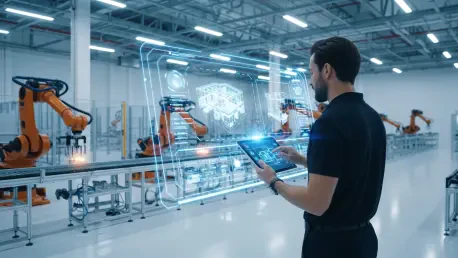
To thrive in this environment, industrial organizations implemented rigorous upskilling frameworks that shifted the focus from static hardware maintenance to dynamic digital proficiency. They moved toward a model where every technician was equipped with basic cyber hygiene training and the ability to perform software-based diagnostics directly from the production line. These leaders identified that providing workers with tablets for real-time data access was only half the battle; the more significant achievement was fostering the digital confidence required to use those tools effectively under pressure. Practical next steps for facilities still in transition involved the creation of software-first mentorship programs where veteran mechanics and digital natives collaborated on complex troubleshooting exercises. By prioritizing these integrated training curricula, manufacturers ensured that their teams could manage firmware updates and network security protocols with the same ease as they once managed physical systems.
Facilities that succeeded in this transition implemented a strategic shift toward internal software academies that provided hands-on experience with specific proprietary platforms. These organizations moved away from generic training in favor of localized, problem-based learning that reflected the actual technical hurdles of their specific assembly lines. By focusing on practical application, they ensured that their workforce did not just understand the theory of software but could actively manipulate it to optimize throughput and energy efficiency. These leaders also prioritized the recruitment of hybrid talent—individuals who possessed both a passion for mechanical systems and a foundational understanding of data structures. This foresight allowed them to build teams that were naturally resilient to the rapid cycles of software updates and hardware iterations. Looking forward, the establishment of clear paths for digital career progression became the standard for retaining high-performing industrial talent in a competitive and automated global market.